Featured Armature & Stator Assembly Machinery
Field-proven coil winding, insulation inserting, shaping, and precision turning solutions designed for alternating current (AC), brushless direct current (BLDC), universal, and automotive traction motor architectures.




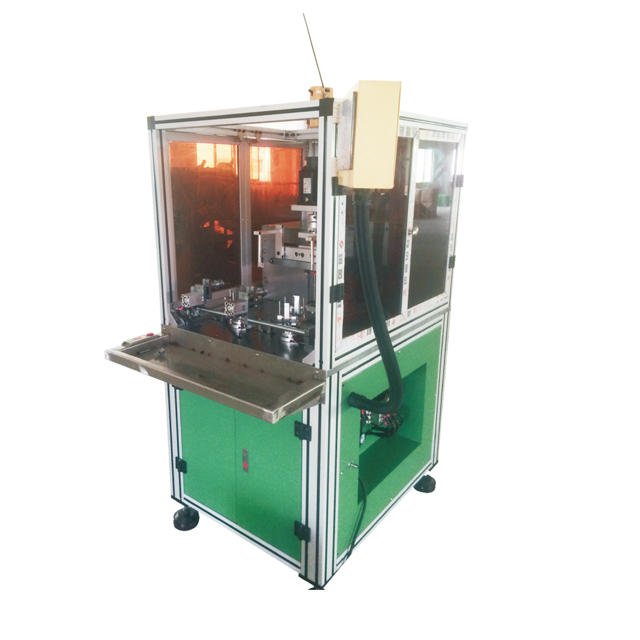



The Mechanics of High-Density Armature & Stator Manufacturing
In contemporary electromechanical production, the winding of rotors and stators is no longer merely a mechanical transposition of magnet wire into magnetic core slots. It represents an intricate convergence of electromagnetic optimization, dynamic mechanical kinematics, precise closed-loop tension regulation, and strict thermal dissipation management. As tier-1 original equipment manufacturers (OEMs) transition toward energy efficiency classes compliant with IE4, IE5, and stringent automotive-grade ISO/TS standards, manufacturing tolerances on coil geometry, slot fill factors, and wire insulation integrity have tightened drastically.
Industrial armatures—predominantly found in high-performance universal power tools, automotive starter motors, electric mobility actuators, and high-torque pump assemblies—demand an uncompromised balance between rotational symmetry and thermal endurance. Traditional manual or low-tier flyer winding mechanisms introduce inconsistent wire strain, leading to localized thinning of the enamel coating, dielectric breakdown under high-frequency pulse-width modulation (PWM) inverter switching, and rotor imbalance that accelerates bearing fatigue.
Active Closed-Loop Tensioning
Dynamic magnetic or servo tensioners replace rudimentary friction springs. Real-time feedback preserves magnet wire cross-section within ±0.8% elongation limits, preventing micro-cracking of polyimide-imide enamel layers during high-speed flyer indexing up to 3,500 RPM.
Precision Needle Kinematics
For inner slotted stators and high-pole brushless DC (BLDC) configurations, multi-axis CNC needle winding systems navigate tight slot openings (down to 1.2 mm), laying wire in dense, orderly patterns without mechanical interference or copper scraping against lamination stacks.
Integrated Commutator Fusing
Armature line automation incorporates intermediate indexing hooked or slotted commutators with subsequent precision resistance micro-welding or tungsten-inert gas (TIG) hot staking, yielding interface electrical resistance below 15 micro-ohms per segment.
Achieving high slot fill factors ($K_{fill} \ge 75\%$) while eliminating coil cross-over faults requires matched downstream shaping, wedge insertion, and final forming operations. When an armature or stator core leaves the winding station, mechanical stress must be uniformly redistributed. Our progressive manufacturing engineering eliminates residual internal mechanical stresses through multi-stage geometric shaping dies, ensuring complete concentricity and clearance for subsequent rotor-to-stator air gaps as low as 0.25 mm.
Core Machine Architecture & Process Comparison
A direct technical comparison across standard winding and forming paradigms to assist manufacturing plant directors and production planners in balancing capital expenditure (CAPEX) with operational throughput.
| Winding / Processing Architecture | Primary Motor Applications | Wire Gauge Capability (∅) | Cycle Time / Slot Index | Slot Fill Factor ($K_{fill}$) | Tooling Changeover |
|---|---|---|---|---|---|
| High-Speed Flyer Winding Single/Dual Spindle Armatures |
Universal Motors, Drills, Vacuum Cleaners, Automotive Starters | 0.15 mm – 1.10 mm | 0.25s – 0.60s / turn | 62% – 70% | 15–25 mins (Quick-clamp collets) |
| CNC Multi-Station Needle Winding Internal Stator Tooth Winding |
BLDC, Drones, Servo Motors, EV Compressors, Ceiling Fans | 0.20 mm – 1.40 mm | 0.80s – 1.50s / index | 70% – 82% | 30–45 mins (Modular CNC head) |
| Coil & Wedge Insertion Line Synchronous Push-In Mechanism |
Induction Motors, Pump Motors, HVAC Compressors, Generators | 0.20 mm – 1.25 mm | 12s – 25s / entire stator | 68% – 76% | 40–60 mins (Blade magazine swap) |
| Progressive Forming & Shaping Hydraulic/Servo 2nd Final Shaper |
All Stator Geometries Prior to Impregnation & Lacing | All compatible gauges | 6s – 10s / cycle | Optimizes head height | 20 mins (Expanding segment dies) |
| CNC Rotor Surface Fine Turning Aluminum & Lamination Machining |
Squirrel Cage Induction, Shaded Pole, Ceiling Fan Rotors | Rotor OD: 20–160 mm | 5s – 12s / rotor piece | TIR ≤0.005mm | 10–15 mins (Quick chucking system) |
Future Procurement Trends (2025–2030 Horizon)
How global motor manufacturing enterprises are recalibrating their machinery sourcing strategies to navigate shifting supply chain dynamics, decarbonization mandates, and flexible automation paradigms.
Accelerated Migration to BLDC & Permanent Magnet Machines
Procurement teams are shifting capital away from legacy single-phase induction machinery toward high-flexibility needle winding platforms designed for concentrated-pole BLDC and permanent magnet synchronous motors (PMSM) in HVAC, consumer white goods, and industrial robotics.
Enameled Aluminum & Alloy Wire Adaptability
Driven by relentless copper price volatility, manufacturers are engineering winding lines with ultra-sensitive, zero-inertia tension brakes and anti-scratch ceramic eyelets capable of processing fragile copper-clad aluminum (CCA) and pure aluminum magnet wire without work-hardening failures.
Industrial IoT, OPC-UA & Digital Twin Commissioning
Procurement directors now require machinery with native Ethernet/IP, Modbus TCP, and OPC-UA connectivity. Predictive telemetry—logging servo torque, temperature drifts, cycle wear, and real-time wire tension—interfaces directly with enterprise MES/SCADA suites for predictive maintenance.
Total Cost of Ownership (TCO) over Baseline CAPEX
Savvy international buyers prioritize machines constructed with globally standardized electrical components (e.g., Siemens, Omron, Mitsubishi, Schneider, SMC pneumatic valves). This drastically lowers long-term spare-parts lead times and spares maintenance budgets from closed-ecosystem lock-ins.
Technological Breakthroughs in Armature & Stator Assembly
The global motor automation arena is characterized by aggressive miniaturization and heightened power density demands. Three dominant technological developments are currently redefining machine engineering standards across China and the broader export market:
Hairpin & Continuous Segment Winding
While stranded round wire remains the benchmark for fractional horsepower and consumer stators, high-voltage vehicle powertrains and commercial pump motors are transitioning to rectangular copper hairpin conductors. Machinery development has embraced continuous flat-wire wave-winding, which eliminates weld joints and decreases end-turn profile by 30%.
Electronic Cam (E-CAM) Synchronization
Replacing fixed physical cams with multi-axis programmable electronic cams enables dynamic acceleration-deceleration curve profiles. Spindle rotation, traversing axes, wire guides, and slot indexing operate in mathematical synchronicity, eliminating wire whipping and mechanical backlash even at extreme production velocities.
In-Line AI Vision Defect Detection
High-speed optical inspection sensors mounted directly adjacent to flyer nozzles and forming tooling inspect slot alignment, detect crossed turns, verify wedge retention, and spot enamel micro-fractures in sub-millisecond intervals, arresting defective components before resin encapsulation.
17+ Years of Manufacturing Leadership in Dongguan, China
Situated in Qishi Town, Dongguan—at the epicenter of South China's premier electromechanical precision engineering corridor—Zunqi Intelligent Equipment and the Hongfang brand family have delivered over 3,500 turnkey motor lines to leading factories in Germany, India, Brazil, Turkey, Vietnam, the USA, and beyond.
Bespoke Tooling Engineered to Stator/Rotor Geometry
We do not sell generic off-the-shelf equipment. Every inserting needle, flyer guide, shaping jaw, and wedge blade magazine is CAD/CAM custom-profiled to your actual lamination stack, slot opening, skew angle, and copper diameter specifications.
Physical Sample Trial Run & Video Sign-off
Before crate closing and ocean dispatch, we require physical stator and armature cores from your factory. We perform exhaustive continuous trial runs at full rated production speed, logging cycle times and generating high-resolution video proof of runout, slot fill, and insulation integrity.
Robust 1-Year Comprehensive Warranty & Spares
Every machine is backed by an unconditional 12-month mechanical and electrical warranty. Critical wear components—such as ceramic eyelets, cutting blades, guide needles, and creasing fingers—are supplied in duplicate within the export toolkit.
Frequently Asked Procurement & Engineering Questions
Comprehensive answers addressing key operational parameters, mechanical tolerances, tooling turnarounds, electrical compatibility, and post-sales commissioning protocols.
What is the minimum order quantity (MOQ) and production lead time?
Our standard minimum order quantity for automated armature winders, stator coil inserters, forming presses, and fine turning machines is strictly 1 set. Standard standalone machines feature a factory production cycle of 20 to 30 calendar days. Fully automated turnkey production lines (encompassing slot insulation, multi-spindle winding, inserting, intermediate shaping, double-side lacing, and final forming) generally require 45 to 60 days, inclusive of customized die fabrication and sample validation.
What technical data must we submit to receive a customized machine configuration?
To ensure exact tooling compatibility, our engineering department requests: (1) 2D mechanical drawings of the stator or rotor lamination indicating outer diameter (OD), inner diameter (ID), slot count, slot opening dimension, and total stack height; (2) Winding scheme parameters, including wire diameter (enamelled copper or aluminum), turns per slot/coil, coil span, and resistance targets; (3) Commutator dimensions for armatures (tang type, slot type, overall shaft length); and (4) Desired hourly throughput or production shift targets.
How does your equipment prevent scraping or micro-cracking of enamel wire?
All high-friction wire guide pathways utilize ultra-polished 99% purity industrial alumina ($Al_2O_3$) ceramic eyelets, silicon nitride guide rollers with zero-backlash micro-bearings, and tungsten carbide flyer heads. Furthermore, our machines integrate servo-controlled dynamic tensioners that continuously adjust braking torque based on linear flyer velocity, ensuring wire elongation stays strictly within international safety tolerances (≤1.0%).
Can the machinery be configured for non-standard factory electrical grids?
Yes. While our standard domestic electrical infrastructure uses 3-phase 380V/50Hz or single-phase 220V/50Hz, our electrical systems are fully modular. We routinely engineer and export configurations wired for North American 3-phase 208V/220V/480V at 60Hz, Japanese 200V/50-60Hz, or Latin American dual-voltage standards. Power transformer units, servo power supplies, and PLC input taps are configured at the factory to match your local grid requirements.
What is the procedure for factory acceptance testing (FAT) and commissioning?
We operate a transparent two-tier verification process: Prior to crating, we run customer-supplied sample stators/armatures on the machine, generating a multi-angle high-definition FAT video showing dimensional checks, cycle time, slot insertion smoothness, and dielectric high-potential (Hi-Pot) insulation tests. For on-site commissioning, we provide full English parameter manuals, step-by-step wiring schematics, and live remote video support with our chief automation engineers. On-site dispatch of installation engineers is readily available for complex turnkey multi-machine cells.
How do your rotor fine turning machines eliminate air gap runout?
Our HF-C60 and heavy-duty rotor turning series utilize a high-precision pneumatic-hydraulic concentric chucking center coupled with a dynamically balanced ultra-rigid main drive spindle. The machine performs rough and finish cutting using diamond (PCD) or cubic boron nitride (CBN) cutting inserts, preserving an outer diameter tolerance of ≤±0.005 mm and Total Indicated Runout (TIR) within ≤0.008 mm. This precision eliminates eddy current hotspots and acoustic noise caused by uneven electromagnetic air gaps.
Upgrade Your Motor Manufacturing Line Today
Partner with China's premier engineering specialist in electric motor automation. Submit your stator or rotor blueprints for a comprehensive tooling evaluation, cycle time simulation, and competitive turnkey quotation from our senior engineering team.
