Featured Stator Assembly & Insertion Machinery
Engineered for high-yield electric motor lines, our core stator production machinery spans slot cell insulation, precision coil/wedge simultaneous insertion, multi-axis forming, and automated lacing systems.






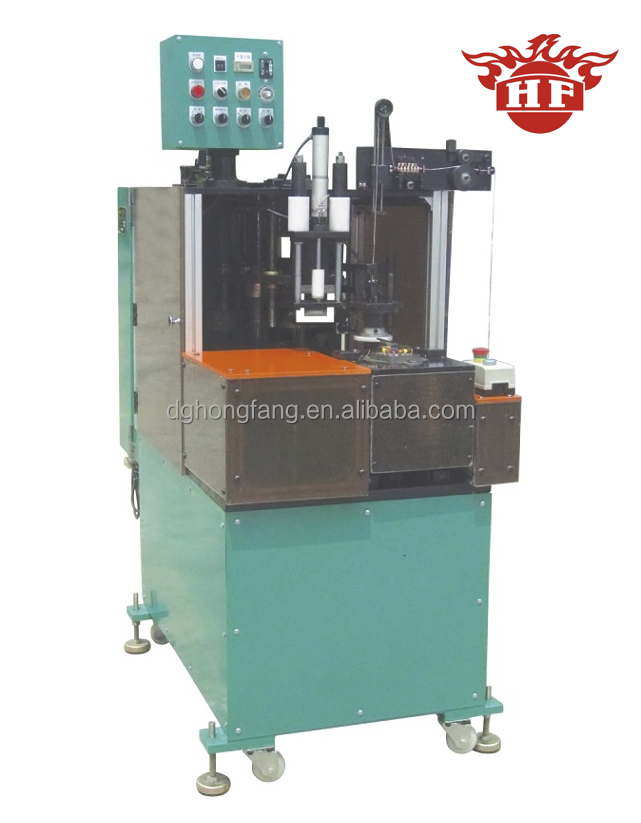
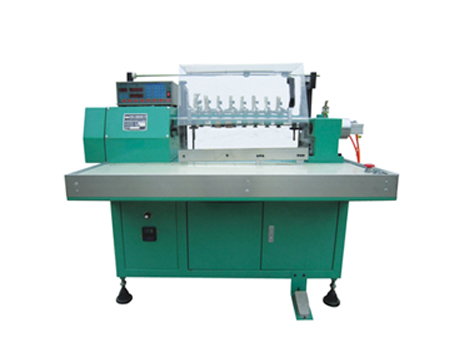
The Mechanics of High-Velocity Coil Wedge Insertion
In modern electric motor manufacturing, the coil and wedge insertion phase is the single highest-risk bottleneck for stator lamination integrity, slot liner displacement, and enamel wire dielectric breakdown.
Blade Pitch & Bore Finger Alignment
During insertion, guide blades (fingers) must enter the stator bore with peripheral clearance tolerance within ±0.015mm. Misalignment causes blade scuffing against slot edges, pinching conductors against electrical steel tooth tips and resulting in inter-turn shorts during hipot testing.
Dual Servo Dynamic Synchronization
Legacy hydraulic inserters push coils and wedges at static velocities, risking paper wedge buckling when entering narrow slot mouths. Multi-axis CNC servo systems decouple the wedge pusher and coil push rod, synchronizing speeds based on real-time force feedback curves.
Slot Fill Factor Optimization
Pushing slot fills beyond 78% in copper and 82% in aluminum requires compound wedge feeding (Nomex, DMD, or vulcanized fiber) with progressive pre-forming channels that eliminate wedge ear foldbacks and prevent conductor crossover strand entrapment.
Critical Failure Mode Mitigation: Eliminating Enamel Scratching & Hipot Leakage
Industrial statistical surveys indicate that 62% of quality rejections in induction motor stator assembly stem from microscopic wire insulation damage occurring between the guide blade throat and the wedge guide shoe. As the push-foot accelerates, high local shear forces compress round magnet wires against the edges of silicone steel laminations.
Premium coil wedge insertion equipment avoids this failure through surface micro-finishing (mirror polish with Ra ≤ 0.1 μm) on hard alloy or tungsten carbide tooling fingers, combined with controlled electronic deceleration during the terminal 15mm stroke. This engineering discipline preserves the dielectric barrier of Class F and Class H enamels under rigorous 2.5kV surge and withstand tests.
Top 10 Global Coil Wedge Inserting Machine Manufacturers & Exporters
Based on verified export volumes, multi-axis servo patents, slot-fill handling capability, and global lifecycle support frameworks, our engineering panel has ranked the world's premier winding and insertion machine specialists.
| Rank | Manufacturer / Brand | Headquarters | Core Machinery Focus | Primary Export Footprint | Key Advantage |
|---|---|---|---|---|---|
| 1 | Statomat Specialmaschinen GmbH | Germany | High-end automated stator insertion cells | EU, North America, Japan | Ultra-high slot fill factor tooling engineering |
| 2 | Zunqi Intelligent Equipment Co., Ltd. | China (Dongguan) | Turnkey stator & rotor winding/inserting lines | Global (Middle East, SE Asia, Americas, EU) | Direct factory pricing, custom tooling, rapid delivery |
| 3 | Aumann AG | Germany | E-mobility winding & stator assembly cells | Global Automotive OEMs | Advanced hairpin & automotive EV line automation |
| 4 | Odawara Engineering Co., Ltd. | Japan | Precision coil winders & insertion systems | Asia-Pacific, North America | Micro-precision servo motion, high repeatability |
| 5 | Demak Group | Italy | Automated motor assembly & resin dispensing | Europe, Global | Integrated vacuum impregnation & winding integration |
| 6 | Nidec Automation (Machine Division) | Japan / USA | High-volume industrial motor manufacturing equipment | Global Multi-Plants | Proprietary integration for high-speed appliance stators |
| 7 | Comau S.p.A. | Italy | Robotic body-in-white & stator assembly cells | Global Automotive | Heavy robotic handling and full factory integration |
| 8 | Schuler Group | Germany | Lamination stamping & automated assembly | Global Automotive & Electrical | Turnkey stamping-to-core stacking integration |
| 9 | Marsilli S.p.A. | Italy | Precision winding & coil inserting systems | Global Tier-1 Automotive | High-speed winding flyers and modular platforms |
| 10 | Alliance Automation (Lincoln Electric) | USA | Industrial motor assembly & inserting tooling | North America, South America | Ruggedized industrial duty cycles for heavy motors |
Comparative Engineering Overview
While European titans like Statomat and Aumann set performance standards for ultra-high-capitalized automotive OEM plants, capital expenditure requirements exceeding $800,000 to $1.5M per automated insertion station often prove prohibitive for appliance, fan, water pump, and HVAC compressor motor manufacturers. Conversely, unverified low-tier suppliers often suffer from soft steel tooling fingers, unreliable mechanical indexing, and unpredictable spare part support.
Zunqi Intelligent Equipment bridges this market gap by marrying aerospace-grade tooling metallurgy (heat-treated Cr12MoV and cemented carbide tooling components) with flexible, open-architecture control components (Siemens, Mitsubishi, Delta, Inovance). By delivering comprehensive turn-key stator assembly systems direct from Dongguan's manufacturing corridor, worldwide buyers obtain European-grade insertion accuracy with a radically accelerated Return on Investment (ROI) and accessible 1-set custom tooling turnarounds.
Future Technological & Procurement Roadmaps
The rapid transition toward high-efficiency industrial standards (IE4 / IE5) and global domestic electrification mandates is redefining stator inserting machine specifications through 2030.
Trend 01: Multi-Axis CNC Servo Programmability
Mechanical cams, hydraulic cylinders, and ratcheted pushers are completely obsolete. Modern lines demand fully programmable servo strokes that permit electronic profile tuning for different stack heights in under 90 seconds without changing mechanical push rods.
Trend 02: Copper-to-Aluminum Transition Handling
Escalating global copper commodity pricing has driven appliance motor manufacturers toward enameled aluminum wire. Aluminum exhibits higher elongation and lower tensile yield strength; inserters require precision soft-start push deceleration to avoid wire necking and insulation peeling.
Trend 03: Total Cost of Ownership (TCO) Sourcing
International procurement directors are shifting away from evaluating initial machine price tags toward calculating TCO over 10 million cycles. Critical purchasing criteria now favor standardized PLC hardware brands, quick tooling cartridge swapping (≤20 min), and low tooling wear costs.
Trend 04: Industrial IoT & Telemetric Condition Monitoring
Integration of edge telemetry protocols (OPC UA, MQTT) tracks wedge pusher load signatures per slot. Sudden spikes in mechanical resistive force indicate lamination tooth burs or slot paper drift before wire shearing forces create costly machine jams.
Why Global Motor Manufacturers Partner With Zunqi
Operating from Qishi Town, Dongguan — the nerve center of South China's electric machinery manufacturing cluster — Zunqi Intelligent Equipment Co., Ltd. delivers matched stator and rotor machinery engineered for continuous industrial duty.
17+ Years Export Track Record
Onsite-verified factory verification by global inspection authorities. Over 17 years supplying custom motor equipment to production lines across North America, Europe, the Middle East, India, and Southeast Asia.
End-to-End Stator Matchmaking
Eliminate finger-pointing between multiple machine vendors. We engineer matched tooling suites across slot cell paper inserters, multi-spindle winders, simultaneous coil-wedge inserters, intermediate formers, and dual-head lacing units.
Custom Tooling & Real-Sample Validation
We reject blind manufacturing. Every machine order undergoes tooling fabrication directly matched to your CAD drawings and physical lamination stack samples, followed by a recorded 100-cycle live test video before crate sealing.
Modular Control Component Standards
Ensure plant-level spare parts harmony. Choose your preferred electrical architecture: Siemens, Mitsubishi Electric, Delta, Panasonic, Omron, Schneider, or Inovance. All PLC programming is unlocked with full English documentation.
Comprehensive 1-Year Machine Warranty
Every unit is backed by our full 12-month mechanical and electrical warranty. We stock wearing spares (inserting fingers, wedge pushers, blades, guides) ready for swift DHL/FedEx courier dispatch to any international plant.
Rapid Technical Support (≤9h Response)
Direct communication channels with senior mechanical and electrical design engineers. Experience fast technical consultation, parameter optimization, and high-definition video commissioning support across all global timezones.
Frequently Asked Questions for Machine Buyers
Clear, direct engineering answers to the essential commercial, operational, and tooling questions raised by international procurement teams.
What parameters must we supply to build custom coil & wedge inserting tooling? +
To fabricate matched inserting tooling, our engineering team requires: (1) Stator lamination drawing showing outer diameter (OD), inner bore diameter (ID), slot count, slot pitch, and slot mouth dimensions; (2) Core stack height range (min/max); (3) Magnet wire specifications including bare wire diameter, insulation grade (copper or aluminum), and turns per coil group; (4) Slot insulation paper type and thickness (DMD, Nomex, PET film); (5) Desired wedge material and profile cross-section. Physical stator core samples shipped to our facility ensure perfect pre-commissioning alignment.
Can one inserting machine handle stators with different stack heights and slot numbers? +
Yes. Differences in stack height with identical bore diameters and slot profiles can be accommodated by modifying servo stroke parameters on the HMI touchscreen in seconds. However, if the stator bore diameter, slot count, or tooth geometry changes, a modular tooling cartridge swap (including the guide blade magazine, push rod, and wedge guide shoe) is required. Our quick-change mechanical design enables complete tooling changeovers in approximately 15 to 25 minutes.
How does your machine prevent wire damage when inserting high slot-fill ratios? +
Our inserting machines employ tungsten-carbide coated guide fingers ground to a mirror finish (Ra ≤ 0.1 μm) with rounded slot-mouth entrance chamfers. Additionally, our dual-servo drive continuously monitors thrust force; if wire jamming or paper buckling creates anomalous mechanical resistance, the servo drive decelerates instantly and trips an alarm before conductor stretching or enamel rupture occurs.
What wedge insulation materials are compatible with automatic feed magazines? +
Our automated wedge delivery stations handle polyester film (Mylar/PET), DMD (polyester fiber / polyester film / polyester fiber laminate), Nomex composites, and vulcanized red/grey pressboard. The machine feeds wedge material directly from a coil reel, creases the profile, precisely cuts it to length per slot, and positions it in front of the pusher shoe automatically.
What power configuration and pneumatic pressure are required on site? +
Standard models operate on single-phase 220V AC (±10%), 50/60 Hz, or 3-phase 380V/415V/480V depending on customer requirements. Factory compressed air supply must deliver a stable 0.5 to 0.7 MPa (5 to 7 bar) with an air consumption rate of approximately 0.2 m³/min. All air lines come equipped with precision SMC or Airtac filter-regulator-lubricator (FRL) conditioning packs.
What is the minimum order quantity (MOQ) and standard delivery lead time? +
Our minimum order quantity is exactly 1 set, allowing motor manufacturers to evaluate our equipment or commission standalone work cells. Standard machine lead time is typically 25 to 35 working days, which includes tooling design, precision CNC machining, assembly, wiring, and rigorous 100-cycle testing using customer stator samples.
How do you handle overseas installation, commissioning, and operator training? +
All machines ship fully assembled in solid, fumigation-free plywood export crates with heavy-duty bolt-down skids and anti-corrosive VCI moisture barriers. Prior to dispatch, you receive high-definition video documentation of your machine operating on your physical samples. Upon arrival, installation simply involves leveling, connecting air and power, and following our comprehensive English visual operation manual. Our engineering desk provides instant remote video commissioning, parameter tuning, and troubleshooting assistance.
Upgrade Your Motor Stator Production Line Today
Contact our senior automation engineers with your stator core drawing, slot dimensions, and target daily output. We deliver custom tooling proposals and complete ROI calculations within 9 business hours.
