Precision Stator Coil, Wedge & Rotor Finishing Machinery
Engineered for fractional horsepower, industrial pump, hermetic compressor, and BLDC motor manufacturing lines. Sized directly from customer laminated core specifications.
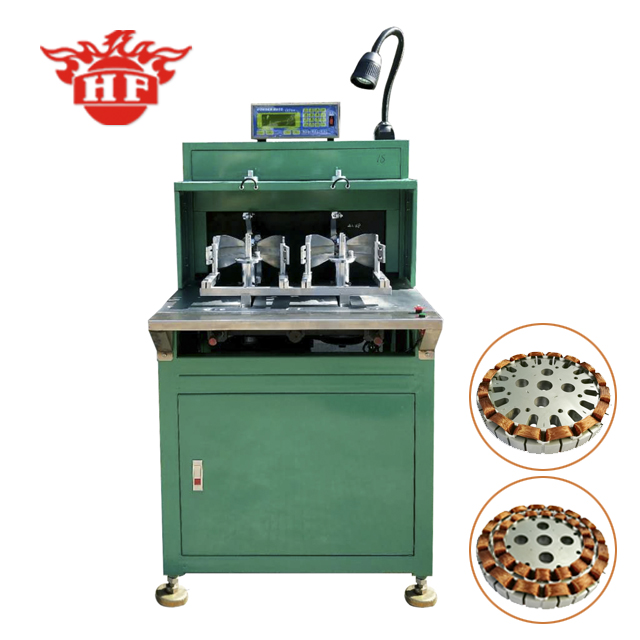
Automatic Ceiling Fan Winding Machine Two Station
Dual-workstation CNC flyer winding designed for dual-speed ceiling fan stators, balancing tension management and coil symmetry.
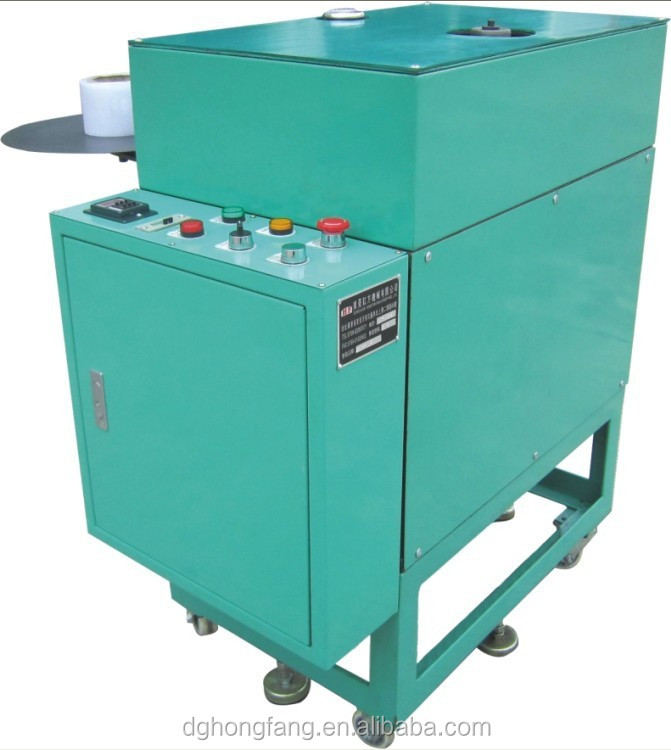
HONGFANG HF-D50 220V 1000W Insulation Paper Insertion Machine
Automated edge-creasing, cutting, and slot insulation cell for cooler and evaporator blower motors. 1-year factory warranty.
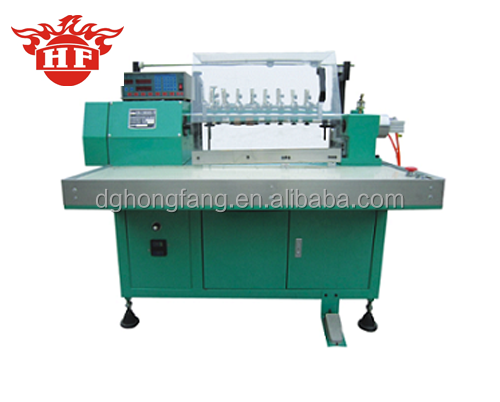
HF New CNC Auto Stator Coil Winding Machine 8 Heads 3000 RPM
High-speed 8-spindle coil winding apparatus supporting copper and aluminium enameled wire for high-volume table fan lines.
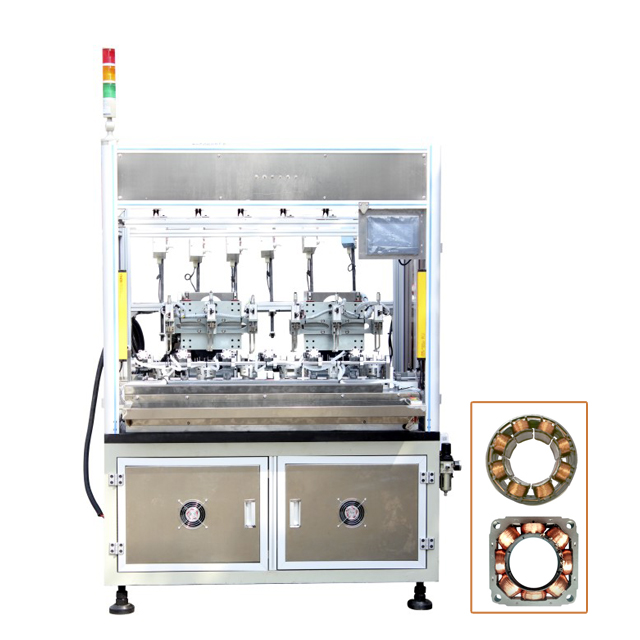
HF-LO2-6G Six Stations Internal Winding Machine with PLC
Rotary six-station internal armature needle winding system designed for brushless DC and pump inner stator topologies.
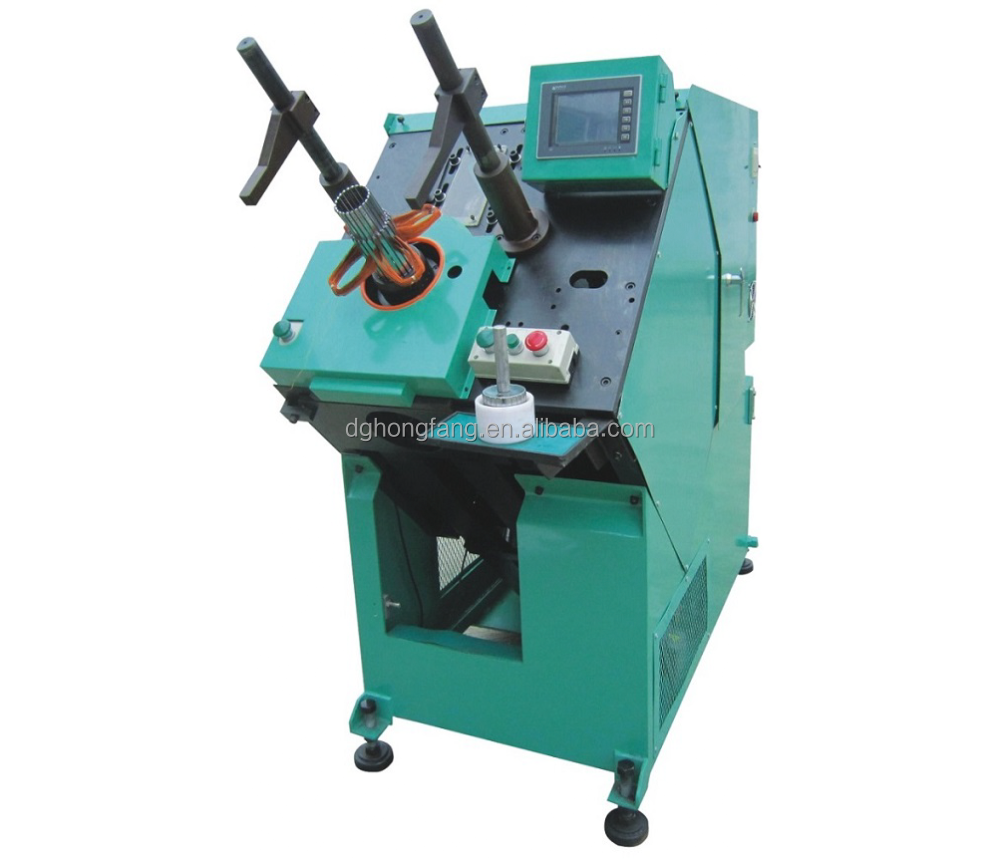
Automatic Stator Wedge Paper and Coil Inserting Machine
Simultaneous coil pushing and wedge feeding mechanism. Eliminates manual wire damage and boosts slot fill factors dramatically.
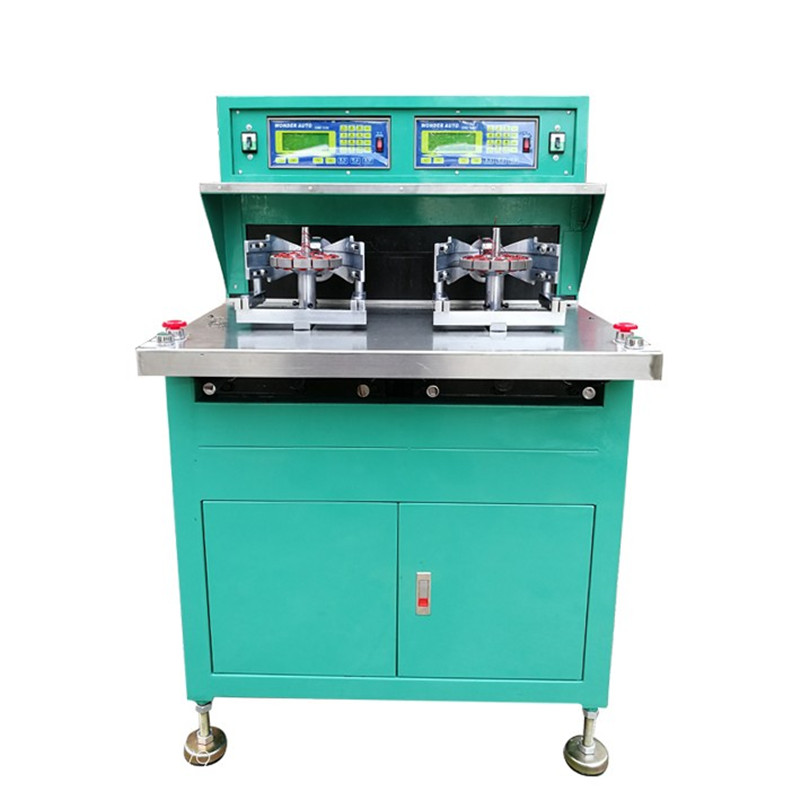
HF-R40-2G Dual-Controller Automatic Ceiling Fan Stator Winder
Independent microcomputer parameter controls for primary and auxiliary slot indexing, wire guide tensioning, and cutting.
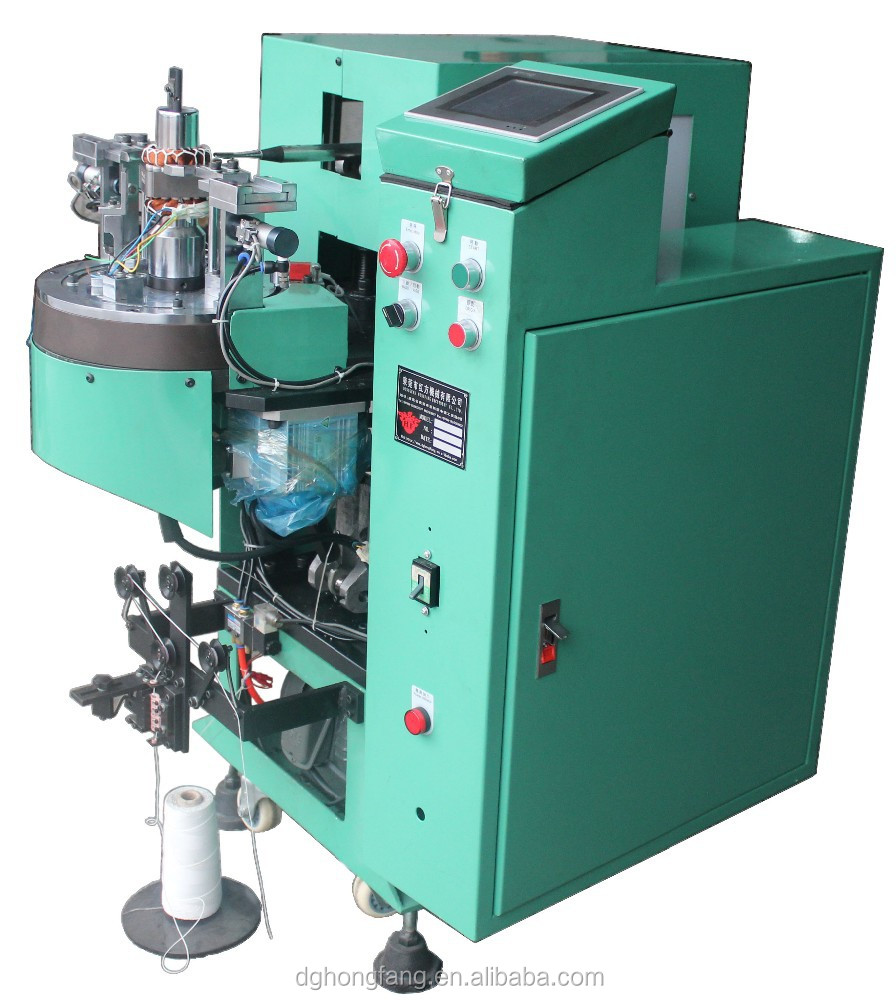
HF Single Side Lacing Machine for Table Fan Motor Stator Coil
High-rigidity needle arm mechanism binding overhang winding end-turns with adjustable slot skip, pitch, and uniform tensioning.
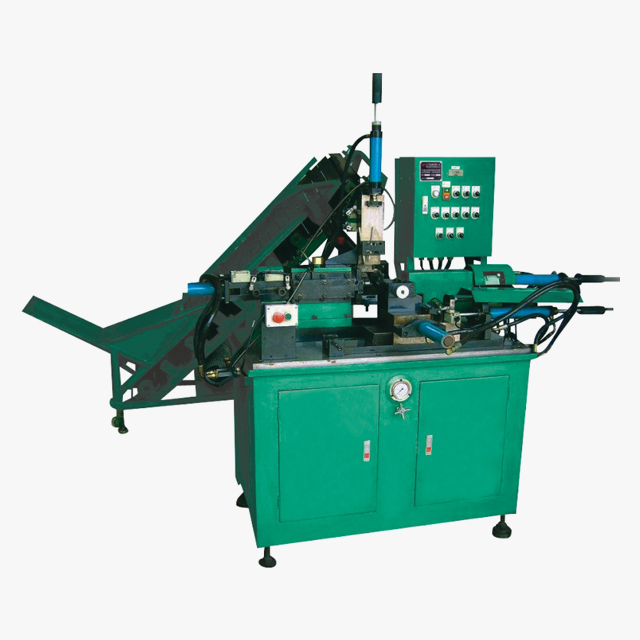
Fan Motor Rotor Rough Turning & Surface Cutting Machine
High-precision outer diameter skiving and turning lathe to maintain tight stator-rotor air gap clearances and reduce harmonic noise.
State of the Art in Stator Wedge Insertion & Coil Filling Engineering
An engineering analysis of mechanical wedge pushers versus multi-axis servo inserters for high-efficiency IEC, NEMA, and EV traction motors.
In modern electromagnetic machine manufacturing, the insertion of stator phase coils and insulating wedges represents the single most critical constraint on production throughput, scrap rates, and thermal classification compliance. The transition from legacy IEC Class F insulation protocols toward higher-density Class H and Class 220 inverter-grade systems has fundamentally altered tooling physics. Whether manufacturing fractional horsepower (FHP) domestic ventilation fans or three-phase IE4/IE5 industrial induction drives, achieving a high slot fill factor (copper fill ratios exceeding 78% net area) without compromising primary ground insulation demands micron-scale kinematic control.
A precision Automatic Wedge Inserting Machine (frequently integrated as a dual-action coil and wedge insertion cell) must accomplish three synchronized biomechanical operations in a single stroke: (1) vertical pushing of layered magnet wires into semi-closed lamination slots, (2) simultaneous forming, creasing, and shearing of dielectric wedge materials (such as Nomex®, DMD, NMN, or PET electrical grade film), and (3) longitudinal sliding of the shaped wedge through guide blades into the slot mouth to lock the phase coils under mechanical tension without scratching wire varnish.
Top 10 Global Automatic Wedge & Coil Inserting Equipment Manufacturers Matrix
Comparative evaluation based on drive architecture, wedge material handling, tooling versatility, and capital investment.
| Manufacturer / Brand | Kinematic Drive System | Supported Wedge Dielectrics | Stack Height Range (mm) | Tooling Changeover Time | Overall Value Score |
|---|---|---|---|---|---|
| Zunqi Intelligent Equipment (China) | Dual Servo Mechanical Cam Hybrid | Nomex, DMD, NMN, Polyester, Presspaper | 10 – 260 mm | < 25 Minutes | 9.8 / 10 (Best Value) |
| Statomat Specialmaschinen (Germany) | Full Closed-Loop Multi-Axis Servo | Aramid, Polyimide, Heavy Laminates | 20 – 350 mm | < 35 Minutes | 9.4 / 10 |
| Rimac Enterprises (Italy) | Hydraulic Servo Integrated | DMD, NMN, Rigid Epoxy Glass | 50 – 500 mm | > 45 Minutes | 9.1 / 10 |
| Odawara Engineering (Japan) | High-Precision AC Servo Gearing | Mylar, Nomex, Ultra-thin Film | 15 – 180 mm | < 20 Minutes | 9.3 / 10 |
| Alliance Winding Equipment (USA) | Servo Direct-Drive Push-Rod | Standard DMD, Nomex Blends | 25 – 300 mm | < 40 Minutes | 8.9 / 10 |
| Marsilli S.p.A. (Italy) | Precision Micro-Motion Linear Drives | Polyester, Flexible Dielectric | 8 – 150 mm | < 15 Minutes | 9.2 / 10 |
| Nittoku Co., Ltd. (Japan) | Multi-Station High Speed Indexer | PET, Thin Laminates, Vulcanized Fiber | 10 – 160 mm | < 30 Minutes | 9.0 / 10 |
| SMAC Moving Coil Actuators (USA) | Direct Linear Programmable Force | Thin Film, Delicate Substrates | 5 – 120 mm | < 20 Minutes | 8.7 / 10 |
| Dongguan Hongfang CNC (China) | Cam Guided Servo Driven | DMD, Green Insulating Paper, Nomex | 12 – 220 mm | < 25 Minutes | 9.5 / 10 |
| Schuler Group (Germany) | Heavy Mechanical Toggle Press | High-Voltage Mica & Glass Mat | 80 – 650 mm | > 60 Minutes | 8.8 / 10 |
Future Procurement & Technology Trends in Wedge Insertion Machinery
How electrical engineering shifts toward 800V architectures, Hairpin stators, and robotic self-diagnostics are re-writing equipment procurement specifications.
1. Shift from Pure Mechanical Cams to Multi-Axis Synchronous Servo
While mechanical conjugate cams provided the bulletproof reliability of 1990s production floors, modern procurement is heavily favoring synchronized servo axes. Programmable servo insertion blades allow variable velocity profiling: accelerating along the empty stator bore, decelerating precisely at the slot opening to prevent enamel wire pinching, and delivering dynamic thrust peaks as wedges seat into the iron stack. This eliminates mechanical backlashes and protects microscopic dielectric layers.
2. In-Line Real-Time Force Feedback & Missing Wedge Vision
Industry 4.0 quality architectures reject post-assembly quality containment. Advanced procurement tenders now specify closed-loop load cells directly behind the insertion push rods. If pushing resistance spikes beyond pre-calibrated thresholds (indicating a wire crossover or blade collision), the machine stops within 4 milliseconds. Integrated CCD vision cameras inspect 100% of both stator ends immediately after cycle completion, verifying complete wedge overhang symmetry and slot retention.
3. Rapid Tooling Modularity for High-Mix Manufacturing
The modern factory floor can no longer justify dedicating a capital machine to a single motor footprint for 6 months. Progressive manufacturers are requiring quick-change modular tooling suites. By utilizing precision-ground locating pins, quick-disconnect pneumatic manifolds, and preset slot-guide cartridges, operators can swap tooling between a 24-slot ceiling fan stator and a 36-slot industrial compressor stator in under 25 minutes without recalibrating mechanical endpoints.
4. Adaptation to Class H & Tough Multi-Layer Composite Papers
With heat pump compressors and high-rpm motors shifting toward harsher operating regimes, traditional creased polyester (Mylar) wedges are increasingly replaced by Nomex-polyester-Nomex (NMN) or aramid laminate structures. These composites exhibit substantial spring-back elasticity and high abrasive resistance. Procurement managers must specify hardened tungsten-carbide or high-vanadium tool steel (HRC 62-65) cutting dies and custom wedge folding blocks to prevent edge-delamination.
Why Global Motor Makers Partner with Zunqi Intelligent Equipment
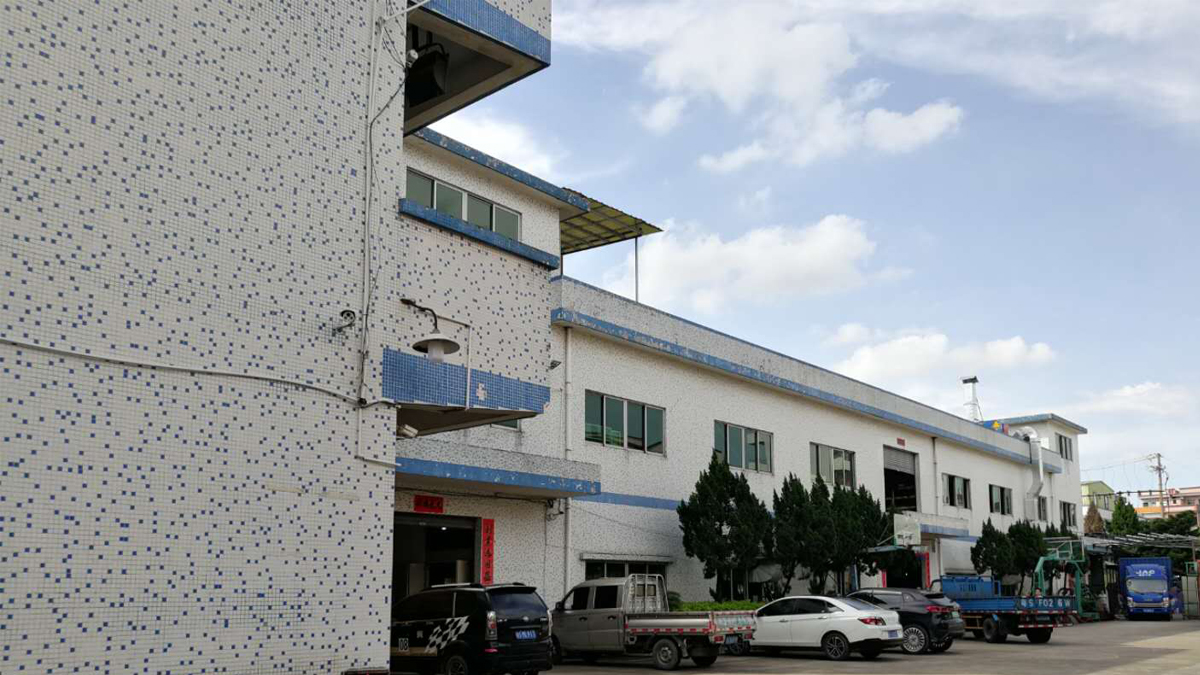
Headquartered in Qishi Town, Dongguan City, Zunqi Intelligent Equipment operates at the epicenter of South China's electrical industrial cluster. Backed by 17 years of specialized export engineering, our facility combines in-house CNC tool machining, electrical software design, and rigorous testing on customer-supplied stator stacks.
From automatic slot cell paper insertion and multi-head coil winding to simultaneous coil & wedge inserting, lacing, intermediate forming, and rotor surface turning—we engineer every stage to harmonize in cycle-time and dimensional accuracy.
Frequently Asked Technical Questions (FAQ)
Direct answers to the most common engineering and commercial challenges faced by stator production directors.
What parameters are required to calculate custom tooling for wedge and coil inserting machines? +
To fabricate precision inserting fingers, push blades, and wedge guides without clearance play, our engineering team requires a comprehensive 2D/3D stator lamination drawing indicating: (1) Inside Diameter (ID), (2) Outside Diameter (OD), (3) Stack Height range, (4) Slot Opening width and tooth tip profile, (5) Total slot count, and (6) Coil schedule specifying wire diameter, enamel grade, turns per slot, and target wedge thickness/material. Sending 3 to 5 physical stator iron stacks and sample wire bobbins ensures pre-shipment validation under authentic workshop dynamics.
How does the machine prevent scratching the magnet wire enamel during high fill-factor insertion? +
Protection of wire coating relies on our three-point mechanical design: First, the inserting guide blades are manufactured from imported high-alloy die steel, subjected to cryogenic heat treatment and multi-pass mirror polishing (≤ Ra 0.1 μm) to eliminate micro-burrs. Second, the blade tips are pre-stressed to maintain precise alignment with the stator tooth edges, creating a seamless metal chute. Third, the servo pushing profile decelerates smoothly as the slot mouth fills, ensuring that the wedge enters and forms the top insulation seal before the push fingers retract.
What is the typical tooling lifespan and replacement schedule under standard industrial operation? +
Under continuous two-shift production (approx. 1.2 to 1.8 million strokes annually) with proper pneumatic lubrication and recommended dielectric papers, Zunqi tungsten-hardened wedge cutting dies and blades deliver an operational lifespan between 1,500,000 and 2,500,000 cycles. Push rods and guide blades should be inspected every 6 months for surface friction marks. We supply a standard spare wear-kit with every machine and guarantee rapid dispatch of precision replacement components from Dongguan.
Can a single wedge inserting machine process both copper and aluminium magnet wire? +
Yes. However, because aluminium wire exhibits lower tensile yield strength, higher ductility, and a greater volumetric spring-back factor than copper for equivalent thermal ratings, the tooling tolerances and pushing stroke must be optimized. In our PLC touchscreen software, operators can select between pre-stored "Copper" and "Aluminium" kinematic parameter curves, which dynamically modulate insertion speed, pneumatic pressure hold, and blade retraction dwell times.
What power configuration and electrical component brands are supported for export machinery? +
Standard machines are built for single-phase 220V 50/60Hz or three-phase 380V/415V/480V based on regional factory specifications. To ensure effortless maintenance and spare parts availability in North America, Europe, and Asia, our control architectures can be configured with globally standardized automation components including Siemens, Mitsubishi, Schneider, Omron, Delta, or Inovance PLCs, paired with SMC or Airtac pneumatic valve blocks.
What warranty, commissioning, and technical support frameworks are provided to international clients? +
Every equipment unit carries an unconditional 1-year factory warranty covering core kinematic components, motors, and controllers. Before factory acceptance sign-off, we provide complete video documentation of the machine processing your custom stator samples at target cycle speeds. For global deployments, our engineering department provides real-time English video commissioning guidance, comprehensive schematics, operating manuals, and when required, on-site installation and technician training by senior field engineers.
Accelerate Your Stator Line Automation Today
Send us your stator lamination drawings and daily capacity requirements. Our technical sales engineers in Dongguan analyze your slot geometry and return a comprehensive machine configuration proposal within 9 hours.
