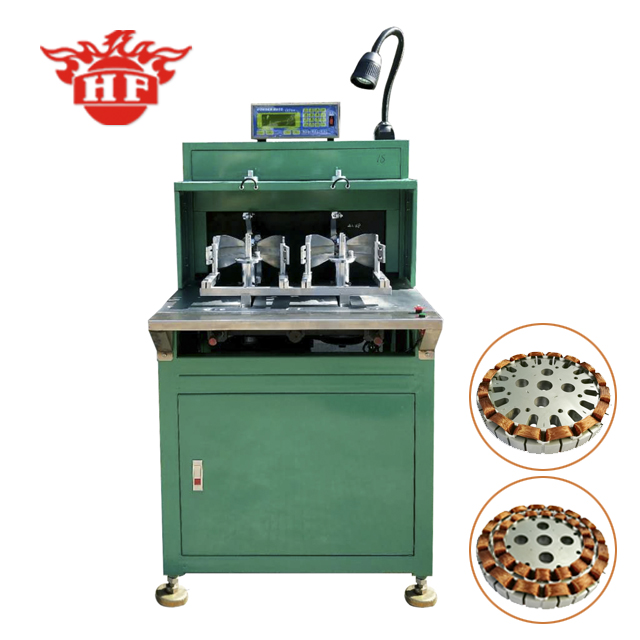
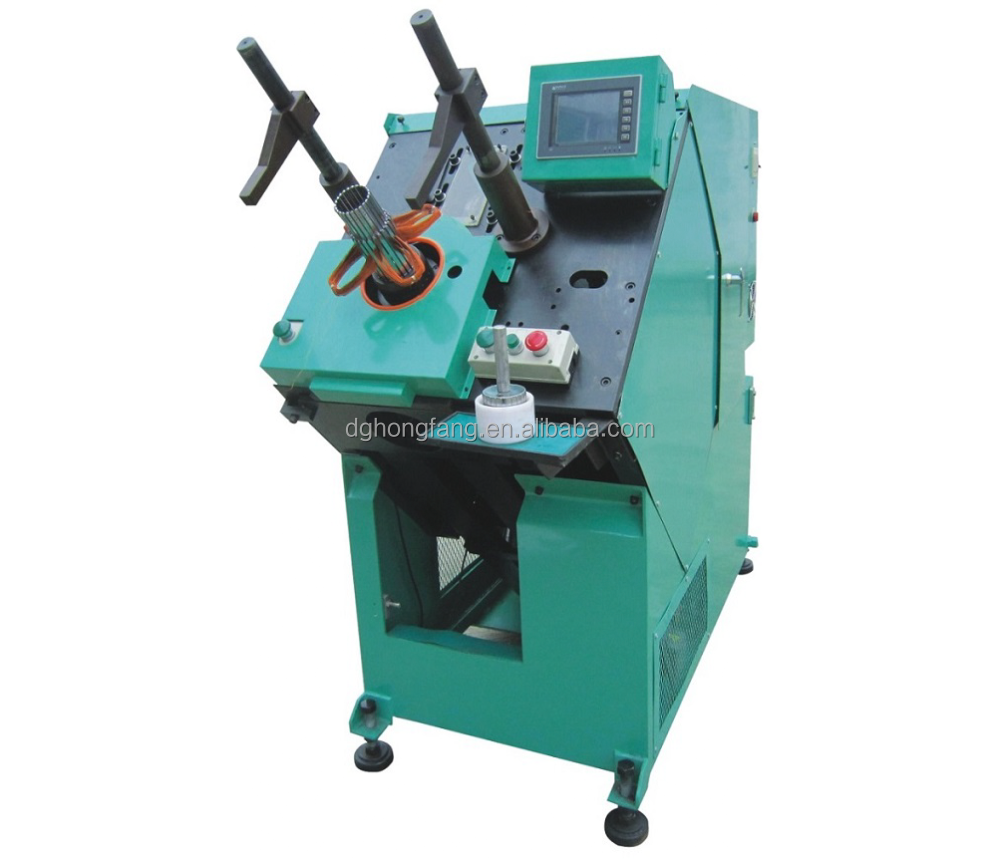
HF-LO2-6G Six Stations Internal Winding Machine with PLC for Motor Coil Inner Stator
- 6-station auto indexing rotary turntable
- High-speed internal needle/flyer winding
- Industrial PLC core & 1-year warranty
Explore our flagship OEM/ODM machinery engineered for ceiling fan, table fan, ventilation cooler, and industrial motor manufacturing lines. Each unit is custom-tooled to specific stator lamination blueprints.
The global fan manufacturing sector—encompassing high-volume residential ceiling fans, industrial axial ventilation blowers, table fans, and pedestal coolers—is undergoing a seismic shift in stator manufacturing tolerances. Driven by strict energy regulations such as IEC 60034-30-1 (IE3/IE4 standards) and the consumer push toward high-torque, ultra-quiet Brushless DC (BLDC) systems, motor manufacturers can no longer rely on legacy semi-manual winding frames.
In high-speed electric motor coil winding, copper slot-fill factor directly governs thermal dissipation, core losses, and overall motor efficiency. When an automated flyer or needle nozzle wraps enamelled magnet wire around a stator tooth or into skewed slots, micro-fluctuations in wire tension can induce micro-cracking in the polyamide-imide enamel insulation. This leads to inter-turn dielectric breakdown, localized corona discharges, and catastrophic field failures under variable-frequency pulse-width modulation (PWM) drive conditions.
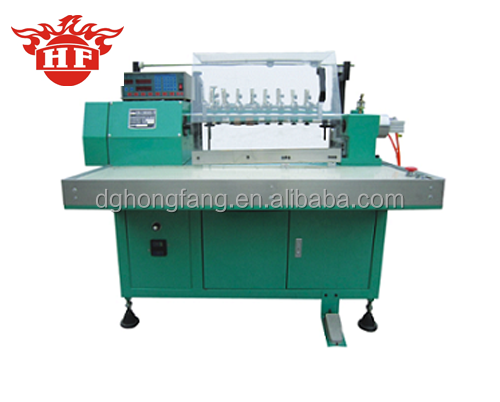
At Zunqi Intelligent Equipment, our fan motor coil winders integrate closed-loop dynamic tension controllers paired with multi-axis CNC interpolation. Whether deploying our 8-head high-speed semi-coil winding machines running at 3000 RPM or our HF-LO2-6G multi-station internal winding systems, the wire path is guided across mirror-polished tungsten-carbide guides and ceramic pulleys. This guarantees tension stability within ±1.5 grams-force across acceleration, constant-speed winding, and deceleration cycles, completely eliminating wire stretching and slot distortion.
Precision layering algorithms maximize slot copper packing density up to 78%, reducing end-turn copper overhang, cutting coil resistance ($I^2R$ losses), and reducing total copper weight per stator.
Equipped with specialized friction-reduction nozzles and parabolic acceleration curves designed specifically to handle delicate enamelled aluminium wire without necking or elongation.
Modular quick-clamp stator clamping fixtures allow factory tooling retooling between different lamination stack heights (10mm to 50mm) and slot pitches within 12 minutes.
Moreover, the winding process cannot exist in an engineering silo. Stator integrity is dictated by downstream synchronization: automated slot insulation inserting, concurrent coil and wedge inserting, multi-axis intermediate forming, precision end-turn lacing, and final rotor turning. Zunqi provides complete, end-to-end turnkey machinery ecosystems manufactured inside our Dongguan facility, ensuring zero compatibility friction between production stages.
Review the mechanical benchmarks, processing tolerances, and operational parameters across the complete fan motor manufacturing sequence.
| Process Step | Primary Equipment | Applicable Parameters | Dimensional Tolerance | Critical Quality Control Benefit |
|---|---|---|---|---|
| 01. Slot Insulation | Insulation Paper Inserting Machine | DMD, NMN, Polyester film (0.12–0.35 mm) | Edge cuff fold ±0.2 mm | Prevents dielectric puncture against lamination teeth burrs |
| 02. Coil Winding | Multi-Head / Multi-Station CNC Winder | Copper/Al wire 0.10–1.20 mm; up to 3000 RPM | Turn accuracy ±0 turns | Equal phase resistance; avoids rotational vibration & hum |
| 03. Coil & Wedge Inserting | Automatic Coil & Wedge Inserter | Stack height 10–60 mm; Stator OD 50–160 mm | Stroke alignment <0.05 mm | Zero wire-skin scratching; eliminates manual push damage |
| 04. Pre-Forming | Hydraulic Stator Coil Forming Machine | Expansion tooling tailored to lamination ID | Head clearance >1.5 mm to rotor | Expands coil end-turns to clear the rotor insertion bore |
| 05. End-Turn Lacing | Servo Double-Side Stator Lacing Machine | Polyester twine; single/double diamond stitch | Tension constancy ±5% | Binds end windings tightly against electromagnetic vibration |
| 06. Final Sizing | Final Stator Coil Sizing Press | Radial & axial simultaneous press dies | Coil height tolerance ±0.3 mm | Guarantees stator clears motor die-cast end bells |
| 07. Rotor OD Skimming | Rotor Fine Turning & Cutting Lathe | Tungsten carbide / CBN cutting inserts | Concentricity ≤0.008 mm | Precise air-gap dimension (0.25–0.35 mm) for maximum torque |
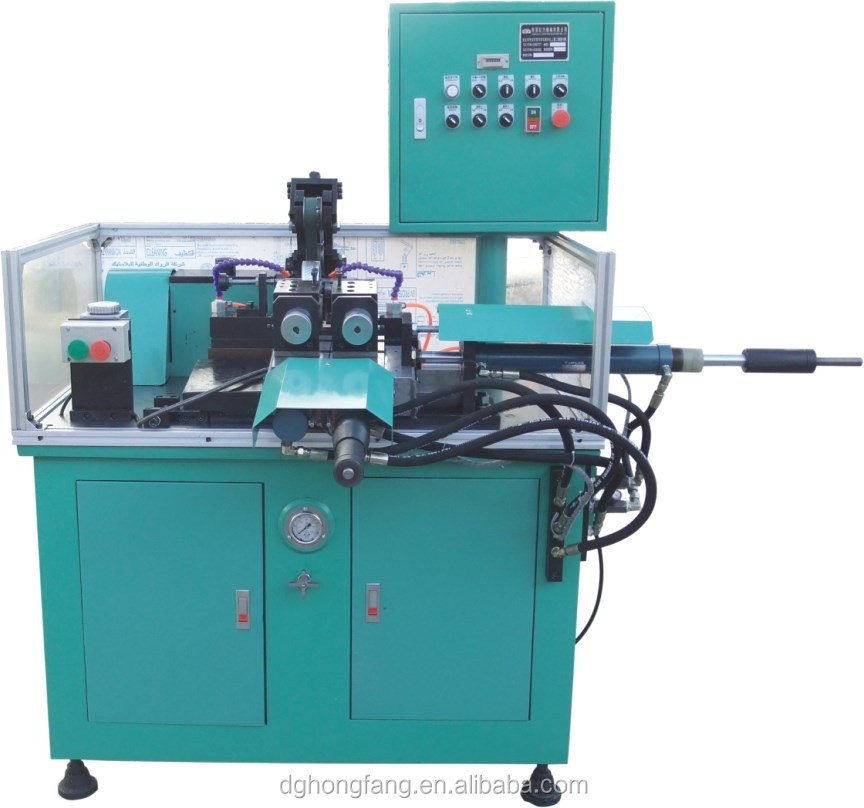
| 08. Shaft Press-Fitting | Hydraulic Precision Shaft Pressing Machine | SC45# Steel shafts; 5–25 mm diameter | Axial runout ≤0.015 mm | Prevents bearing race cocking and fan blade wobble |
For procurement directors, manufacturing engineers, and Tier-1 appliance OEMs, capital equipment decisions made today must withstand regulatory shifts over the next decade. Sourcing coil winding machinery is no longer merely a matter of hardware purchase—it is an investment in manufacturing agility.
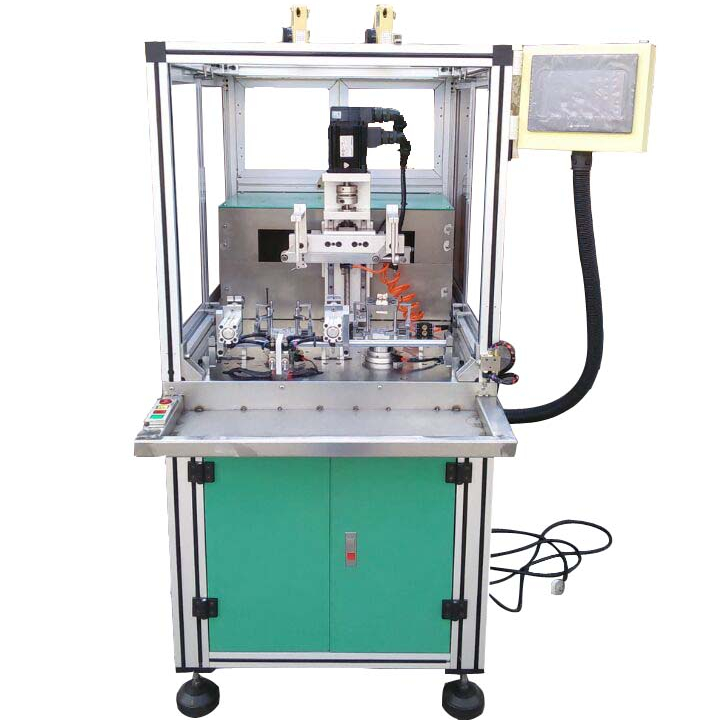
1. Accelerated Transition from AC Induction to Outer-Rotor BLDC Architecture: Global minimum energy performance standards (MEPS) are phasing out traditional shaded-pole and single-phase capacitor-run induction fan motors due to their dismal 30%–45% electrical efficiency. Brushless DC (BLDC) motors achieve 75%–88% efficiency. BLDC architectures require specialized winding machinery: high-pole-count stators (e.g., 8-pole, 12-pole, 24-slot configurations) need internal tooth-winding (needle winding) or multi-pole outer-stator winding machines. Factory procurement strategies must prioritize dual-capability machines capable of winding both conventional induction stators and advanced BLDC assemblies.
2. Enamelled Aluminium Magnet Wire as an Anti-Inflation Strategy: With copper commodity prices experiencing volatile surges, major ceiling fan and air-cooler manufacturers across India, Southeast Asia, South America, and the Middle East are shifting up to 60% of their sub-75W fan lines to enamelled aluminium wire. Aluminium exhibits a lower tensile yield point, higher elongation susceptibility, and a prone-to-fracture oxide layer. Forward-thinking procurement teams are mandating winding machines equipped with digital servo flyers, pneumatic deceleration buffers, and ultra-smooth ceramic guides to avoid work-hardening the aluminium conductor.
3. Telemetry, IoT Edge Connectivity, and In-Line Quality Verification: Next-generation factory acceptance testing (FAT) now regularly stipulates real-time Modbus/TCP or OPC-UA data logging. Buyers require live telemetry on wire tension curves, individual slot turns, cycle speeds, and ambient drive temperatures. Automated optical inspection (AOI) modules integrated directly above winding mandrels detect wire crossovers, dropped turns, and wedge misalignments in real time, preventing defective stators from entering varnish impregnation tanks.
4. Total Cost of Ownership (TCO) vs. Initial Capital Outlay: While European and Japanese winding machines command exorbitant capital expenditure premiums, basic low-tier machinery often suffers from erratic downtime, cam-box oil leaks, and poor tooling metallurgy. The modern procurement sweet spot centers on specialized Chinese engineering manufacturers like Zunqi Intelligent Equipment, who deliver industrial-grade Siemens or Mitsubishi PLC controls, hardened alloy steel tooling, and rapid CNC changeovers at an ROI amortization timeline under 14 months.
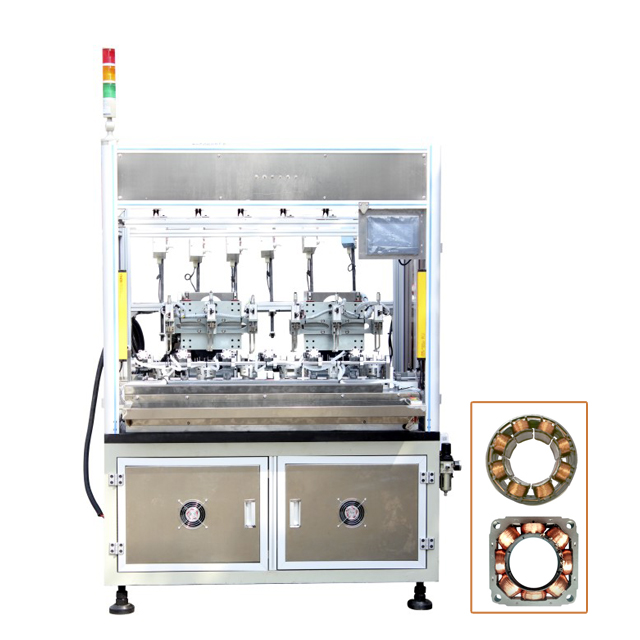
Headquartered in Qishi Town, Dongguan, China—the epicenter of precision mechatronics—we combine 17+ years of dedicated export engineering with world-class component customization.
We do not sell generic off-the-shelf winders. Every wire former, inserting needle plate, and rotor fixture is custom-machined via wire-EDM and CNC center directly from your stator lamination drawings and physical iron samples.
From insulation insertion to automatic coil inserting, two-side lacing, hydraulic head forming, and rotor surface turning—we guarantee identical cycle-time balancing and seamless physical conveyance across all stages.
Our control cabinets are engineered to your plant standard: Siemens, Mitsubishi, Omron, Delta, Panasonic, or Schneider PLC and servo packs, paired with SMC or Airtac pneumatics for effortless local spare parts sourcing.
Before ocean dispatch, every machine runs continuous dry and wet test batches using your supplied wire and laminations. High-definition operating video, tooling documentation, and wear-part packages ship inside every export crate.
Detailed technical clarifications on equipment configurations, tooling tolerances, power specifications, and international project execution.
Connect directly with our senior application engineers in Dongguan. Submit your stator lamination drawings, stack heights, and target cycle times to receive a comprehensive technical proposal and tooling design roadmap within 9 hours.