High-Performance Motor Manufacturing Machinery
Engineered for high slot fill rates, minimal wire tension deviation, and repeatable batch manufacturing across induction motors, ceiling fans, submersible pumps, and BLDC appliances.

HF-R22 Coil Winding Machine Semi Automatic 8 Heads
- Simultaneous 8-spindle batch winding configuration
- Compatible with Fan, Cooler, Pump, and Tool Motors
- Handles enameled copper and aluminum wire

Electric Iron Motor Shaft for Fan, Cooler & Pump Motors
- SC45# low-carbon hardened steel composition
- Cylindrical grinding with high concentricity
- Engineered to minimize air-gap dynamic runout

Fully Automatic Motor Coil Winding Machine (220V Plant Use)
- Programmable multi-axis servo traversal array
- High-speed flyer mechanism with auto-clamping
- Touchscreen HMI with recipe memory storage

Slot Paper Inserting Cutting Machine (1kW 380V/220V)
- Automated edge folding, cutting, and slot push
- Adjustable feed length for varying stack heights
- 1-Year mechanical and electrical warranty
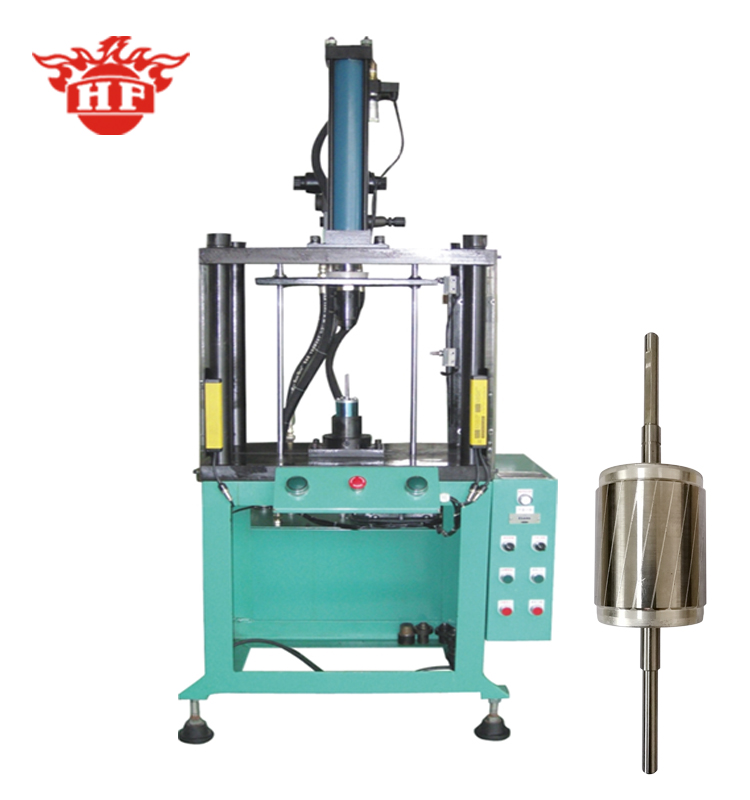
HF-W50 Rotor & Shaft Inserting Hydraulic Press Machine
- Proportional hydraulic pressure force feedback
- Rigid die frame prevents axial shaft deflection
- Interference fit monitoring for quality assurance

HONGFANG HF-D50 Green Insulation Paper Insertion Machine
- Dedicated high-speed cooler stator slot cell insertion
- 1000W 220V energy-efficient drive architecture
- Precision rotary indexing with zero misfeed rates
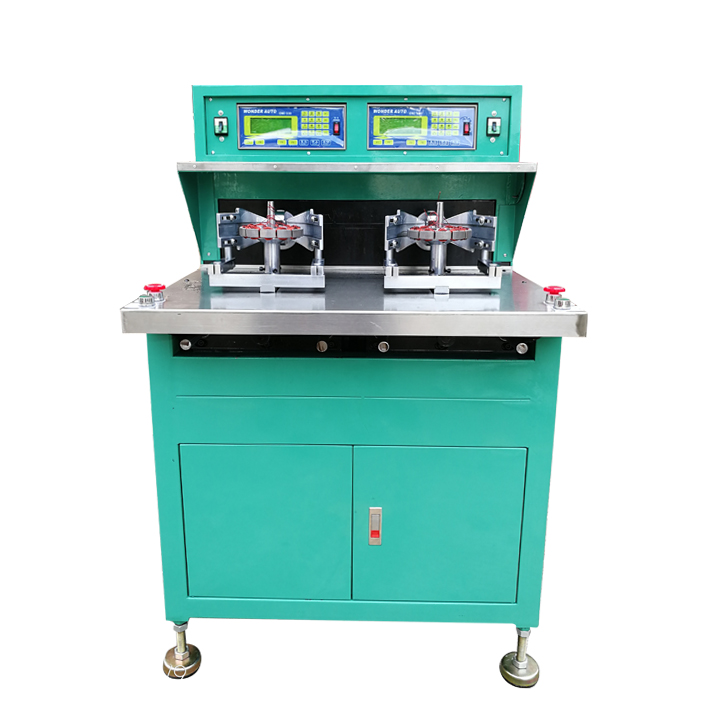
HF 2-Controller 2-Station Ceiling Fan Winding Machine
- Dual independent electronic programmable controllers
- Simultaneous winding of internal/external stator coils
- Heavy-duty structural casting minimizes harmonics

HONGFANG Stator Coil Forming & Shaping Machine (1kW)
- Hydraulic/pneumatic multi-segment end-turn expansion
- Guarantees stator bore clearance prior to rotor insert
- Quick-change modular tooling for rapid changeovers
Precision Coil Winding Kinematics & Slot Fill Physics
Achieving high electrical efficiency (IE3, IE4, and NEMA Premium) begins at the stator winding interface. Understand the engineering parameters that govern high-yield electromagnetic coil manufacturing.
Closed-Loop Tension Control
High-speed winding flyers introduce substantial centrifugal forces on enameled magnet wire. Our machines utilize active closed-loop electromagnetic tensioners that dynamically counteract wire whipping. This eliminates copper wire elongation, keeps conductor cross-sectional resistance within 0.5% tolerance, and protects delicate polyimide or polyamide-imide insulation coatings from micro-fracturing and dielectric breakdown.
Optimized Slot Fill Dynamics
Maximizing the copper slot fill factor (often exceeding 78% in high-efficiency brushless DC and industrial induction motors) requires controlled multi-axis wire layering. Through synchronized CNC servo axes governing spindle rotation, radial traversal, and nozzle yaw, winding coils are laid in structured, dense parallel layers. This minimizes air gaps within the slot, reduces thermal resistance, and elevates magnetic flux density.
Simultaneous Coil & Wedge Insertion
Manual insertion of pre-wound coils into deep lamination slots carries severe risks of mechanical scuffing and copper kinking. Our combined insertion systems compress the coil bundle while simultaneously guiding epoxy-glass or DMD composite slot wedges into position via segmented push guides in a single mechanical stroke, achieving zero winding-to-ground fault rates during subsequent hipot testing.
| Winding Technology Type | Typical Applications | Slot Fill Factor Limit | Kinematic Advantage | Automation Compatibility |
|---|---|---|---|---|
| Spindle / Flyer Winding | Universal motors, ceiling fans, table fans, small pumps | 55% – 68% | High rotational velocity (up to 3,000 RPM), low moving mass | High; ideal for multi-head indexers & conveyor lines |
| Direct Needle Winding | BLDC motor internal stators, automotive actuators, servos | 65% – 78% | Precise tooth-by-tooth placement directly on pole teeth | Fully automated; integrated cut, clamp, and terminal termination |
| Coil Inserting (Push-Transfer) | Medium/heavy industrial AC motors, compressor stators | 70% – 82% | Prevents conductor torsion; handles multi-wire parallel bundles | Coupled with automated wedge forming and feed magazines |
| Hairpin Stator Tooling | Electric Vehicle (EV) traction drives, high-torque industrial | 80% – 88%+ | Rectangular solid copper bars with optimized end-turn space | Robotic insertion, automated CNC 3D twisting, laser welding |
Future Procurement Trends in Coil Winding & Assembly
Global manufacturing mandates are shifting rapidly toward electrification, modular reconfigurability, and predictive factory automation. Forward-thinking procurement teams evaluate machine capital expenditure through the lens of long-term lifecycle flexibility.
Direct-Drive Servo Integration
Legacy mechanical gearboxes, belt pulleys, and mechanical cam link drives are being phased out in modern winder procurements. Direct-drive synchronous servo motors deliver zero-backlash motion profiles, reduce mechanical maintenance intervals, and allow software-based stroke re-profiling in seconds rather than physical re-tooling.
IoT & In-Line Process Telemetry
Plant operators increasingly demand native OPC-UA and MQTT communication protocols. Modern winding lines must stream instantaneous cycle times, real-time winding tension spikes, wire-length consumption, and servo thermals to enterprise MES dashboards for predictive maintenance and ISO 9001 compliance.
Modular Tooling Architecture
To accommodate high-mix, low-to-medium-volume production runs across regional appliance and pump lines, winder buyers prioritize quick-change tooling dies. Segmented coil formers, modular wedge cutters, and self-centering chucks cut setup times from hours to under 20 minutes.
Automated Quality Verification
Modern procurement specifications dictate in-line quality verification before stators proceed down the line. Vision inspection cameras confirm slot wedge presence and proper seating, while built-in four-wire resistance and surge testing stations detect micro-shorts and ground leakage immediately after winding.
Frequently Asked Questions on Coil Winding Procurement
Detailed engineering and commercial answers to help procurement managers, plant directors, and electrical engineers validate equipment specifications before ordering.
What parameters are mandatory for designing custom coil winding and inserting tooling?
To produce matched tooling with zero commissioning delays, our design department requires:
- Detailed 2D/3D technical drawings of the bare stator lamination stack (Outer Diameter, Inner Bore Diameter, Stack Height, and detailed Slot Opening geometry).
- Winding diagram detailing slot pitch (e.g., 1-4, 1-6), turns per coil, number of parallel wires, and nominal wire gauge (AWG or diameter in millimeters).
- Wire material specification (enameled copper or aluminum, thermal class rating, insulation grade).
- Insulation specifications: Slot liner paper material type (DMD, NMN, Nomex), paper thickness, and cuff length requirements.
- Physical stator cores and sample wire spool dispatched to our Dongguan facility for empirical trial testing.
How does the machine manage wire tension when switching between copper and aluminum wire?
Aluminum wire possesses a significantly lower tensile yield strength and higher plastic elongation factor compared to copper. When winding aluminum wire on our machines, we equip the tensioning stations with low-inertia ceramic wire rollers, specialized felt or magnetic hysteresis brakes, and customized tension software profiles. The PLC limits maximum flyer acceleration and deceleration ramps to prevent wire necking, ensuring the conductor diameter remains uniform and preventing hot spots caused by localized cross-sectional narrowing.
Can electrical control components be customized to match our plant's maintenance standards?
Yes. As an authentic OEM/ODM manufacturer, we offer completely open architectural configuration. While our standard machines deploy industrial-grade Mitsubishi, Delta, or Inovance control platforms, we routinely integrate Siemens (S7-1200/1500), Omron, Schneider, or Panasonic PLCs and servo drives based on customer plant standards. Pneumatic subsystems can be configured with SMC, Festo, or Airtac components, ensuring your local maintenance technicians can access replacement parts and interface with familiar diagnostic software.
What is the difference between single-station and multi-station (e.g., 6 or 8 head) winding machines?
The distinction primarily lies in product cycle time and batch output targets. Single or two-station machines (such as our ceiling fan or heavy-duty motor models) are engineered for stators requiring large wire diameters, high slot turn counts, or rapid tooling turnarounds across varying lamination heights. Multi-head machines (such as our HF-R22 8-head system) wind multiple coil sets simultaneously, maximizing output for standardized, high-volume consumer fan, pump, and power-tool production where high hourly throughput is the governing metric.
What steps are taken to prevent enamel wire scratch damage during high-speed insertion?
Wire scratch mitigation relies on our precision tooling surface finishing. All guide blades, push fingers, and transfer magazines are CNC-machined from high-grade alloy tool steel (SKD11/Cr12MoV), followed by vacuum heat treatment to HRC 58-62, sub-micron precision polishing, and Titanium Nitride (TiN) or Hard Chrome coating. This delivers an ultra-low friction coefficient (Ra < 0.2μm). Additionally, insertion speeds are governed by servo-controlled velocity profiles that gently ease the coil bundle through the slot tooth tips without pinch shearing.
What is the typical lifespan, maintenance schedule, and warranty coverage?
All machines carry an international 1-year comprehensive mechanical and electrical warranty. Our equipment is designed for round-the-clock industrial duty with an anticipated operational lifespan exceeding 10–15 years when properly maintained. Daily maintenance involves automated or manual lubrication of linear guide rails and pneumatic oil mist levels. Wearing components—such as cutter blades, wire guide nozzles, and push rods—are supplied in an initial spares kit with replacements readily stocked for express worldwide dispatch.
How does the factory conduct Pre-Shipment Inspection (FAT) for international buyers?
Prior to crating, every machine undergoes a strict Factory Acceptance Test (FAT). We load your supplied stator cores and magnet wire, run a continuous test batch of at least 50–100 cycles to evaluate cycle stability, verify winding turns via digital resistance checks, conduct hipot tests at 1,500V–2,000V for slot dielectric integrity, and generate high-resolution video documentation covering all operations, sensor verifications, and dimension tolerances for buyer sign-off.

Dongguan Industrial Cluster & 17 Years of Engineering Heritage
Headquartered in Qishi Town, Dongguan, Guangdong Province—the world's most concentrated industrial hub for electrical motor manufacturing and precision mold tooling—Zunqi Intelligent Equipment delivers an unmatched ecosystem of manufacturing agility, localized component supply chains, and technical expertise.
- Turnkey Machine Line Compatibility: We design and manufacture the entire stator and rotor value chain—from slot insulation inserting, high-speed coil winding, and simultaneous coil/wedge insertion to intermediate shaping, CNC lacing, final forming, rotor fine turning, and hydraulic shaft pressing. Every machine matches in cycle time and tooling geometry.
- Bespoke Tooling & Fixture Engineering: Tooling is never generic. Our engineering department designs and hardens custom dies tailored directly to your stator slot openings, stack lamination heights, and coil end-turn clearances.
- Strict Export Packaging & Logistics: Every machine is coated with heavy-duty VCI anti-rust oil, wrapped in multi-layer vacuum barrier film, securely bolted to solid structural steel/wood skids, and encased in fumigation-free plywood export crates rated for long-distance maritime freight.
- Direct Technical Lifecycle Support: Work directly with our bilingual application engineers. We offer remote digital commissioning assistance, parameter diagnostic guidance, detailed wiring schematics, and video tutorials for tooling changeovers.
Request a Customized Machine Layout & Tooling Proposal
Send your stator lamination drawings, wire specifications, and target hourly output to our engineering desk. We analyze your manufacturing requirements and provide a detailed line configuration proposal within 9 hours.
Contact Us