1 kW Shaping

Engineered for fractional-horsepower (FHP), industrial induction, BLDC, HVAC pump, and home appliance motors. Every system is built in Dongguan with dedicated multi-axis CNC tooling, PLC control architecture, and rigorous dynamic factory acceptance testing.

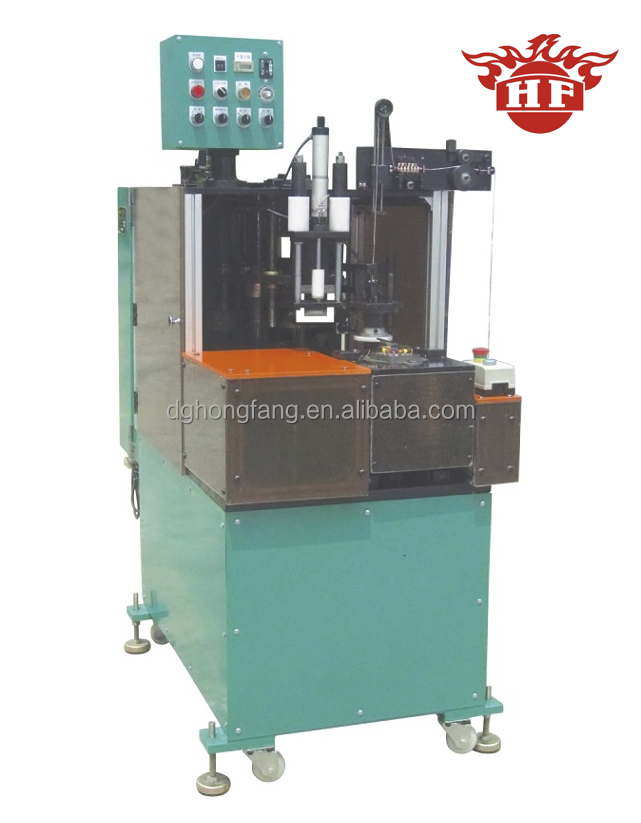
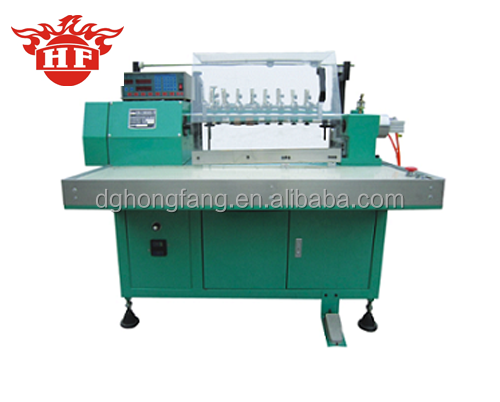




A comprehensive engineering review into the mechanics of automated winding, copper deformation limits, thermal dissipitation modeling, and lean automated cell layouts.
Modern electrical motor efficiency standards (such as IEC 60034-30-1 IE3, IE4, and emerging IE5 super-premium tiers) mandate maximizing copper volume inside stator laminations. While manual coil insertion rarely exceeds a 42% to 48% net slot-fill factor, our CNC multi-head automatic winders paired with synchronized push-blade wedge insertion achieve consistent slot-fill ratios between 58% and 72%. This dramatically minimizes resistive I²R copper losses while preventing enamel scraping via closed-loop micro-tensioning.
Tension fluctuation is the primary cause of wire necking, localized cross-sectional thinning, and insulation degradation. Our factory utilizes multi-stage closed-loop magnetic brake damping combined with digital servo feedback. Even during 3,000 RPM high-speed nozzle oscillation, wire tension is constrained within a precise tolerance of ±1.5 cN, protecting the dielectric integrity of Grade-2 polyamide-imide (PAI) and polyurethane enamelled copper and EC-grade aluminum wires.
Asymmetrical end-turn heights generate non-uniform magnetic leakage reactance and secondary high-frequency spatial harmonics, exacerbating acoustic noise and mechanical motor vibration. Our dual-station intermediate and secondary hydraulic-assisted forming presses reshape coil end overhangs to precise blueprint specifications, reducing end-turn spatial protrusion by up to 35% to ensure optimal stator bore clearance.

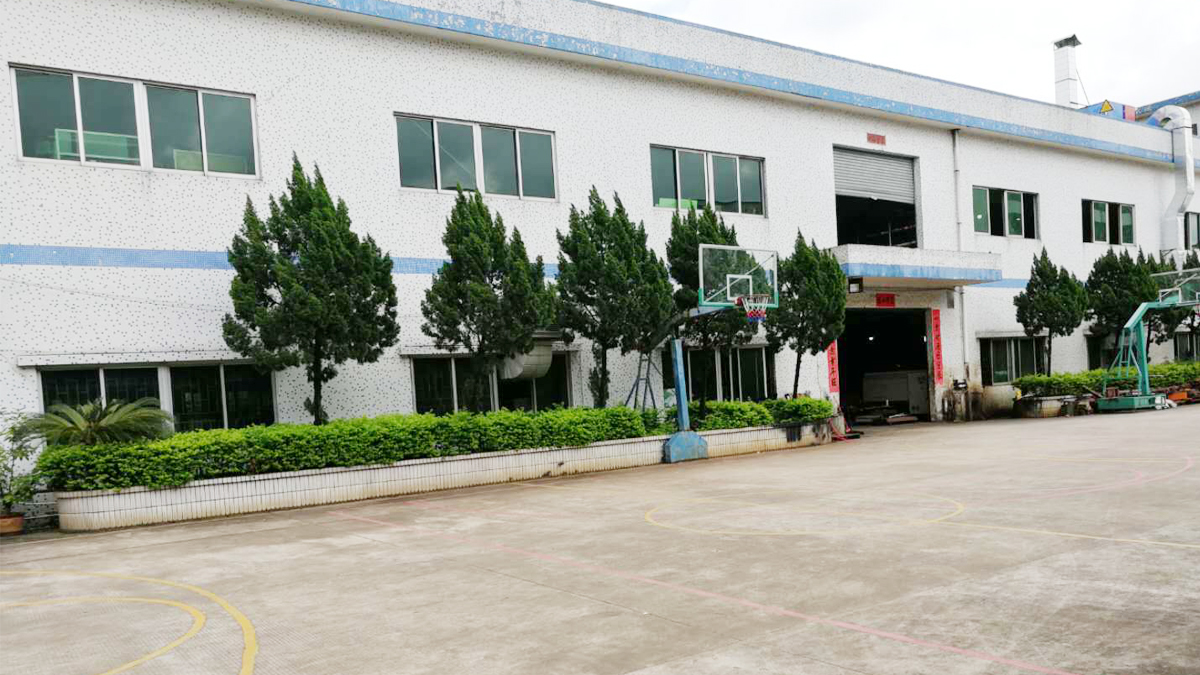
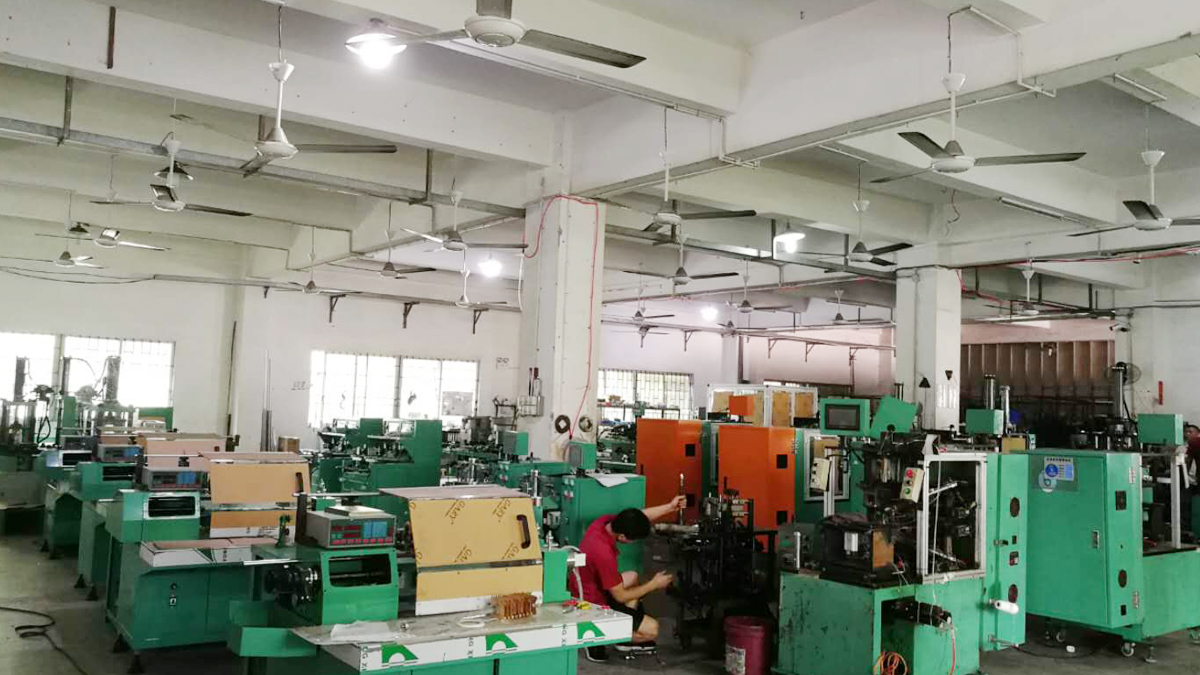
Headquartered in Qishi Town, Dongguan, Guangdong Province—the epicenter of South China's electric machinery and precision manufacturing cluster—our factory spans comprehensive machining, electrical programming, and clean assembly workshops staffed by 51 to 100 industrial automation experts.
Global decarbonization initiatives, the rise of ultra-high-efficiency BLDC/PMSM motors, and escalating copper raw-material costs are redefining plant procurement specifications. Here is what leading factory buyers prioritize over the next decade.
High-mix low-volume (HMLV) electric motor assembly is displacing static mass manufacturing. Procurement directors are favoring machines offering servo-indexed tool quick-couplers. By shifting from traditional 4-hour manual mechanical recalibrations to sub-25-minute digital changeovers via pre-saved PLC parameter recipes, motor factories maximize Overall Equipment Effectiveness (OEE) across multi-SKU runs.
With copper commodities trading at historic premiums, Tier-2 appliance and fan motor manufacturers are re-engineering stators around EC-grade enamelled aluminum wire. Because aluminum exhibits higher brittleness, lower tensile modulus, and rapid work hardening, equipment buyers demand winders featuring active anti-stretch flyer nozzles and ultra-gentle wire path geometry to prevent micro-fracturing of the oxide insulation boundary.
Sourcing standalone winders from disparate vendors creates cycle-time bottlenecks and interface friction between stator insulation, coil inserting, forming, and lacing. Procurement teams increasingly favor single-source OEM/ODM suppliers capable of delivering synchronized production cells where conveyor cycles, tooling pitches, and transfer arms match the takt time of the final assembly cell.
Future-ready automatic winding machines must interface with plant MES platforms through industrial Ethernet (EtherCAT, Profinet, or Modbus-TCP). Procurement specifications increasingly mandate real-time monitoring of winding turns accuracy, lacing thread tension, motor core stack height pressure, and rotor fine-turning OD sensor feedback to prevent defective units from reaching vacuum pressure impregnation (VPI) stages.
Examining mechanical, electrical, and materials engineering evolutions driving the industry toward zero-defect, high-throughput manufacturing.
While mechanical cam-driven flyer heads are constrained by physical inertia and centrifugal backlash at speeds exceeding 2,500 RPM, direct-drive linear motor flyer systems eliminate gear train vibration. This architecture yields higher acceleration rates, cleaner layer crossovers, and sub-micron positioning accuracy, enabling dense precision orthocyclic coil winding on narrow stator teeth.
Next-generation stator coil forming machines integrate expanding internal mandrels with multi-segment peripheral squeeze dies. By applying simultaneous radial and axial pressures, modern forming systems avoid stress concentrations in phase insulation papers, preventing high-potential (Hi-Pot) electrical breakdown at the slot exit corners.
Rotor outer diameter (OD) concentricity directly determines motor magnetic air gap symmetry, torque ripple, and acoustic sound pressure. Our specialized HF-C60 fine turning technology executes automated high-speed surface cutting in a single clamping chuck, holding OD runout tolerances within ±0.005 mm and eliminating costly secondary manual balancing operations.
Clear, direct answers regarding custom tooling specifications, lead times, international electrical compliance, and factory acceptance procedures.
To fabricate bespoke winding heads, inserting blades, wedge guides, and forming molds, our engineering team requires: (1) Stator lamination drawing showing outer diameter (OD), inner diameter (ID), stack height, slot dimensions, and slot opening width; (2) Winding diagram indicating slot count, number of phases, poles, turns per coil, and coil pitch; (3) Wire specification including bare diameter, enamelled outer diameter, copper vs. aluminum grade, and insulation class; (4) Physical stator samples (2–3 pieces) for final bench testing and trial runs prior to shipment.
Yes. Our machines are engineered with adjustable stroke mechanisms and servo-controlled linear axes. If the stator lamination outer/inner diameter and slot count remain identical, stack heights can typically be adjusted across a range of 10 mm to 60 mm (or up to 120 mm on heavy-duty models) directly via digital touchscreen settings and mechanical spacer adjustments in under 15 minutes.
Wire protection is engineered into every contact point: (1) Wire routing utilizes mirror-polished high-purity ceramic eyelets (99% Al²O³) and dynamic bearing pulleys; (2) Flyer winding arms utilize polished tungsten carbide nozzles; (3) Inserting blades are vacuum heat-treated Cr12MoV or SKD11 tool steel with sub-micron polished radiused edges; (4) Synchronized pushers gently guide coils and insulation wedges together, preventing the copper enamel from rubbing across abrasive sharp edges of electrical steel laminations.
Standard machines require 25 to 35 business days for manufacturing and tooling fabrication. Turnkey multi-machine automated lines require 45 to 60 business days. Before export crating, every machine undergoes a strict 72-hour continuous test cycle using your physical stator cores. We record comprehensive 4K video documentation verifying cycle time, slot fill, winding resistance balance, surge test voltage, and Hi-Pot dielectric insulation integrity for your engineering sign-off.
Absolutely. Because we manufacture for international export across North America, Europe, Southeast Asia, South Asia, the Middle East, and Latin America, our electrical cabinets can be custom-wired to your facility's local three-phase or single-phase industrial power supply (e.g., 220V, 380V, 415V, 440V, or 480V at 50Hz or 60Hz). Industrial grade isolated transformers and Schneider circuit breakers ensure long-term electrical safety.
All machinery comes backed by a 1-year full machine warranty covering core components (PLC, servo motors, hydraulic valves, and cylinders). Every machine ships with an export consumable spare parts kit (extra insertion blades, ceramic guides, push rods, belts, and lacing needles). We provide complete English electrical schematics, operation video tutorials, and direct engineer-to-engineer video support with an average response time of under 9 hours.
