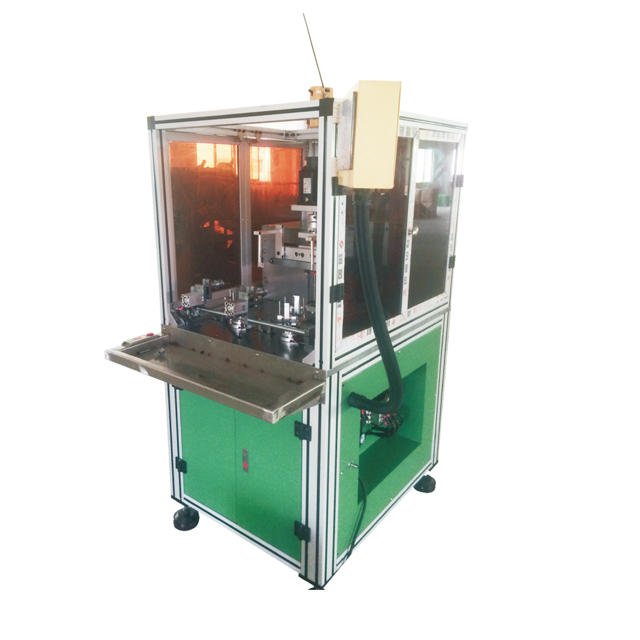
4 Stations Internal Stator Winding Machine
- Multi-station rotary indexing
- PLC digital synchronization
Precision-engineered automated winding, insulation slot inserting, wedge transfer, and rotor finishing solutions tailored to custom stator blueprints.





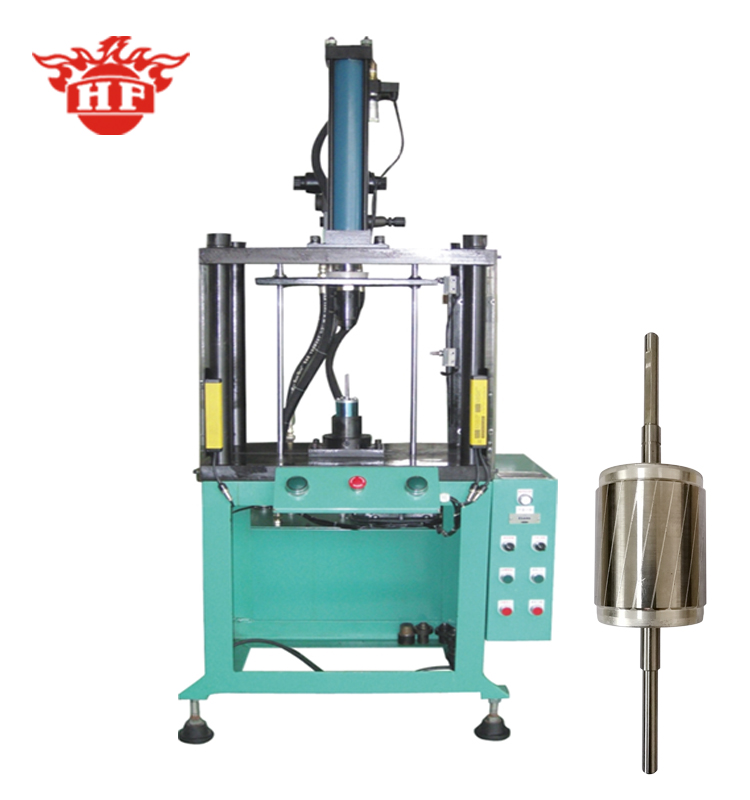

A comprehensive examination of dielectric integrity, slot-cell kinematics, edge-cuffing tolerances, and custom tooling parameters in high-throughput electric motor manufacturing.
In modern industrial electric motors, hermetic compressors, and automotive traction drives, stator slot insulation forms the foundational barrier preventing phase-to-ground and inter-turn electrical breakdowns. An automatic insulation paper inserting machine (also classified under slot cell inserters) operates as an electromechanical bridge between bare laminated electrical steel stacks and magnet wire winding lines. The mechanical cycle encompasses precision roll unwinding, programmable edge-cuffing, precision indexing, guillotine cutoff, dimensional pre-forming, and rapid axial insertion into narrow stator slots.
When selecting a custom OEM motor insulation inserting machine supplier, motor design engineers must evaluate the kinematic behavior of the inserter mechanism under dynamic load. Misalignment during the axial stroke causes microscopic tears or micro-fissures in composite insulation papers—such as DMD (polyester film/polyester fiber non-woven composite), Nomex® aramid papers, NMN laminates, and polyimide (Kapton®) substrates. Such mechanical defects severely reduce Partial Discharge Inception Voltage (PDIV) thresholds and compromise dielectric withstand capabilities under severe variable frequency drive (VFD) switching spikes.
Our OEM custom-engineered inserting machines utilize multi-axis digital servo architectures that manage feed tension with continuous closed-loop feedback. By maintaining constant linear web tension regardless of master coil diameter variations, the feed mechanism eliminates edge stretching, preventing insulation skewing when entering the cuffing die assembly.
The cuffing process forms folded reinforced borders at both axial extremities of the insulation sleeve. These folded edges prevent mechanical shear during subsequent copper magnet wire insertion, especially when automated push-rods or flyer winding arms force conductors into the slot envelope under considerable mechanical pressure. Our precision tooling features tungsten-carbide-coated creasing rollers and high-rigidity guide blades fabricated from vacuum-heat-treated Cr12MoV cold-work tool steel (hardness HRC 60-62), maintaining edge cuff dimensional tolerances within ±0.05 mm across millions of insertion cycles.
Slot profiles vary drastically depending on the motor typology: induction motors frequently use semi-closed narrow-slit slots, brushless DC (BLDC) and permanent magnet synchronous motors (PMSM) often implement trapezoidal or parallel-tooth slots, while ceiling fan stators demand shallow, high-pole-count geometries. Zunqi Intelligent Equipment customizes the complete tooling package—including push-blades, wedge guides, outer formers, and indexing collets—directly from customer lamination CAD files (DWG/DXF/STEP), ensuring a 100% conformal fit that maximizes available slot fill factors.
| Machine Series | Applicable Stator OD / ID | Stack Lamination Height | Insulation Thickness Range | Cycle Time (Per Slot) | Control Architecture |
|---|---|---|---|---|---|
| HF-D50 / High-Speed Compact | OD Φ30 – 160 mm / ID Φ15 – 120 mm | 10 mm – 160 mm | 0.12 – 0.35 mm (DMD/PET) | 0.30 – 0.45 s/slot | PLC + Touch HMI |
| HF-D80 / Heavy-Duty Industrial | OD Φ80 – 280 mm / ID Φ40 – 200 mm | 20 mm – 300 mm | 0.18 – 0.50 mm (Nomex/NMN) | 0.35 – 0.55 s/slot | Dual Servo + PLC |
| HF-S20 / Micro & Appliance Class | OD Φ20 – 90 mm / ID Φ10 – 60 mm | 5 mm – 80 mm | 0.10 – 0.25 mm (Mylar/Nomex) | 0.25 – 0.38 s/slot | High-Speed Stepper/Servo |
| Custom OEM Turnkey Station | Engineered to drawing (EV/Pumps) | Up to 450 mm custom stroke | Multi-layer composites up to 0.6mm | Synchronized to line beat | Siemens / Mitsubishi Option |
How global electrification shifts, high-voltage vehicle architectures, and Industry 4.0 digitization are reshaping capital expenditure decisions for motor assembly machinery.
The shift from 400V to 800V+ EV architectures requires stators to withstand higher voltage surges (dv/dt) without insulation breakdown. Procurement directors are seeking inserting equipment capable of handling thicker, multi-layered Nomex-Kapton films without cracking edge folds or delaminating barrier interfaces.
High-mix low-volume motor plants require rapid Single-Minute Exchange of Die (SMED) capabilities. Forward-looking procurement mandates modular tooling cartridges where lamination stack height, cuff length, and slot count parameter changes occur via HMI recipes within 15 minutes, cutting changeover downtime by 70%.
Tier-1 automotive component manufacturing requires 100% traceability. Modern automated inserters incorporate piezo-electric force transducers into the push-rod assembly to detect pinched slot cells in real time, stopping cycle completion before wire coils undergo irreversible damage during winding.
Moving beyond conventional mechanical linkage machines to multi-axis synchronized mechatronic insertion platforms.
Early-generation slot paper inserters relied heavily on complex mechanical Geneva drives, mechanical bevel gears, and eccentric cam rockers to synchronize index spacing with cutting strokes. While mechanically robust, these legacy systems suffered from progressive mechanical backlash, severe wear on sliding linkages, and lengthy retooling requirements whenever slot pitches or stack lengths altered. A change in slot geometry often required ground-up cam redesigns and days of manual hand-fitting.
Zunqi Intelligent Equipment's modern insulation inserting platforms utilize direct-drive rotary servo motors coupled to precision planetary gearheads with zero backlash (arcmin ≤3). By decoupling paper feeding, cuff folding, shearing, and stator bore indexing into programmable servo axes, stroke distances and cuff dimensions are modified entirely through digital touchscreen parameters. When handling skewed stator laminations (standard in submersible pump and HVAC blower motors to mitigate cogging torque), the servo indexer executes micro-angle compensation dynamically during the axial push stroke, completely preventing paper crinkling.
Furthermore, our cutting units feature progressive scissor-guillotine shearing blades with continuous auto-lubrication. This prevents fibrous edge burrs on composite DMD or Nomex materials, eliminating loose insulation dust that could contaminate cleanroom assembly lines or degrade high-vacuum hermetic compressor systems.
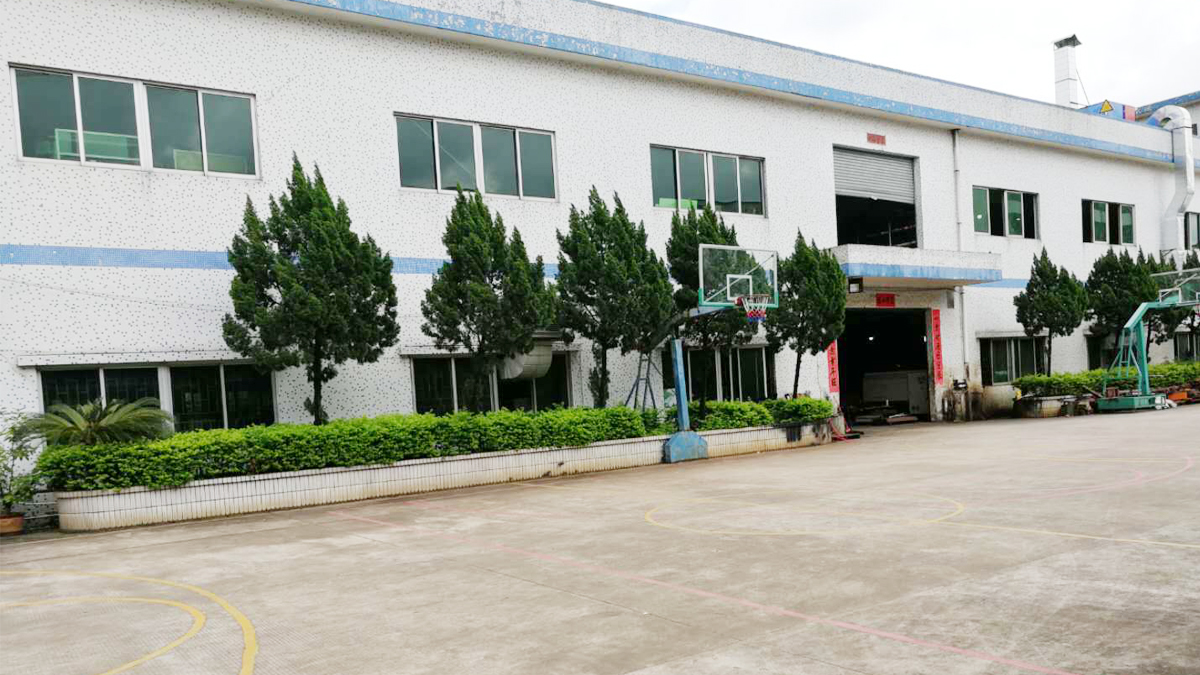
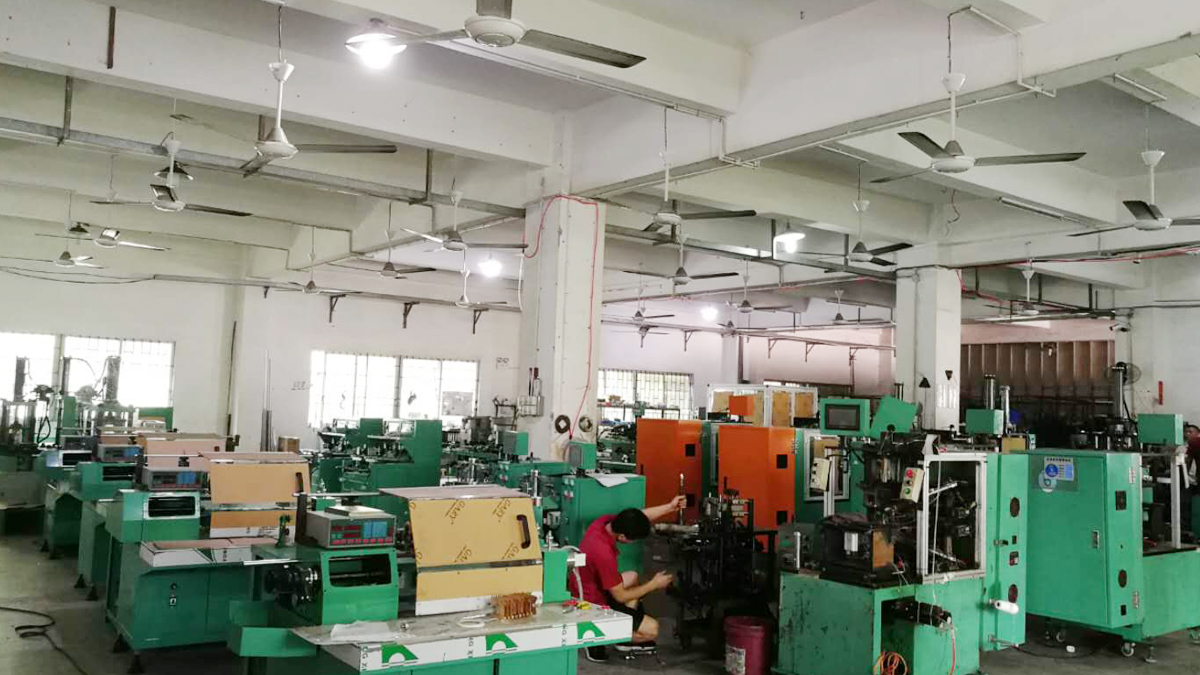
Headquartered in Qishi Town, Dongguan, Guangdong Province—the world's most concentrated precision industrial motor and appliance manufacturing hub—Zunqi Intelligent Equipment Co., Ltd. has delivered factory-direct motor production machinery to global markets for over 17 years.

In-depth technical and commercial answers addressing common engineering concerns when commissioning custom slot insulation machinery.
To fabricate matched tooling without dimensional deviation, please provide your stator lamination drawing or STEP 3D CAD model displaying: Stator Outer Diameter (OD), Inner Bore Diameter (ID), Stack Lamination Height, Slot Count, Slot Mouth Opening Width, Slot Cross-Section Profile, and Skew Angle (if applicable). Sending 2–3 un-wound stator stack samples allows us to conduct physical test runs and verify cuff retention before machinery delivery.
Yes. Our servo-driven platforms accommodate adjustable stack heights electronically via touchscreen inputs without changing mechanical parts, provided the stator outer profile and slot geometry remain identical. For different stator IDs or tooth geometries, rapid modular tooling changeover sets (including push-rod, outer guide blade, and indexing locator) are swapped within 15–20 minutes.
Our guillotine cutters and feed assemblies handle DMD (Dacron-Mylar-Dacron), NMN (Nomex-Mylar-Nomex), pure Nomex® aramid papers (such as Nomex 410), polyester (PET/Mylar) films, polyimide (Kapton®), and vulcanized red fiber composite papers ranging in thickness from 0.10 mm up to 0.50 mm. Heavy Nomex or thick film options receive specialized carbide-treated blade edges.
Our standard MOQ is 1 set for all standalone machinery (insulation inserting, coil winding, lacing, forming, rotor turning, shaft press). Typical manufacturing lead time for standard models is 20–30 business days. Custom OEM tooling tailored to complex stator geometries typically requires 30–45 business days including full trial run validation.
We configure our power transformers and servo drive systems to match your plant's domestic utility supply: 220V Single-Phase (50Hz/60Hz), 380V Three-Phase (50Hz/60Hz), 415V, 440V, or 480V industrial grid standards. Simply specify your target factory voltage and frequency during technical inquiry review.
All machines carry a 1-year comprehensive factory warranty covering non-consumable mechanical and electrical parts. We offer detailed English manuals, electrical schematic diagrams, and high-definition step-by-step video guidance for initial commissioning. In addition, our senior application engineers provide remote live video support within 9 hours of inquiry receipt, and on-site field engineering is available for complete turnkey line projects.
Send your stator blueprint, lamination height, and production cycle targets to our engineering specialists in Dongguan. We provide custom machine recommendations, cycle-time calculations, and tooling quotes within 9 hours.
