Precision Shafts

Good Quality Electric Iron Motor Shaft for Household Table Fan Cooler Pump Motors
- Grade: SC45# / Low Carbon Steel
- Heat Treated Bearing Journals
- Concentricity: ≤0.005mm
Engineered for precision slot-filling ratios, minimum copper elongation, and rapid changeover. Every station is manufactured to custom stator specifications in our Dongguan facility.


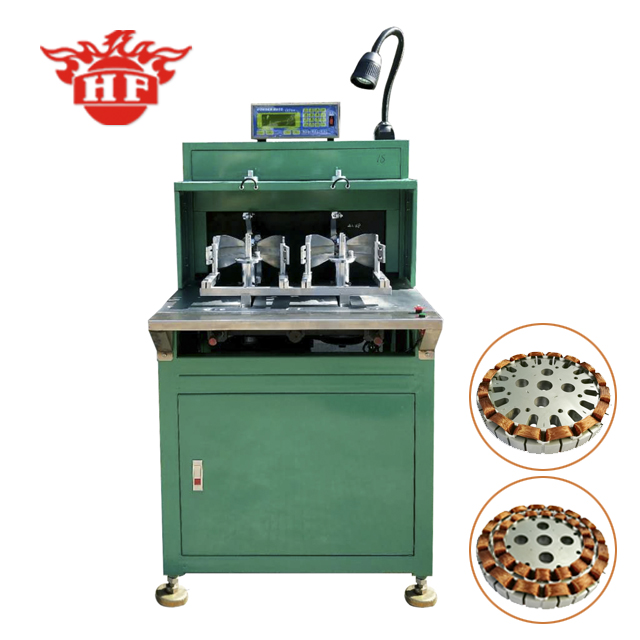




The global electric motor manufacturing sector is experiencing an unprecedented paradigm shift driven by stringent decarbonization targets, statutory energy performance standards (IEC 60034-30-1 class IE4 super-premium and IE5 ultra-premium efficiency), and the accelerated proliferation of brushless DC (BLDC) and permanent magnet synchronous motors (PMSM). Motor engineering executives and plant managers can no longer rely on conventional, manual-intensive winding lines. Sourcing strategies are actively evolving from isolated standalone machinery procurement toward digitally integrated, turnkey stator fabrication cells.
As electric motor architectures diverge into specialized niches—ranging from fractional-horsepower residential fan motors and commercial hermetic compressor pumps to industrial servo drives—procurement specialists must navigate critical engineering vectors:
Next-generation inverter-duty motors demand optimal slot-fill percentages. Our automated coil & wedge inserting machines simultaneously advance pre-formed wire bundles and composite slot liners into micro-dimensioned tooth openings without enamel scraping or dielectric degradation.
Mechanical spring friction discs are obsolete. Leading plants insist on multi-axis closed-loop electronic servo tensioning that stabilizes copper elongation within <1.0%, virtually eliminating internal mechanical stress, coil hot-spots, and inter-turn short circuits.
Instead of rigid transfer lines, international buyers prefer modular cells combining semi-automatic winders, high-speed wedge inserters, and servo lacing stations. This structure allows rapid product reconfiguration across different core stack heights and lamination profiles.
Furthermore, the choice between copper (Cu) and enamelled aluminum (Al) magnet wire continues to impact machinery tooling configurations. Aluminum's lower tensile strength and pronounced ductility demand ultra-polished ceramic eyelets, hardened alloy guiding needles, and non-impact pneumatic transfers to safeguard the outer insulation film during the drawing, fly-winding, and wedge-ramming phases.
Fabricating an electric motor stator from bare magnetic steel laminations to an impregnated, hermetically verified core requires an unbroken sequence of specialized operations. Misalignment in any preliminary operation directly cascades into winding flaws, excessive phase-to-phase discharge, or rotor bore friction.
| Operation Stage | Primary Machine Unit | Critical Engineering Parameters | Quality Risk Prevented |
|---|---|---|---|
| 1. Slot Insulation | HF-D50 Automatic Paper Inserter | Crease cuff width, edge fold tolerance ±0.2mm, cycle rate ≤0.5s/slot | Ground wall insulation puncture; high-voltage flashover |
| 2. Magnet Wire Winding | HF-LO2-6G Multi-Station Winder | Wire diameter 0.10–1.20mm, turn count accuracy: exact integer | Phase imbalance; winding resistance asymmetry; motor hum |
| 3. Coil & Wedge Insertion | Automatic Wedge & Coil Inserter | Simultaneous stroke, pusher rod clearance, wedge retention lip | Wire shearing; damaged slot teeth; popped coil turns |
| 4. Intermediate Forming | Hydraulic 3D Expanding Former | Radial expansion diameter, axial overhang clearance limit | End-turn interference with end-shield bearing hubs |
| 5. End-Turn Lacing | HF-BS20 Servo Double-Side Lacer | Cord tension 15–45N, stitch mode (continuous, skip, slot-by-slot) | Harmonic vibration coil abrasion; transit wire displacement |
| 6. Final Forming | Hydraulic Coil Sizing Machine | Final ID/OD concentricity calibration to stator lamination stack | Rotor insertion interference; uneven thermal dissipation |
| 7. Rotor OD Finishing | HF-C60 Precision Turning Lathe | Runout tolerance ≤0.008mm, surface roughness Ra ≤1.6μm | Uneven magnetic air gap; acoustic vibration; cogging torque |
| 8. Shaft Press-Fitting | Hydraulic Shaft Inserting Press | Tonnage feedback, displacement monitoring, journal coaxiality | Rotor stack lamination flaring; shaft runout; bearing failure |
By implementing a standardized line architecture where every winder, inserter, former, and lacing unit originates from a single manufacturing partner, motor plants eliminate the complex integration friction typical of multi-vendor assemblies. Machine cycle times are synchronized to eliminate bottlenecks, while tooling interfaces adhere to modular quick-release standards.
Located in Qishi Town, Dongguan—the epicenter of South China’s motor engineering and precision manufacturing ecosystem—Zunqi Intelligent Equipment delivers field-proven industrial automation backed by 17+ years of international trade reliability.
Continuous onsite-verified supplier on Alibaba.com. Hundreds of running installations across South Asia, the Middle East, Europe, and the Americas.
Forming mandrels, winding flywheels, and insertion guide fingers CNC-machined from hardened Cr12MoV tool steel precisely tailored to your stator CAD drawings.
Fully configurable control panels running Siemens, Mitsubishi, Panasonic, Delta, or Omron PLC and servo systems with multinational electrical safety certification.
We never ship untested equipment. Every customer sends physical stator laminations and wire samples for full load qualification and video sign-off prior to crating.
Direct technical answers addressing lead times, voltage compatibility, tooling interchangeability, and international field commissioning.
Consult directly with our Dongguan application engineering team. Forward your stator core drawings, wire gauge criteria, and target cycle times to obtain an optimized machinery configuration and transparent commercial quotation within 9 hours.
