Engineered Cooler & Stator Assembly Machinery
From single-cell semi-automated workstations to high-throughput multi-station production cells, explore our core line built with PLC intelligence, servo-driven kinematics, and customized slot tooling.
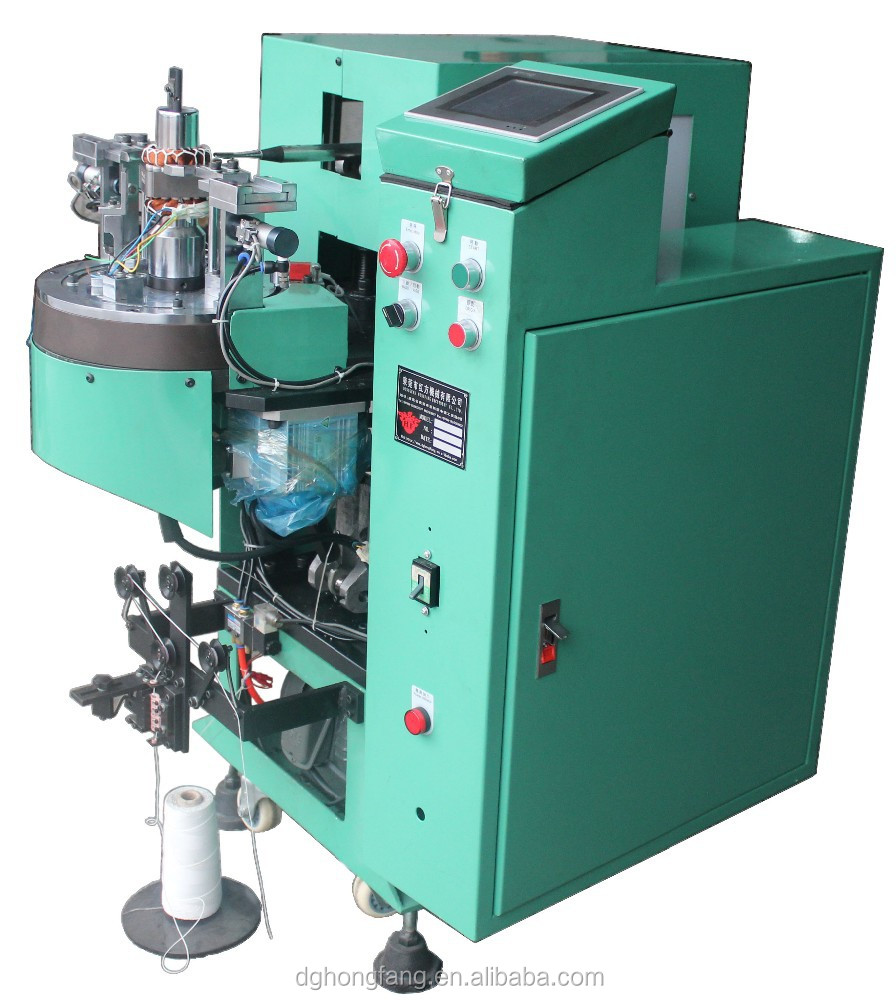
- Power: 1000W | Dual Voltage 380V/220V
- High-tension lock-stitch binding mechanism
- Ideal for table fans & evaporative cooler heads
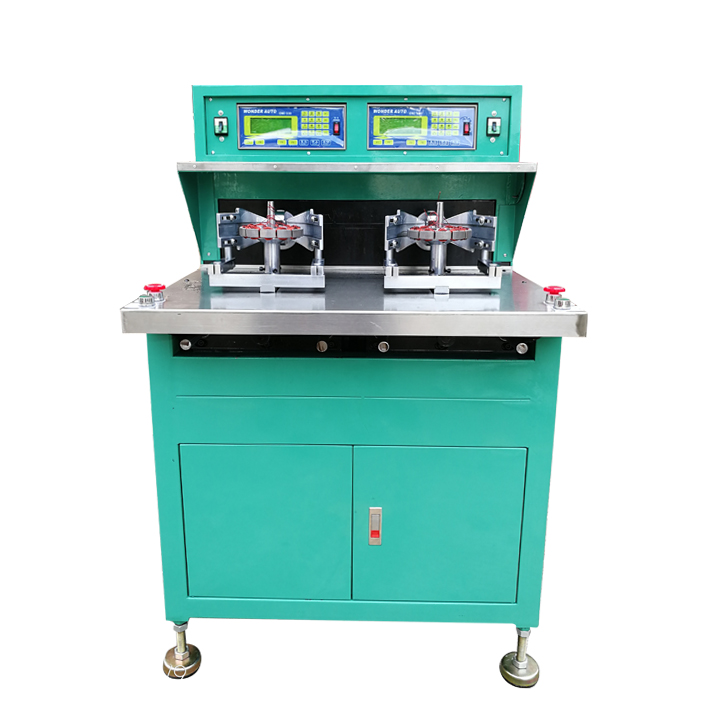
- Dual-controller independent speed indexing
- Robust 1 kW 220V PLC drive platform
- 1-Year structural & electronic warranty
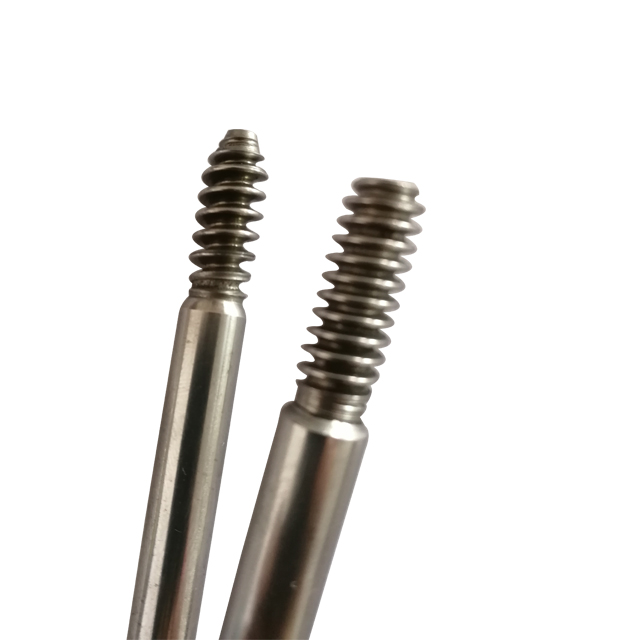
- Precision ground SC45 carbon steel
- Strict concentricity & micro-finish tolerance
- Engineered for sub-fractional water pumps
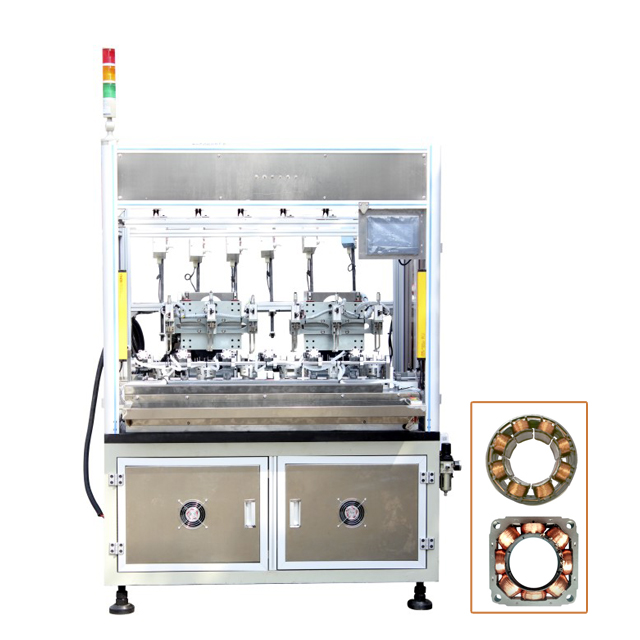
- 6-Station simultaneous rotary indexing
- Internal needle fly-winding kinematics
- Ideal for high-efficiency BLDC cooler designs
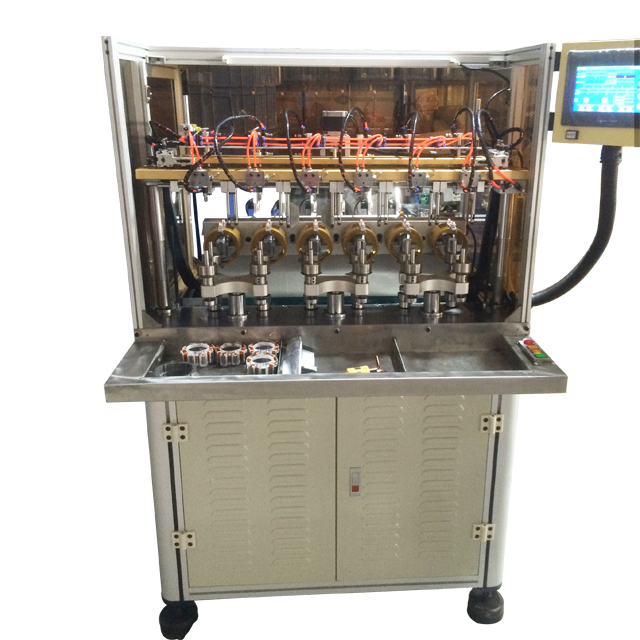
- Automated gear transmission mechanism
- High-torque outer stator winding capacity
- Integrated pneumatic wire tensioners
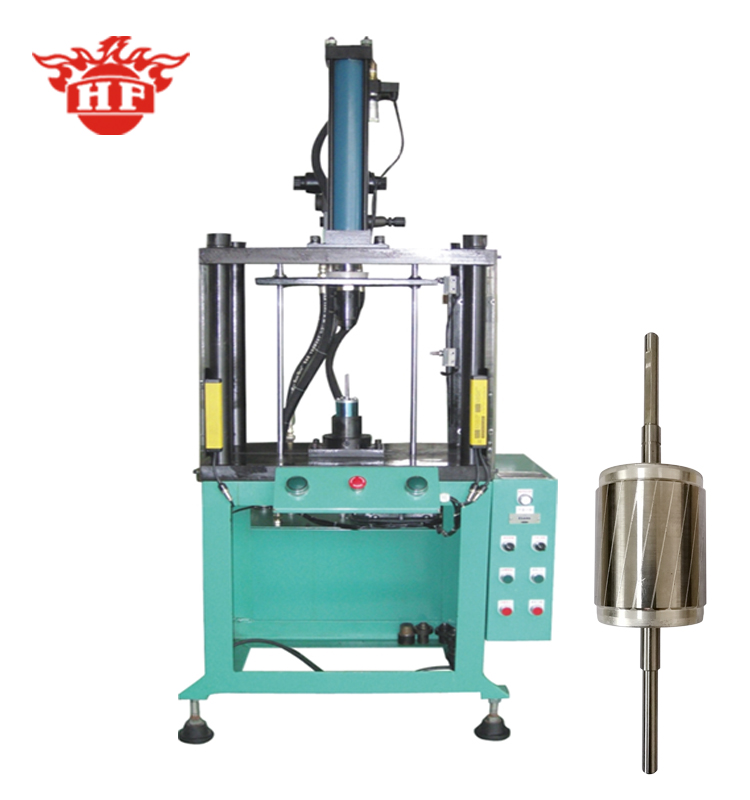
- Closed-loop hydraulic force control
- Zero-damage bearing journal insertion
- Standard HF-W50 modular tooling platform
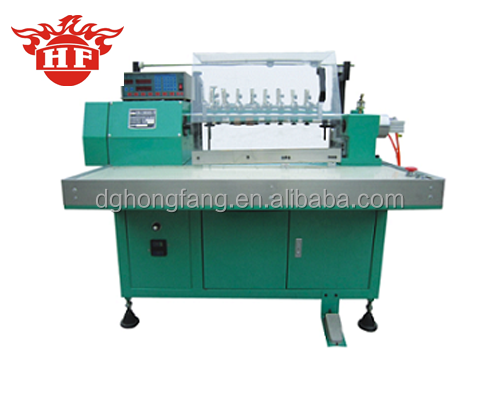
- Automated wire arraying, hooking, & cutting
- Copper & aluminium enameled wire ready
- Rapid tooling changeover for multi-model lines
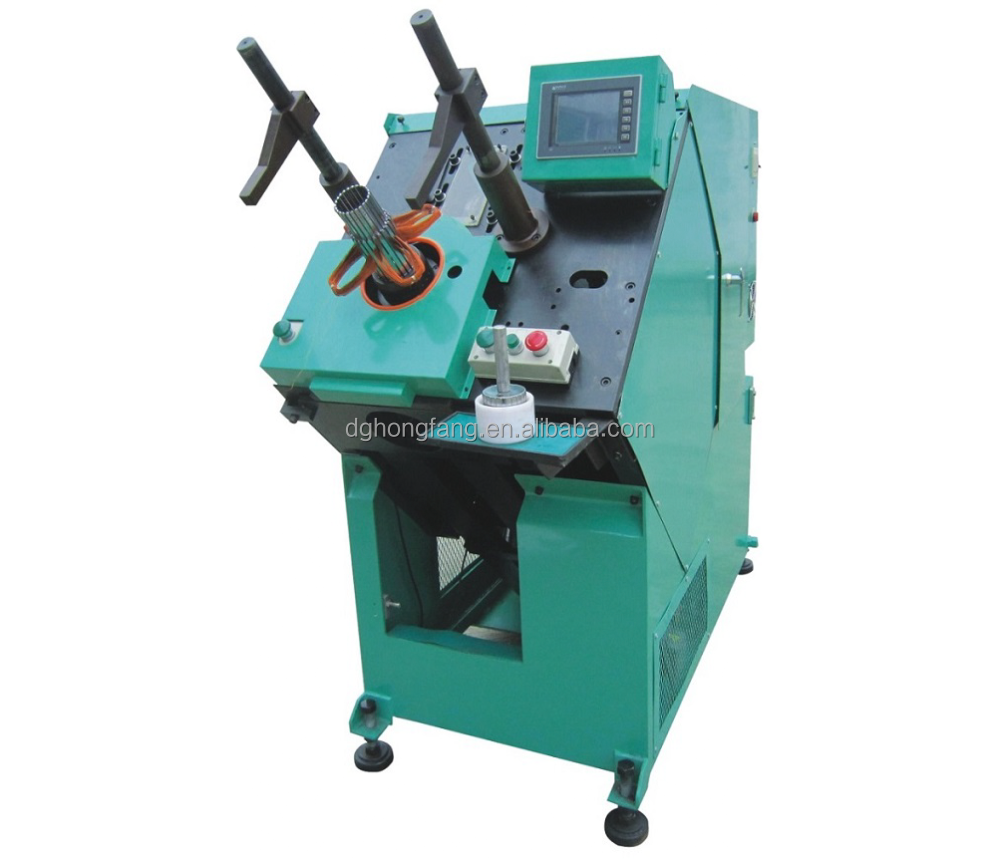
- Simultaneous coil & insulation wedge insertion
- Dual-servo high-torque mechanical fingers
- Protects slot liner integrity in 1 stroke
1. Kinematic Precision & Electromechanical Challenges in Cooler Motor Stators
In modern industrial and domestic evaporative air coolers, the electric motor serves as the uninterrupted thermodynamic driver. Whether operating under shaded-pole, permanent split capacitor (PSC), or contemporary brushless direct current (BLDC/EC) topologies, cooler motor stators face extreme operating environments. These motors encounter high relative humidity, constant ambient temperature fluctuations, and extended duty cycles. Consequently, the manufacturing integrity of the stator winding process dictates not only electrical efficiency (IE3, IE4, or BLDC standards) but also the motor's mean time between failures (MTBF).
From an electromechanical perspective, conventional open-slot or semi-closed slot cooler stators require extreme tension precision during high-speed coil insertion and winding. Manual or under-damped mechanical flyer systems frequently introduce micro-fissures in the wire insulation enamel (polyurethane or polyester-imide coatings). These microscopic pinholes degrade rapidly under moist air-cooler environments, leading to inter-turn short circuits, ground insulation punctures, and catastrophic coil burnouts. As a specialized OEM manufacturer and global exporter, our automated cooler motor winding platforms integrate closed-loop electronic active tensioners, synchronized servo-driven lead screw indexers, and CNC-profiled wire guides to ensure consistent electromagnetic density without stressing the conductor's dielectric boundary.
Engineering Core Note: Controlling the dynamic wire elongation under 1.5% while achieving a slot fill factor above 75% requires real-time closed-loop tension compensation during high-speed flyer reversals. Our multi-station winders utilize micro-actuated servo tensioners to eliminate transient peak forces during acceleration profiles exceeding 3,000 RPM.
2. Comparative Architecture: Semi-Automated vs. Fully Integrated CNC Cells
Tier-1 cooler motor manufacturers must balance capital expenditure (CapEx) against operational availability, changeover flexibility, and total yield rates. Below is a granular technical comparison between standard legacy winding equipment, modern standalone multi-station machines, and fully automated servo-synchronized turnkey cells.
| Technical Metric / Process | Standard Semi-Automatic (Legacy) | Zunqi High-Speed CNC Multi-Station | Fully Integrated Turnkey Servo Line |
|---|---|---|---|
| Slot Fill Factor Capability | 55% – 62% | 68% – 76% | Up to 82% (Servo-Guided) |
| Enamel Wire Compatibility | Copper Only (0.25 – 0.90 mm) | Copper & Aluminium (0.10 – 1.20 mm) | Cu, Al, & Specialized Alloys |
| Tension Control Modality | Friction Disk (Passive Mechanical) | Magnetic Powder / Pneumatic Regulated | Closed-Loop Active Servo Compensation |
| Lacing & Tying Cycle Time | Manual Stitching (45–60 s/pc) | Single/Double Automatic (12–18 s/pc) | Synchronized In-Line Cell (< 9 s/pc) |
| Dielectric Fault Rate (< 2.5 kV) | 1.2% – 2.8% Average | < 0.15% (Strict Tooling Radius) | < 0.02% (Zero-Scratch Needle Path) |
| Operator Requirement (per 1,000 units/shift) | 4–6 Dedicated Operators | 1–2 Setup Technicians | 1 Supervisory Line Engineer |
Future Procurement Trends in Cooler Motor Manufacturing
Global motor buyers, industrial procurement executives, and plant managers are fundamentally adapting their manufacturing infrastructure to meet rising sustainability goals, volatile raw material costs, and smart industrial automation.
1. The Accelerating Shift from AC Induction to BLDC/EC
Global minimum energy performance standards (MEPS) are phasing out low-efficiency shaded-pole cooler motors in favor of 3-phase BLDC and Permanent Magnet Synchronous Motors (PMSM). Procurement teams are prioritizing concentrated winding machines capable of internal multi-station needle winding for segmented or inner stators.
2. Enamelled Aluminium Wire Substitution
Due to raw copper price volatility, cooler motor OEMs are migrating up to 60% of domestic cooling fan lines to polyurethane-coated aluminium magnet wire. This demands winding equipment with ultra-smooth ceramic guides, gentle deceleration profiles, and precision anti-snap wire paths to overcome aluminium's lower tensile strength.
3. Single-Minute Exchange of Die (SMED) Tooling
Modern assembly plants run seasonal product shifts (table fans, desert coolers, portable swamp coolers, ceiling units) on single lines. Modular tooling jigs, rapid magnetic lock plates, and saved recipe programs on HMI touchscreens reduce changeover duration from 4 hours down to under 15 minutes.
4. IIoT-Connected OEE Traceability & Vision QC
Procurement directors increasingly demand integrated Industry 4.0 data gateways. Modern machines capture wire consumption, cycle deviations, winding resistance variances, and integrate post-winding CCD cameras to check slot wedge alignment before transferring parts to final coil lacing.
Why Tier-1 Motor Makers Partner With Zunqi Equipment
Located in the heart of China's advanced manufacturing center—Dongguan—we combine 17 years of verified direct export authority with bespoke electromechanical machine tooling tailored to your exact motor stator drawings.
Tailored Tooling to Stator Geometry
We do not sell rigid standard machines. Coil winding formers, inserting blades, wedge guides, and lacing cams are customized in-house using CNC machining to match your precise stack height, lamination slot depth, and wire gauge.
Turnkey Line Synchronization
From initial slot insulation paper inserting to winding, simultaneous coil & wedge inserting, end-turn forming, dual-side lock-stitch lacing, and rotor shaft press fitting—every machine's takt time is balanced to eliminate line bottlenecks.
Configurable Industrial Automation
We configure electrical cabinets to match your maintenance team's preferred PLC and drive ecosystem—offering Siemens, Mitsubishi, Panasonic, Delta, Inovance, and SMC pneumatics for seamless local parts procurement.
Rigorous Pre-Shipment SAT Protocol
Prior to crating, your physical stator lamination samples are tested on our assembly floor. We record uninterrupted multi-angle running test videos showing real-time cycle times, slot fill uniformity, and electrical surge verification before dispatch.
Frequently Asked Technical & Operational Questions
Direct engineering answers addressing stator geometry, electrical compliance, tooling lead times, and global on-site commissioning.
What specific stator technical parameters are required to build customized winding tooling? +
Can your automated winding and inserting machines handle enamelled aluminium magnet wire without breakage? +
What is the minimum order quantity (MOQ) and production lead time for customized machines? +
How are machines packaged for long-distance ocean shipping, humidity, and customs clearance? +
What warranty, technical documentation, and international field service do you provide? +
Can the control cabinet accommodate our plant's 380V/415V 3-phase or 110V/220V 1-phase electrical grid? +
Request a Technical Proposal & Stator Tooling Review
Accelerate your cooler and fan motor output with custom-built OEM winding machinery. Speak with our chief automation engineers today for a free tooling evaluation and line capacity layout.
