Featured Motor Stator & Rotor Production Machines
Precision-engineered machine modules designed for electric fan motors, submersible water pumps, industrial air compressors, and high-dynamic servo drives. Every unit features tailored tooling matching customer-specific stator laminations.

New HF Fan Motor Rotor Turning & Casting Machine with PLC and Pump Core Components Aluminum Surface Cutting
- High-precision external diameter finishing
- Air gap concentricity tolerance ≤0.015mm
- Integrated core coolant & chip recovery

HONGFANG Motor Stator Coil Forming & Shaping Machine for Manufacturing Plant New 1 Year Warranty 1 kW
- Hydraulic/pneumatic dual expansion mandrels
- Pre-lacing and final end-turn sizing
- Zero copper stretch & enamel scuffing

Electric Motor Spares SC45# Low Carbon Steel Iron Fan Motor Shaft Machining Components for Household Use
- Hardened SC45# structural steel grade
- Centerless grinding with Ra 0.4 finish
- Custom press-fit knurling & keyways
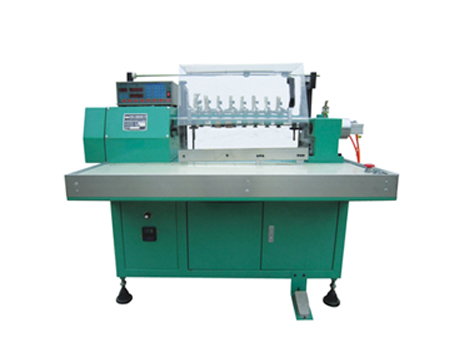
Electrical Motor Stator Coil Winding Machine for Cooler Motor
- High-speed flyer mechanism & auto-skip
- Optimized for desert cooler motor sizes
- Precise tension control reduces resistance bias

Automatic Servo System Stator Coil and Wedge Inserting Machine
- Dual-servo simultaneous coil & wedge feed
- Programmable thrust profile avoids wire pinch
- Cycle time ≤14-18s per full stator load

HF-R22 Coil Winding Machine Semi Automatic Coil Making Machine 8 Heads for Fan Motor Cooler Motor Pump Motor Power Tool Motor
- Eight-spindle parallel batch production
- Quick-swap tooling formers for pumps/tools
- Digital micro-controller turn counting

New Fully Automatic Motor Coil Winding Machine High Quality Coil Maker for Manufacturing Plant Use 220V
- Single-phase 220V convenient plant hookup
- Touch HMI with parameter recipe library
- Automatic wire nipping and tension damping

HF-R40-2C New Automatic Ceiling Fan Motor Coil Winding Machine with 1 Year Warranty Two Station for Stator
- Dual station alternating high throughput
- Compatible with copper & aluminum wire
- Rigid cast iron base dampens vibration
Engineering Principles of Modern Motor Stator Coil & Wedge Insertion
An authoritative technical analysis of stator coil insertion kinematics, electromagnetic design requirements, slot fill optimization, and high-yield manufacturing controls.
In electric motor manufacturing, the stator coil and slot wedge insertion stage represents the critical intersection where mechanical automation directly determines electromagnetic efficiency and electrical insulation integrity. A motor coil inserting machine—often designated as a coil and wedge inserter or stator winding insertion equipment—must simultaneously force pre-wound copper or aluminum phase groups through narrow stator slot openings while forming, cutting, and driving rigid insulation wedges (DMD, Nomex, or polyester film) over the conductors to lock them permanently into the lamination stack.
Achieving stable high-speed insertion without peeling magnet wire enamel or puncturing slot liners requires rigorous mechanical synchronization. Modern Chinese industrial machinery has evolved from traditional hydraulic or pneumatic mechanisms to multi-axis servo-synchronized kinematic architectures. In these modern systems, one servo motor governs the linear insertion blades (pushing the magnet wire coils into the laminations), a second servo synchronizes the wedge pushers, and an independent high-torque stepper or servo executes precise wedge paper feeding, indexing, and rotary magazine position alignment.
Key Engineering Metric: Modern high-efficiency motors (IEC IE3, IE4, IE5 and NEMA Premium Efficiency) demand stator copper slot fill factors exceeding 75% to 82%. At these fill densities, clearance between conductors and tooth tips approaches nominal limits. Multi-axis servo insertion systems eliminate the violent impulse shocks of pneumatic systems, maintaining constant linear velocity and dynamically regulating thrust to prevent mechanical pinch points and copper strand deformation.
The insertion tooling assembly operates under tremendous frictional forces. Standard commercial tools quickly suffer galling and micro-welding when processing heavy-gauge magnet wire. Premier manufacturers utilize SKD11, DC53, or Cr12MoV vacuum heat-treated tool steels hardened to HRC 60-62, supplemented with PVD (Physical Vapor Deposition) Titanium Carbon Nitride (TiCN) coatings. The guide blades maintain an ultra-tight radial clearance—typically within ±0.008 mm—relative to the stator bore, ensuring that wire bundles slide smoothly along the slot tooth walls without migrating beneath the blade edges or compromising ground insulation barriers.
The Complete 8-Stage Turnkey Stator Manufacturing Sequence
How coil insertion integrates within our matched automated production cell.
Slot Insulation
Automatic feeder cuts, creases, and pushes insulating paper into all stator slots in a single indexing pass.
Coil Winding
Multi-spindle flyer or internal winders form phase groups with strict tension regulation to prevent enamel stretch.
Coil & Wedge Insertion
Servo blades drive phase bundles and slot closing wedges concurrently into the lamination stack bore.
Mid-Point Forming
Expansion dies flare and press end windings outward, clearing the central bore diameter for lacing access.
Stator Coil Lacing
Servo needles lace end coils on single or dual sides with tensioned cords to secure against operational vibration.
Final Dimension Forming
Precision hydraulic/pneumatic dies calibrate total end-turn envelope height and outer diameter tolerances.
Rotor Fine Turning
High-speed diamond or carbide tooling skims the outer diameter of the die-cast rotor to guarantee air gap concentricity.
Shaft Press-Fitting
Controlled tonnage presses SC45# steel shafts into the rotor core with linear transducer displacement monitoring.
Future Procurement Trends for Motor Coil Inserting Machines
Navigating the industrial shift toward BLDC architectures, high slot fill mandates, and Industry 4.0 production data analytics.
1. Proliferation of BLDC & PMSM Stators
The global phase-out of inefficient shaded-pole and PSC motors has accelerated demand for Brushless DC (BLDC) and Permanent Magnet Synchronous Motors (PMSM). Modern coil inserting machines now feature modular transfer magazines capable of handling concentrated fractional-slot windings, segmented stators, and skewed slot geometries without requiring entirely dedicated machine chassis.
2. Extreme Slot Fill Demands (>80%)
To comply with Tier-1 energy efficiency standards (IE4 and IE5), motor designers must pack more conductor mass into smaller iron footprints. Coil inserters are engineered with compound wedge profiles, ultra-thin guide fingers, and adaptive closed-loop torque sensing that halts pusher advancement if anomalous wire cross-over forces are detected, preventing scrap.
3. Rapid Tooling Changeover (≤15 Mins)
High-mix, low-volume production paradigms across HVAC, appliance, and automotive sub-tier suppliers render lengthy changeover times obsolete. Future-ready inserting machines incorporate quick-release clamping systems, pre-calibrated cartridge blade arrays, and automatic recipe loading where stroke lengths and indexing angles configure automatically via the HMI.
Technical Evolution: Legacy Mechanical vs. Modern Servo Insertion Technology
Comparative engineering breakdown showing structural performance gains across critical operating metrics.
| Performance Characteristic | Legacy Hydraulic / Pneumatic Units | Modern Dual-Servo Inserting Systems (Zunqi Standard) | Operational Impact on Factory Floor |
|---|---|---|---|
| Insertion Stroke Control | Fixed mechanical stops; abrupt deceleration profiles | Programmable multi-speed servo curves with S-ramp smoothing | Eliminates conductor impact shock and wire scuffing |
| Max Achievable Slot Fill | Limited to 65% – 70% to prevent blade jamming | Routinely delivers 78% – 85% conductor density | Enables IE4/IE5 super-premium motor compliance |
| Slot Wedge Preparation | Mechanical linkage cutting with knife edge wear | Rotary or linear servo-driven cutting and pre-creasing | Consistent wedge length (±0.2mm); zero wedge buckling |
| Wire Insulation Damage Risk | Moderate to High; surge test failure rate ~1.5% | Near Zero; surge test failure rate typically <0.05% | Reduces factory scrap and post-impregnation breakdown |
| Noise & Energy Footprint | Continuous hydraulic pump hum (>82 dBA); high idle power | Quiet electric servos (<72 dBA); power consumed only on stroke | Clean, energy-efficient workshop environment |
Why Motor Manufacturers Worldwide Partner With Us
Situated at No.2 Dongshan Yongchang Road, Qishi Town, Dongguan, Guangdong, China, our specialized plant combines 17 years of direct international export with the engineering agility of South China's leading precision hardware cluster.
Tooling Customized to Your Stator Sample
We do not sell rigid standard machines. Your stator slot drawings, physical lamination samples, wire gauge, and stack heights directly govern the machining of insertion blades, push fingers, and wedge guides.
Full Line Mechanical Matching
From paper insertion and flyer winding to coil inserting, intermediate forming, lacing, and rotor surface turning, our equipment shares identical lamination centerlines and compatible cycle times for seamless line synchronization.
Standard Global Components
Machine control cabinets are equipped with internationally recognized industrial brands: Siemens, Mitsubishi, Omron, Panasonic, Schneider, Delta, SMC, and Airtac, ensuring hassle-free long-term parts availability in your home market.
Pre-Shipment Trial Run & Video Sign-off
Before dispatch, your machine undergoes rigorous trial runs in our Dongguan testing facility using your actual stator laminations and magnet wire. You review high-definition operational video verification before crate closing.
Standard Hardware Configurations Built Around Global Reliability
Frequently Asked Questions for Equipment Buyers
Detailed answers prepared by our senior mechanical and electrical tooling engineers to streamline your procurement specifications.
What parameters are required to generate an accurate tooling quotation? +
To fabricate bespoke insertion tooling, we require: (1) 2D/3D stator lamination drawings showing internal bore diameter (ID), outer diameter (OD), and slot opening dimensions; (2) Stator lamination stack height range (min/max mm); (3) Magnet wire specification (single or multi-strand, enameled copper or aluminum diameter); (4) Winding diagram including turns per coil and coil grouping; and (5) Wedge paper material and thickness (e.g., 0.18mm - 0.35mm DMD, polyester, or Nomex). Sending physical stator cores guarantees 100% tooling fit.
Can a single coil inserting machine handle stators with different stack heights? +
Yes. If the stator lamination internal diameter (ID) and slot profile remain identical, changes in stack height (e.g., from 15mm to 45mm for different motor power ratings) are accommodated by adjusting the servo stroke parameters in the touch-screen HMI and quickly adjusting the wedge feed guide length. If the internal diameter or slot count changes, an interchangeable tooling magazine (blades, pusher, wedge guide) must be swapped.
How does the machine prevent enamel abrasion during insertion of aluminum wire? +
Enameled aluminum wire exhibits lower tensile yield strength and higher elongation sensitivity than copper, making it vulnerable to necking and surface peeling. Our inserting machines utilize highly polished guide blades (mirror-lapped to Ra ≤ 0.2 μm) with generous radiused lead-ins. Furthermore, the servo drive employs a decelerated velocity curve as the wire bundle enters the slot throat, reducing frictional drag and eliminating conductor stress.
What slot wedge materials and feed systems are supported? +
Our machines process rolled continuous insulation materials, including DMD (Dacron-Mylar-Dacron), Nomex, pure polyester film (PET), and vulcanized electrical pressboard. The automated wedge box automatically draws the strip from the roll, cuts it to the designated stack height plus cuff overhang allowance, forms it into a rigid U or inverted-omega profile, and transfers it to the pusher magazine ready for simultaneous insertion with the coil group.
What electrical power supply and pneumatic pressures are required on-site? +
Standard machines are configured for single-phase 220V 50Hz/60Hz or three-phase 380V/415V/480V depending on motor and drive configuration. We customize transformer and electrical cabinet specs to match your national utility standard. The pneumatic auxiliary system requires clean, dried industrial compressed air at 0.5 to 0.7 MPa (5 to 7 bar) with an approximate air consumption rate of 0.2 to 0.4 m³/min.
What warranty, wearing parts, and remote technical support are provided? +
All whole-machine systems carry a comprehensive 1-year factory warranty. Each unit ships with an essential spare parts kit (spare insertion blades, push fingers, wedge cutoff knives, springs, and pneumatic seals). We provide complete English electrical schematics, PLC ladder documentation, video setup guides, and direct remote engineering assistance via video call. Our average technical support turnaround is within 9 hours.
Ready to Optimize Your Stator Assembly Line?
Submit your stator drawings, stack heights, and target hourly production output. Our Dongguan engineering team will review your specifications and furnish a custom tooling plan and quotation within 9 hours.
