Precision Stator Manufacturing & Insertion Machinery
Explore precision-engineered stator winding, automatic coil & wedge inserting, lacing, and rotor processing systems configured directly from Dongguan's premier manufacturing base.

Automatic Semi Automatic Coil Winding Machine for Fan Motor Stator Copper/Aluminum Wire Single Phase 220V 0.1-1.2mm Wire
View Specifications
HF-R22 Coil Winding Machine Semi Automatic Coil Making Machine 8 Heads for Fan Motor Cooler Motor Pump Motor Power Tool Motor
View Specifications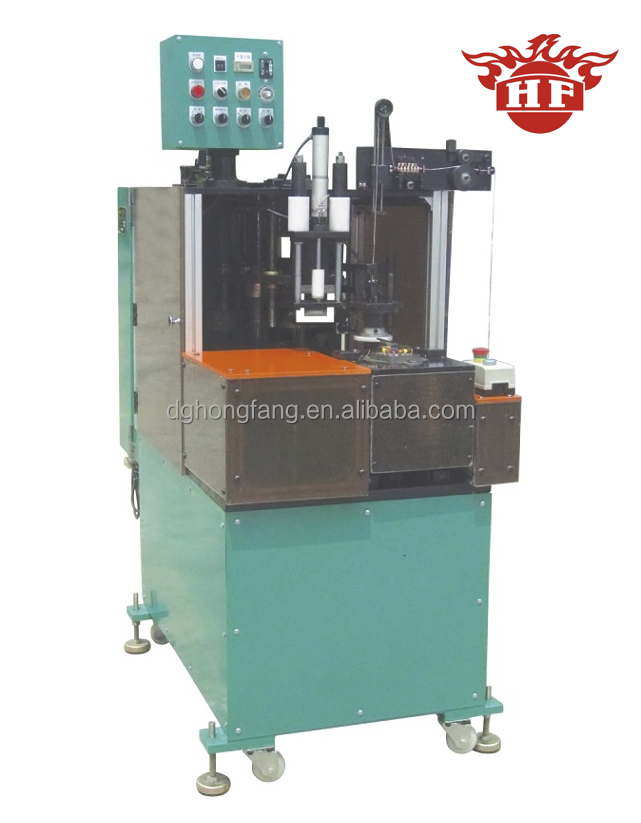
HF-BS20 Servo Type Automatic Coil Double Side Lacing Machine for Fan Motor 1000W 220V
View Specifications
HF-R40-2C New Automatic Ceiling Fan Motor Coil Winding Machine with 1 Year Warranty Two Station for Stator
View Specifications
HF-W120H HONGFANG Electric Motor Stator Coil Final Forming Second Shaping Machine for Manufacturing Plant New 1 Year Gear
View Specifications
New HF Fan Motor Rotor Turning & Casting Machine with PLC and Pump Core Components Aluminum Surface Cutting
View Specifications
New Hydraulic Pressure Ceiling Fan Motor Stator Shaft Inserting Press Machine Gear-Driven Operation 1 Year Manufacturing Plant
View Specifications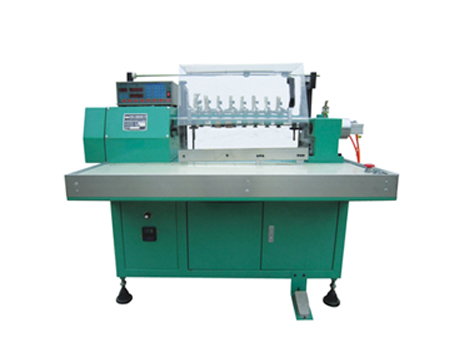
Electrical Motor Stator Coil Winding Machine for Cooler Motor
View SpecificationsKinematics & Mechanics of Modern Stator Coil & Wedge Insertion
Analyzing the precision synchronization between wedge feed guides, blade magazines, and multi-axis servo pushers in high-density electric motor stator lamination cores.
Single-Stroke Simultaneous Transfer
Stator coil insertion is widely recognized by electrical manufacturing engineers as the most mechanically demanding step in electric motor manufacturing lines. Modern automatic insertion systems utilize a specialized blade magazine tooling set. Copper or aluminum wire coils are positioned around guiding blades while slot insulation wedges (Nomex, DMD, or polyester film) are formed, cut, and propelled through dedicated guide rails. A centralized pusher rod drives both coil bundles and insulation wedges into the semi-closed stator slots simultaneously, eliminating secondary operations and preventing slot liner tear.
Slot Fill Factor Optimization (>78%)
As global energy efficiency standards (IE3, IE4, and upcoming IE5 ecodesign directives) demand tighter electrical packing, slot fill factors have scaled from traditional 65% up to 75%–82%. Achieving this density without scraping the enamel insulation coat requires micron-level ground insertion fingers, precision-engineered Cr12MoV or tungsten carbide guide tooling hardened to HRC 60–62, and gradual taper geometry. Controlled pushing velocities prevent mechanical stress build-up in magnet wire turns, drastically reducing inter-turn short circuits.
Copper vs. Aluminum Tension Dynamics
With volatile raw material prices, motor factories worldwide increasingly convert ceiling fan, air cooler, and sub-fractional horsepower pump motors to aluminum magnet wire. However, aluminum has lower tensile strength and higher elongation sensitivity compared to electrolytic copper. Premium Chinese stator equipment incorporates closed-loop servo tension controllers, specialized polished ceramic eyelets, and customized blade spacing matrices that prevent wire stretching, notch weakening, and impedance asymmetry during insertion.
Industrial Stator Coil Insertion Machinery Specifications
Comparison across operational configurations: Semi-Automatic vs. Full Servo High-Speed vs. Complete Turnkey Cell integration.
| Performance Metric / Feature | Semi-Automatic Wedge & Inserter | Full-Servo High-Speed Inserter | Turnkey Automated Stator Cell |
|---|---|---|---|
| Primary Target Applications | Ceiling fan, desk fan, cooler motors | HVAC compressors, industrial pumps, washing motors | EV auxiliary motors, servo motors, premium pumps |
| Stator Outer Diameter (OD) | Φ40 mm – Φ160 mm | Φ50 mm – Φ220 mm | Φ30 mm – Φ260 mm (Configurable) |
| Stack Height Capacity | 10 mm – 100 mm | 15 mm – 180 mm | 10 mm – 250 mm |
| Insertion Cycle Time | 18 – 28 sec / stator | 12 – 18 sec / stator | 10 – 15 sec / continuous station |
| Max Slot Fill Factor | Up to 72% | Up to 80% | Up to 82% ± 1% |
| Drive Architecture | Pneumatic + Geared Motor Assist | Dual or Triple Servo Axis (Wedge/Push/Index) | Multi-Axis Synchronized Servo + Robotics |
| Tooling Changeover Time | 45 – 60 minutes | 20 – 30 minutes (Quick-lock blades) | 15 – 25 minutes (Modular tooling blocks) |
| Enamel Coating Scraping Rate | < 0.15% | < 0.05% | < 0.02% (Real-time force sensing) |
Strategic Sourcing & Technological Trends in Coil Insertion
Key engineering shifts shaping factory capital expenditure and equipment selection across the global motor manufacturing industry.
1. Full Servo Closed-Loop Force Monitoring
Traditional pneumatic-hydraulic mechanical pusher arms apply unmonitored force profiles, leading to blade damage or hidden wire gouging if a coil catches. The emerging industry standard relies on high-resolution servo load-cell feedback. If the pushing resistance exceeds calculated thresholds by even 5%, the stroke instantly decelerates or retracts, preserving tooling integrity and preventing costly coil scrap.
2. Hybrid Compatibility with Copper & Aluminum
Global procurement teams demand machinery capable of quick transitions between enameled copper and aluminum magnet wires without complete replacement of the inserting magazine. Adaptive tooling profiles with diamond-like carbon (DLC) coatings and programmable multi-slope acceleration curves are eliminating wire snap hazards in aluminum winding runs.
3. Modular Tooling for High-Mix Small-Batch Runs
Motor manufacturing is moving away from dedicated lines producing millions of identical units toward flexible automation cells handling 5 to 15 stator variants weekly. Stator insertion machines now incorporate digitized calibration settings on HMI panels, toolless quick-release magazine couplings, and pre-indexed wedge forming cassettes that cut changeover from hours to under 25 minutes.
Why Global Motor Manufacturers Source from Zunqi Intelligent Equipment
Headquartered in Qishi Town, Dongguan, Guangdong, Zunqi leverages 17+ years of international machinery export expertise, engineering customization, and rigorous quality inspection.
Custom Tooling to Sample
Every stator core features unique slot tooth profiles, stack heights, and opening widths. Our dedicated CNC wire-cutting and precision grinding shop manufactures custom blade magazines, wedge guides, and pushers explicitly matched to customer stator laminations and wire schedules.
Pre-Shipment Trial Verification
We do not dispatch equipment based on theoretical drawings alone. International clients ship physical stator cores and magnet wire directly to our Dongguan facility. We perform exhaustive full-speed winding, insertion, and lacing trial runs, delivering high-definition video acceptance data prior to crating.
Tier-1 Electrical Architecture
To ensure frictionless maintenance abroad, electrical cabinets are engineered around globally available industrial automation platforms: Siemens, Mitsubishi, Omron, Delta, Panasonic, or Inovance PLCs and servos, paired with SMC or Airtac pneumatics and Schneider switchgear.
End-to-End Production Matching
Beyond individual insertion machines, Zunqi delivers harmonious line balance across all steps: slot paper insulation inserting, multi-head coil winding, simultaneous coil & wedge inserting, intermediate forming, double-sided servo lacing, final hydraulic shaping, rotor turning, and shaft pressing.
The 8-Stage Motor Stator Production Ecosystem
Ensuring synchronized cycle times and mechanical tooling coherence from bare lamination stack to fully balanced rotor-shaft assembly.
| Stage | Manufacturing Operation | Core Equipment Utilized | Critical Quality Control Factor |
|---|---|---|---|
| Stage 01 | Slot Liner Insulation | Automatic Insulation Paper Inserting Machine | Cuff folding integrity, paper extension symmetry, zero slot exposure |
| Stage 02 | Magnet Coil Winding | Multi-Head Semi/Full-Auto Coil Winding Machine | Accurate turn counts, uniform layer tension, zero wire crossovers |
| Stage 03 | Coil & Wedge Insertion | Automatic Stator Wedge & Coil Inserting Machine | Zero enamel scuffing, full wedge retention, balanced phase seating |
| Stage 04 | Intermediate Coil Shaping | Motor Stator Coil First-Stage Forming Machine | Flaring end-turns away from bore clearance for lacing needle transit |
| Stage 05 | End-Turn Binding | Double-Side Servo Stator Coil Lacing Machine | Uniform cord knot tension, tight coil bundle consolidation, phase separation |
| Stage 06 | Final Dimensional Shaping | Final Hydraulic Stator Coil Forming Machine | Precision outer diameter and height limits to fit motor end-bell housing |
| Stage 07 | Rotor Outer Diameter Finishing | Rotor Fine Turning & Surface Cutting Lathe | Concentricity control, tight air-gap tolerance, smooth surface finish |
| Stage 08 | Shaft Interference Assembly | Hydraulic Stator & Rotor Shaft Press Machine | Calibrated axial press tonnage, runout verification, bearing seat protection |
Frequently Asked Questions for Stator Machinery Buyers
Authoritative technical answers to common queries regarding tooling changeovers, electrical configurations, factory inspection, and operational lifespans.
Ready to Automate or Upgrade Your Stator Insertion Line?
Submit your stator core drawings (OD, ID, stack height, and slot configuration) along with your wire diameter specifications. Our technical engineering desk will analyze your parameters and return a customized machinery and tooling proposal within 9 hours.
Contact Us