Featured Motor Rotor & Stator Automated Equipment
Engineered to eliminate electromagnetic micro-defects, increase slot fill factor, and maintain micron-level concentricity across high-volume fractional and integral horsepower motor manufacturing.

Stator Winding Machine 2 Station Outernal Winding Machine outer winding for Transformer Motor
Specialized flyer outer winding machinery optimized for BLDC exterior stators, stepping motors, and transformer coils with synchronized dual stations.
- Dual-station simultaneous winding
- Closed-loop magnetic tensioner
- Programmable multi-axis CNC index
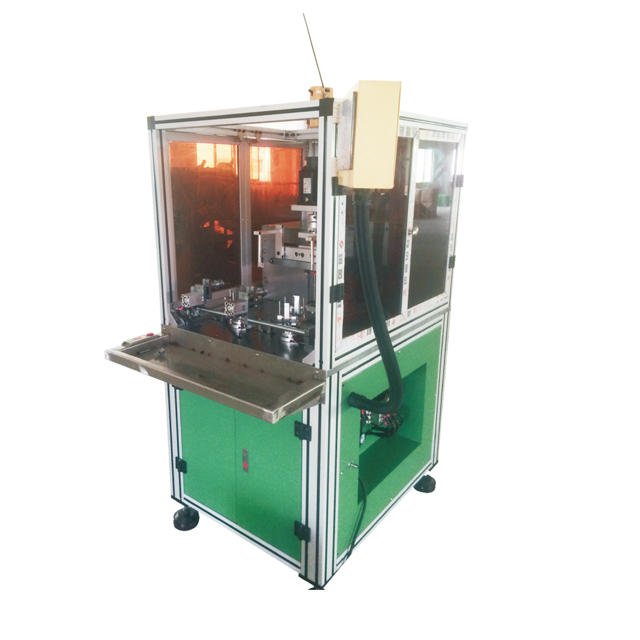
4 stations internal Stator Winding Machine
High-speed needle winding system engineered for high-density multi-pole interior stators, offering precise wire layering and minimal copper stretch.
- 4-station high-throughput index
- Direct needle nozzle wire guidance
- 0.15mm – 1.0mm wire handling

HF Single Side Lacing Machine for Table Fan Motor Stator Coil 1000W 380V/220V
Automated end-turn binder delivering uniform slot lacing, tension stability, and tight knotting to endure centrifugal forces in fan and blower motors.
- Dual voltage (380V / 220V) drive
- High-speed slot-by-slot stitch
- Configurable stitch skip capability
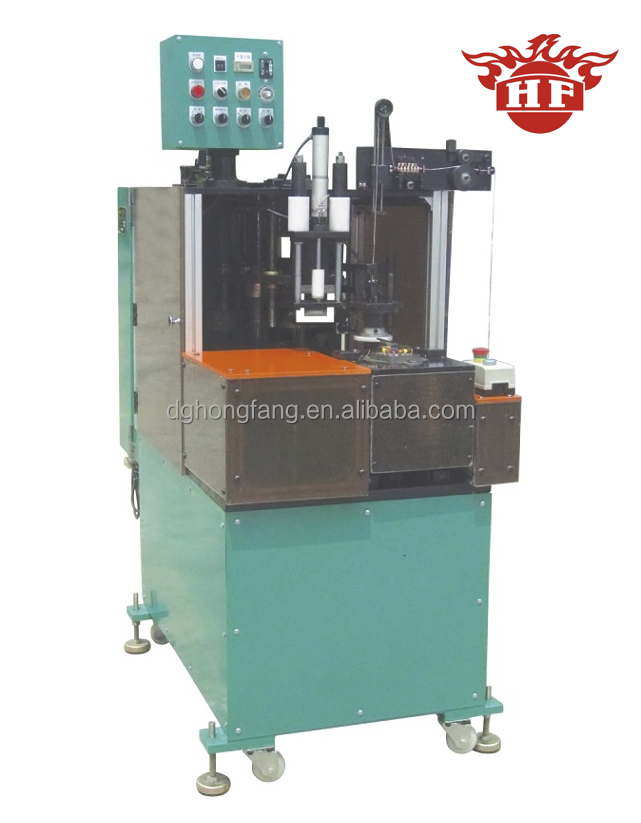
HF-BS20 Servo Type Automatic Coil Double Side Lacing Machine for Fan Motor 1000W 220V
Synchronous double-side lacing system with multi-axis servo coordination, ensuring symmetrical coil compression and flawless outer envelope profiles.
- Dual-side simultaneous binding
- Servo-controlled lacing needle
- Integrated auto-trimming mechanism
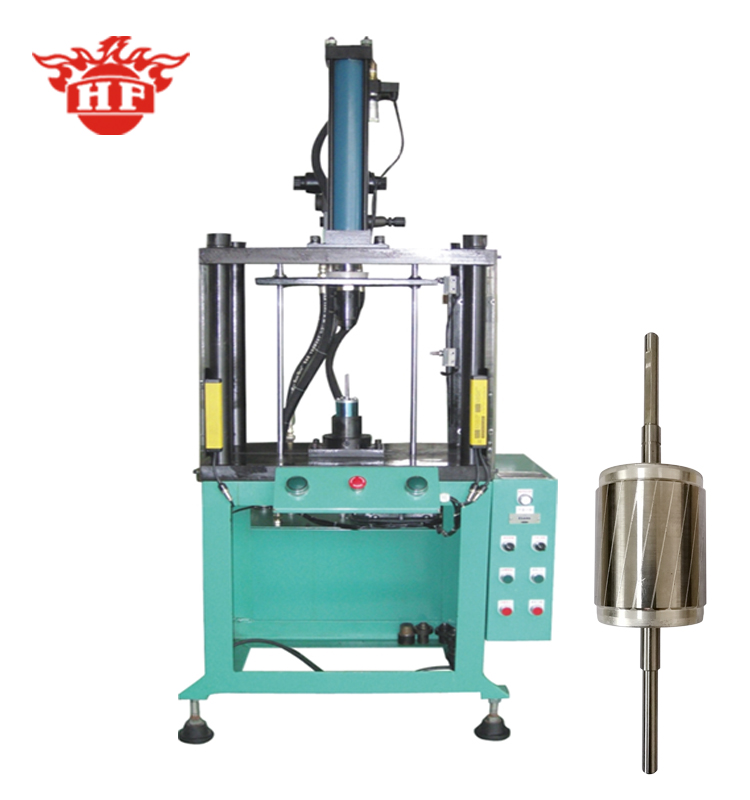
New Rotor and Shaft Inserting Hydraulic Press Machine for Manufacturing Plant 1 Year Warranty HF-W50
Proportional hydraulic press equipped with displacement encoders and load-cell monitoring, preventing rotor lamination buckling during shaft insertion.
- Closed-loop force/displacement curve
- Preserves bearing journal finish
- 1-Year Comprehensive Warranty

Hot Sale Fan Motor Rotor Rough Turning & Surface Cutting Machine with Engine Gear PLC Core Components
Heavy-duty rough skimming lathe engineered to strip cast aluminum sprue gates and calibrate rotor stack outer diameter with high material removal rates.
- Rigid cast iron vibration-damped bed
- Industrial PLC core sequencer
- Rapid pneumatic chucking system

Automatic Rotor Fine Turning & Surface Cutting Machine HF-C60 with PLC Motor Pump-1 Year Warranty
High-precision diamond-tool finishing lathe designed to eliminate rotor lamination smearing, minimizing core eddy-current losses and acoustic resonance.
- Sub-micron concentricity precision
- Integrated flood coolant pump
- Prevents silicon steel short-circuiting

HF-R40-2G Automatic Ceiling Fan Stator Winding Machine Two Controllers Two Stations Motor 1 Year Warranty
Dedicated high-speed dual-head winder designed for external rotor ceiling fan stators, featuring independent micro-stepping controllers for unmatched productivity.
- Dual-controller independent stations
- Auto-reversing & coil stepping
- High yield on 0.18 – 0.55mm wires
Rotor & Stator Equipment Architecture Benchmark
Evaluating kinematic motion systems, wire routing mechanisms, cycle time throughput, and control architectures across modern electric motor production machines.
| Equipment Model | Process Architecture | Wire / Stack Scope | Cycle Time (Avg) | Core Kinematic Drive | Key Tolerance / Quality Metric |
|---|---|---|---|---|---|
| HF-R40-2G Dual-Head | External Rotor Flyer Winding | Wire: Ø0.18 – 0.55 mm | 18 – 25 sec / unit | Twin Micro-step Servo Indexer | Turn Count Zero-Error |
| 4-Station Needle Winder | Internal Stator Direct Injection | Wire: Ø0.15 – 1.00 mm | 12 – 18 sec / station | Synchronized 4-Axis CNC Servo | Fill Factor Up to 78% |
| HF-BS20 Servo Lacer | Synchronous Double-Side Stitch | Stack H: 10 – 120 mm | 0.7 – 1.2 sec / stitch | CNC Synchronous Servo Cam | Coil End Height ±0.3mm |
| HF-W50 Hydraulic Press | Shaft-to-Core Interference Press | Shaft: Ø6 – 32 mm | 6 – 10 sec / insertion | Closed-Loop Proportional Valve | Concentricity ≤ 0.015mm |
| HF-C60 Fine Lathe | PCD Diamond Tool Turning | Rotor OD: Up to 160 mm | 8 – 14 sec / pass | Dynamic Balanced Spindle + Inverter | Surface Roughness Ra ≤ 0.8μm |
Flyer vs. Needle Winding Mechanics
The manufacturing physics dividing external rotor and internal slot stators dictates machine selection. Flyer winding routes copper magnet wire through high-speed revolving guide arms around stationary outward-facing poles, reaching speeds up to 2,500 RPM. This is essential for external rotor brushless DC ceiling fans and drone drive units.
Conversely, multi-station internal needle winding maneuvers a tungsten carbide needle through restrictive slot openings. It controls wire placement directly at the tooth base, crucial for high-voltage industrial servo motors where inter-turn insulation damage must be strictly avoided.
- Closed-loop electromagnetic brake tensioners eliminate wire stretch.
- Tooling hardened to HRC 60-62 resists friction wear from enamel coatings.
- Automatic lead wire wrapping and shearing reduce human intervention.
Critical Secondary Operations: Turning & Pressing
A precision-wound stator is rendered ineffective if the rotor assembly induces air-gap imbalance. High rotor runout produces asymmetric magnetic pull (AMP), causing high-frequency acoustic whine, thermal spikes, and premature bearing fatigue.
Hydraulic shaft insertion requires dynamic force-versus-distance monitoring. Uneven pressure bends laminations, causing inter-plate insulation short circuits. Our rough and fine turning systems preserve the silicon steel boundary, ensuring a uniform magnetic flux barrier without burr creation.
- Dynamic force load cells halt press cycles if interference thresholds spike.
- Fine diamond turning guarantees absolute concentricity relative to bearing journals.
- Eliminates secondary lamination deburring, cutting production cycle times.
Future Procurement Trends in Motor Winding & Assembly (2025–2030)
Procurement directors are shifting capital expenditure from standalone machinery toward fully integrated, telemetry-enabled manufacturing cells. Here are the core forces transforming global equipment purchasing.
Transition to High-Efficiency IE4/IE5 Topologies
With global energy directives mandating IE4 (Super Premium) and IE5 (Ultra Premium) standards, manufacturers must significantly elevate slot fill factors from legacy 60-65% levels up to 78-82%. Procurement teams are prioritizing needle-winding equipment with multi-axis active servo wire tension control to pack more copper into compact slots without damaging insulation barriers.
Modular Cell Architecture & Rapid Changeovers
High-mix, low-volume motor demands in robotic joints, mobility systems, and energy-saving HVAC units require quick tooling changeovers. Future-proof procurement mandates quick-release modular fixtures, pre-calibrated tool cassettes, and recipe-driven HMI configurations that reduce downtime from six hours to under twenty minutes.
Integrated Telemetry & In-Line Defect Interception
Modern factory floors are eliminating end-of-line rejection bins. Procurement criteria now demand real-time telemetry: micro-surge insulation testing during winding, digital torque and angle recording during shaft pressing, and laser-triangulated rotor outer-diameter measurement immediately post-turning, with data sent straight to MES via OPC-UA.
Technological Innovations Shaping Electromagnetic Assembly
From precision magnetic wire guidance to cold plastic deformation of lamination stacks, engineering breakthroughs are revolutionizing motor efficiency and plant automation.
Active Closed-Loop Dynamic Tension Control
Traditional mechanical friction pads suffer from thermal drift and varying coil pack resistance, causing wire stretching, insulation thinning, and partial discharge faults (corona phenomena). Modern winding architecture relies on high-response voice-coil or micro-servo motor tensioners.
These units dynamically compensate for acceleration spikes as flyer arms rotate past square-profile stator tooth corners. Real-time feedback keeps tension within ±1.5 grams of nominal tolerance, ensuring uniform resistance values across all phases and preserving the integrity of class H and class N insulation coatings.
Burr-Free Rotor Turning & Acoustic Optimization
When induction or permanent magnet rotors undergo rough skiving, excessive tool shear can roll edge metal over insulation coatings, bridging individual silicon steel sheets. This creates high eddy current losses, elevated operating temperatures, and reduced system efficiency.
Next-generation CNC rotor turning machines use ultra-hard PCD (Polycrystalline Diamond) tooling with optimized positive rake geometry. Paired with vibration-damped hydraulic chucks and high-pressure flood cooling, they achieve mirror finishes with zero lamination smear and exact surface roundness, directly reducing high-frequency motor noise.

Manufacturing Footprint & Quality Architecture
Located in Qishi Town, Dongguan City—the center of Southern China's precision electromechanical supply chain—our enterprise operates a vertically integrated production complex. We handle everything from precision CNC fixture machining to control cabinet assembly and final test runs.
With an experienced engineering and assembly team of 51–100 specialists, we do not simply assemble standard catalog machinery. Every equipment order undergoes custom engineering matched directly to our client's stator laminations, wire diameters, slot configurations, and cycle time targets.
Frequently Asked Technical & Procurement Questions
Clear, detailed engineering and logistics answers designed to help procurement managers evaluate equipment specs and streamline supplier audits.
What specific parameters are needed to build custom winding and inserting tooling?
To fabricate bespoke tooling (winding flyers, needle nozzles, inserting guides, transfer magazines, and forming dies), our engineering department requires:
1. 2D/3D technical drawings (.DWG, .DXF, or .STEP) of the bare lamination stack showing Outer Diameter (OD), Inner Diameter (ID), Stack Height, Slot Geometry, and Slot Opening Width.
2. Winding schematic detailing wire diameter (gauge), turns per coil, number of coils per slot, and connection types (star/delta).
3. At least 5-10 physical sample lamination cores and a spool of magnet wire shipped to our Dongguan facility for validation and Factory Acceptance Testing (FAT).
How do you prevent wire enamel stripping and micro-cracking during high-speed winding?
We use three key engineering safeguards:
First, all wire contact points (eyelets, pulleys, flyers, and needle tips) use mirror-polished ultra-fine grained tungsten carbide or 99% high-purity alumina ceramics with surface roughness Ra ≤ 0.2 μm.
Second, we use closed-loop electromagnetic or servo tension control to dynamically dampen rapid acceleration spikes, keeping tension well within the safe elastic deformation limits of copper wire.
Third, our custom winding kinematics maintain gentle bend radii throughout the wire path, ensuring the wire never bends sharper than five times its nominal diameter.
What industrial control system architectures and PLC brands can you integrate?
Our standard configuration uses industrial-grade PLC platforms such as Delta or Inovance, which offer high reliability, cost effectiveness, and broad global availability. For international clients with unified factory standards, we frequently build control cabinets around Siemens S7-1200/1500, Mitsubishi Electric iQ-F/iQ-R series, or Omron control architectures.
All operator interfaces (HMIs) feature multilingual software (English, Spanish, Russian, or customized languages) with full diagnostics, step-by-step jog testing, recipe storage for up to 100 part profiles, and password-protected maintenance levels.
What are the Factory Acceptance Testing (FAT) and commissioning verification procedures?
Prior to crating and export dispatch, every machine undergoes a standardized 48-hour continuous run testing protocol:
1. Dimensional & Visual Verification: Verifying physical tool alignment, electrical panel layout, safety door interlocks, and emergency stop circuits.
2. Live Sample Trial: Using the client's provided stators or rotors, we complete at least 50 continuous cycles at full production speed, measuring slot fill consistency, cycle times, turn accuracy, and end-turn height.
3. Comprehensive Video Documentation: We provide full-motion, high-definition videos showing every machine function alongside test data sheets. International buyers can also conduct live digital inspections via Microsoft Teams or Zoom before approving final dispatch.
How are machinery warranties, emergency wear parts, and overseas servicing managed?
All machinery includes a 1-year comprehensive mechanical and electrical warranty. Each machine ships with a complimentary Wear-and-Tear Spares Pack, containing extra winding needles/flyers, pneumatic cylinders, cutter blades, solenoids, and timing belts to support operations for 12 to 24 months.
If technical issues arise, our engineering service desk delivers a root-cause diagnosis within 9 business hours. Most operational concerns are quickly resolved via remote PLC diagnostics or high-definition guided video. Should on-site commissioning be required, our field service engineers can deploy globally.
Ready to Modernize Your Motor Production Line?
Consult with our Dongguan engineering team for an in-depth line evaluation. Send your stator/rotor dimensional drawings, slot details, target output rates, and automation specs. We deliver customized machine layouts and competitive factory-direct quotes within 9 hours.
