Shaft Assembly

Each machine is built from rigid casting components, integrated with international tier-1 PLC and servo drives, and custom-tooled to your laminations and stack geometries.







Why high-velocity stator insulation insertion is the critical factor determining Partial Discharge Inception Voltage (PDIV), slot fill optimization, and zero earth-fault reliability in modern electric motors.
In electric motor manufacturing, the stator slot insulation paper serves as the primary barrier preventing catastrophic dielectric breakdown between copper magnet wires and grounded electrical steel laminations. Even microscopic burrs on silicon steel sheet punch edges, improper edge-cuff fold radii, or minor paper misalignment during insertion can lead to punch-through short circuits, catastrophic ground faults, or premature high-frequency inverter partial discharge.
As premier Chinese exporters and equipment manufacturers based in Dongguan, our servo-driven automatic motor insulation paper inserting machines resolve these risks through precision mechanical kinematics. The machine automates the uncoiling of composite insulation rolls (such as DMD, NMN, Nomex®, or polyester film), cold-draws continuous bilateral folded cuffs, cuts the exact cell strip profile to ±0.05 mm accuracy, forms the paper into a matched U-shape or B-shape slot profile, and pushes the formed cell into the stator stack in a single micro-second stroke.
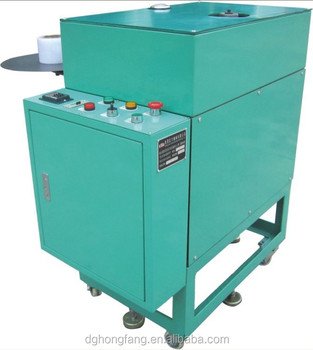
Configurable cuff width from 2.5 mm to 6.5 mm. Dual cold-creasing rollers introduce zero micro-cracks to polyester mylar films, doubling structural rigidity at the slot exits where copper wire tension is highest.
High-torque servo indexing table supports arbitrary slot counts (8 to 72 slots) and handles irregular, missing, or variable-pitch slot distributions without requiring expensive mechanical divider plates.
Tooling mandrels and insertion pushers made from vacuum heat-treated DC53 / SKD11 tool steel (HRC 60-62) with hard-chrome plating to eliminate friction marring across million-cycle production runs.
Compare mechanical versus servo-automated parameters to evaluate throughput gains, tool wear thresholds, and stator compatibility across production environments.
| Performance Parameter | Legacy Mechanical Inserting | High-Speed Servo System (Zunqi Line) | EV / High-Voltage Class Servo Model |
|---|---|---|---|
| Cycle Time Per Slot | 0.70 – 1.20 s | 0.30 – 0.45 s | 0.35 – 0.50 s (Thick Paper) |
| Supported Paper Materials | Standard DMD, Polyester Film | DMD, NMN, Nomex®, NHN, PET, Fish Paper | Nomex® 410, Polyimide Film, Multi-layer Kapton |
| Paper Thickness Envelope | 0.15 – 0.28 mm | 0.12 – 0.38 mm | 0.15 – 0.50 mm (Heavy Insulation) |
| Stator Lamination Stack Height | 10 – 120 mm | 8 – 160 mm (Adjustable) | 15 – 260 mm (Deep Core Models) |
| Stator Outer Diameter (OD) | Max 160 mm | Ø30 mm – Ø260 mm | Up to Ø380 mm Heavy Industry Drive |
| Feeding Accuracy | ±0.25 mm (Cam / Lever) | ±0.03 mm (Direct CNC Servo) | ±0.015 mm (Linear Optical Scale Feedback) |
| Cuff Folding Uniformity | Visible wrinkle variation | Controlled radius, zero crinkling | Micro-embossed dual creasing lines |
| Tooling Changeover Time | 120 – 180 Minutes | 20 – 30 Minutes | 15 – 25 Minutes (Modular Clamping) |
International motor procurement is undergoing a massive shift driven by IE4/IE5 energy efficiency mandates, 800V automotive inverters, and automated lights-out manufacturing demands.
Global IE4 Super Premium and IE5 Ultra Premium regulations require stator slot fill factors exceeding 75% to 82%. Procurement teams can no longer tolerate bulky, flared insulation liners that steal valuable copper slot space. Modern inserting machines must form skin-tight, ultra-compact cell profiles with minimum clearance around tooth shanks to maximize room for heavy gauge copper windings.
With silicon carbide (SiC) inverters operating at switching frequencies over 20 kHz and DC bus voltages rising from 400V to 800V+, motor windings experience severe dv/dt voltage spikes. Buyers now specify automated paper inserters capable of feeding and creasing high-density, multi-layer aramid/polyimide laminates without delamination, preventing the micro-voids that trigger destructive corona discharge.
Factory automation managers are transitioning away from dedicated single-frame machinery toward agile production cells. Today's procurement contracts require quick-change modular dies where stack height, slot width, and cuff sizes can be reconfigured in under 30 minutes. Digital recipe recall stored in HMI panels eliminates mechanical trial-and-error scrap during shift changes.
Major automotive, pump, and HVAC tier-1 OEMs require real-time batch logging. Forward-looking buyers are specifying machines equipped with industrial Ethernet (EtherCAT, Profinet, OPC-UA) to record paper tension, insertion pushing force profiles, and camera inspection logs for every individual serial-numbered stator core that leaves the line.
How engineering advances in multi-axis motion control, automated optical inspection (AOI), and cold-forming metallurgy are pushing stator manufacturing boundaries.
The progression of motor stator insulation insertion has evolved from primitive foot-pedal mechanical shears to intelligent mechatronic ecosystems. At our Dongguan engineering laboratories, mechanical engineers and electrical programmers focus on eliminating three primary failure modes: edge delamination, slot skewing drift, and paper bunching.

Multi-Axis Electronic Cam Synchronization: Traditional cam-actuated machines suffer from wear and backlash, leading to cumulative positional errors across high-slot-count stators (e.g., 48 or 72 slots). Our latest generation replaces mechanical linkages with synchronized multi-axis servo controllers. While one servo precisely measures and unrolls the exact paper length with laser encoder feedback, a second high-torque servo drives the punch carriage through an optimized non-linear velocity curve, gently easing the formed cell into the slot without scuffing the delicate liner surface.
Automated Optical Inspection (AOI) Vision Integration: Positioned directly above the indexing workstation, high-resolution telecentric machine vision cameras inspect every inserted slot in real time. The vision system verifies cuff height, symmetry, and potential paper tears in less than 30 milliseconds. If any abnormal insertion is detected, the machine halts immediately or flags the rejected core on the downstream outfeed conveyor, guaranteeing 100% defect-free output to subsequent coil winding processes.
Direct factory manufacturing, bespoke tooling engineering, and seventeen uninterrupted years of global export reliability from South China's premier industrial automation corridor.
Located in Qishi Town, Dongguan, our factory leverages a world-class supply chain for precision CNC machining, rapid metallurgy treatments, and certified industrial electronics, offering superior machine longevity at competitive factory-direct pricing.
We do not sell generic off-the-shelf machinery. Every inserting die, cuffing guide, and clamp mandrel is custom-engineered using your physical stator punchings or CAD files, pre-validated in our factory before crating.
Beyond slot paper inserting, Zunqi manufactures the entire production chain: needle/flyer stator winding, wedge inserting, end-turn coil forming, servo dual-side lacing, rotor turning, and shaft pressing machines designed to operate with unified cycle times.
With 17 continuous years exporting worldwide across Southeast Asia, Europe, the Americas, and the Middle East, our premises are fully verified onsite on Alibaba.com, backed by comprehensive CE conformity and transparent trade histories.
Direct, highly specific technical answers to the most common questions raised by procurement managers, process engineers, and plant directors.
Our servo-driven insulation paper inserters handle all standard commercial motor insulation materials including DMD (Dacron-Mylar-Dacron), NMN (Nomex®-Mylar-Nomex®), pure Nomex® aramid paper (Type 410, 411), NHN, PET/polyester film, and vulcanized red/green fish paper. Thicknesses can range from 0.12 mm up to 0.45 mm. For stiffer or brittle materials like polyimide or thick composite papers, we equip the machine with heated cuff creasing rollers that prevent micro-fracturing along the fold lines.
Paper tearing is avoided by three synchronized design measures: First, the paper feeding carriage utilizes a servo-driven urethane traction pinch roller rather than pneumatic grippers, eliminating localized stress points. Second, the inserting mandrel and forming dies are custom-machined via wire-EDM to mirror the exact slot profile with a 0.05 mm sliding clearance. Third, our software utilizes an S-curve servo velocity acceleration profile that enters the slot gently, accelerates through the stack core, and decelerates at the exit stroke, preventing buckling against skewed or rough lamination stacks.
Yes. If the stator lamination slot cross-section remains the same, changing stack height requires zero tooling changes: simply enter the new stack height value in the touch screen HMI, and the servo motor automatically adjusts feed stroke and cut length in seconds. If the stator has a different inner diameter or slot shape, a quick-change tooling kit (including the indexing mandrel, push rod, guide shoe, and paper former) can be swapped in 20 to 30 minutes via quick-release locating pins.
All cutting blades, creasing rollers, and punching guides are manufactured from imported DC53 or SKD11 cold-work die steel, vacuum heat-treated to HRC 60-62, with optional tungsten carbide inserts for high-wear zones. Under normal production with standard DMD or polyester paper, our cutting dies achieve approximately 2.5 million to 3 million cycles before requiring light surface re-grinding. We also supply one complete set of backup cutting dies and wear parts with every crated machine.
We encourage clients to send 10–20 physical sample stator lamination cores and their preferred insulation paper rolls to our Dongguan workshop prior to delivery. Our engineers perform a rigorous 500-slot trial run. We verify cuff symmetry, slot clearance, dielectric breakdown testing (hi-pot test at 2500V / 50Hz for 60 seconds), and per-slot cycle velocity. We then record full HD testing videos, provide dimension inspection reports, and arrange live video conferences with your engineering team before packing.
Our standard models are configured for 220V single-phase or 380V three-phase ±10%, 50/60Hz. We can customize internal transformers for 110V, 208V, 415V, or 480V grid standards according to your country's industrial supply. Pneumatic systems require clean, dry compressed air at 0.5 to 0.7 MPa (5 to 7 bar) with an approximate air consumption rate of 0.15 to 0.25 m³/min.
Every machine ships with bilingual (English/Chinese) digital manuals, electrical schematics, and step-by-step video tutorials covering mechanical setup, tooling replacement, and parameter programming. We provide remote video support via WhatsApp, WeChat, or Teams within our guaranteed 9-hour response window. For complete stator production line projects or turn-key facility installations, our senior mechanical and electrical engineers can be dispatched directly to your international factory for on-site commissioning and hands-on staff training.
Submit your stator drawings, stack heights, and target hourly output to our engineering desk. Receive an optimized machine configuration, custom tooling proposal, and quotation within 9 hours.
