

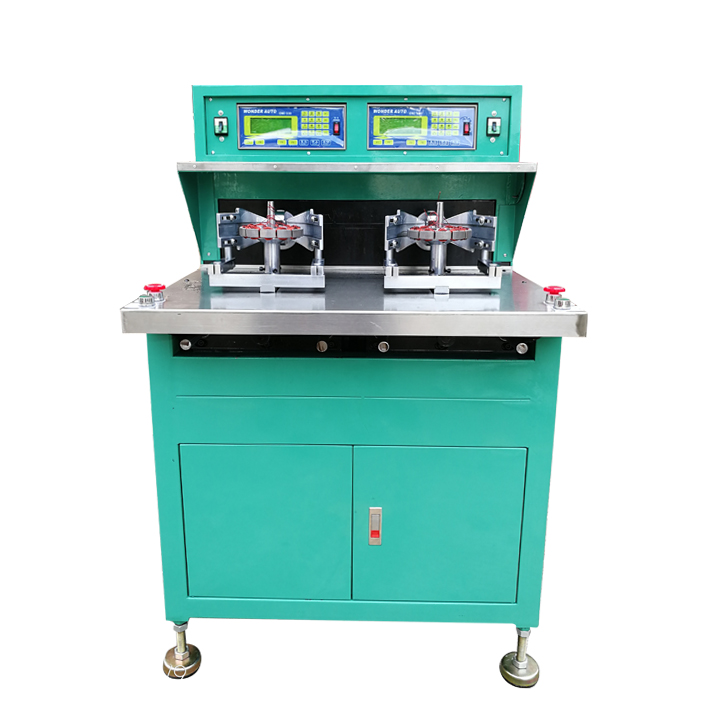





Engineering Architecture: The Mechanics of Modern Stator Coil & Wedge Insertion
In alternating current (AC) induction motors, permanent magnet synchronous motors (PMSM), and brushless DC (BLDC) stators, the coil and wedge insertion phase is the single most critical manufacturing bottleneck determining motor electrical efficiency, thermal distribution, and operational lifespan. The operation involves transferring pre-wound phase coils—whether drawn from pure copper or enamelled aluminium—alongside structural slot closing wedges directly into the narrow slot openings of laminated electrical silicon steel stator stacks.
Historically, manual insertion required hours of manual labor per stator, resulting in frequent insulation film scuffing, wire crossing, and unacceptably low slot fill factors (typically below 58%). Modern automated coil insertion equipment from leading Chinese factories employs synchronized multi-axis servo mechanics capable of pushing primary and secondary coil groups while fabricating, cutting, forming, and driving slot wedges into the stator slots simultaneously in a single stroke cycle under 15 seconds.
Technical Distinction: The core engineering challenge during automated insertion is preventing enamel micro-abrasion while maximizing the copper fill factor. Advanced Chinese manufacturers utilize cold-extruded Cr12MoV, tungsten-coated SKD11, and specialized brass guidance blades polished to Ra < 0.2μm, safeguarding wire insulation under pushing forces exceeding 15 kN.
Tooling Metallurgy & Blade Arrays
Guide blades undergo vacuum quenching to HRC 60–62, followed by cryogenic stress-relief treatment. This eliminates dimensional drift when guiding delicate wire bundles through stator bores ranging from 20mm up to 260mm.
Synchronous Wedge Forming
Integrated wedge mechanisms feed DMD, NMN, Nomex, or polyester roll film, scoring folding creases, cutting exact pitch lengths, and driving wedges synchronously with the descending coil pusher ram.
Servo Push Synchronization
Closed-loop AC servomotors replace obsolete hydraulic cylinders, controlling push speeds dynamically from 5 mm/s to 120 mm/s with positional repeatability within ±0.02 mm to prevent buckling of coil heads.
Technical Comparison: Manual Insertion vs. Hydraulic vs. CNC Servo Inserting Systems
Evaluating the transition from semi-mechanized equipment to high-precision servo coil insertion requires assessing key operational benchmarks including scrap rates, slot fill limits, tool wear intervals, and changeover downtime. The matrix below contrasts conventional workshop configurations with modern Chinese industrial machinery:
| Evaluation Parameter | Manual Hand-Winding & Insertion | Legacy Hydraulic Inserting Unit | CNC Servo Automatic Coil & Wedge Inserter |
|---|---|---|---|
| Cycle Time (36-Slot Stator) | 180 – 360 seconds | 28 – 45 seconds | 8 – 14 seconds |
| Achievable Slot Fill Ratio | Max 55% – 60% | Max 68% – 72% | Up to 82% – 85% |
| Wire Insulation Scuff Rate | High (> 2.5% breakdown risk) | Moderate (0.8% – 1.5%) | < 0.05% (Controlled clearance) |
| Tooling Changeover Time | Not applicable | 120 – 180 minutes | 15 – 30 minutes (Quick clamp) |
| Energy Consumption / Shift | Negligible | 12.5 kWh (Constant hydraulic pump) | 2.2 – 3.8 kWh (Demand-driven) |
| Operator Skill Dependency | Extremely high (Artisan manual labor) | Moderate (Pressure tuning required) | Low (Recipe-based touchscreen HMI) |
Future Procurement Trends: Where Motor Stator Manufacturing is Heading
Procurement specialists, plant engineers, and global production directors must balance immediate machine CAPEX with long-term adaptability. The motor industry is navigating profound structural shifts driven by decarbonization mandates, energy efficiency class upgrades (IEC 60034-30-1 standardizing on IE4 Super Premium and IE5 Ultra Premium efficiency), and the massive electrification of automotive, commercial HVAC, and household appliance systems.
1. Shift Toward High-Mix, Low-Volume (HMLV) Tooling Architecture
Whereas legacy motor factories operated single-stator lines for years without tooling swaps, modern contract manufacturers serve divergent OEM orders weekly. Equipment suppliers in Dongguan and South China now design modular inserting fixtures featuring drop-in tooling cartridges. A single machine base can process fan stators (stack height 12–30mm), water pump stators (stack height 40–90mm), and industrial compressor stators (stack height 100–220mm) by swapping out precision guide blade magazines within 20 minutes without disassembling primary linkage drives.
2. Copper-to-Aluminium Wire Substitution & Dual-Processing Capability
With escalating global copper raw material volatility, small-to-medium motor builders in South Asia, Latin America, and Eastern Europe are increasingly specifying aluminium enamelled wire for ceiling fans, cooler pumps, and shaded-pole motors. However, aluminium features lower tensile strength, higher susceptibility to stretching, and brittle fracture risks. Next-generation coil inserting machines incorporate active friction compensation, curved needle geometry, and micro-stepped pusher velocity to ensure aluminium windings enter lamination slots without work-hardening or breakage.
3. Industrial IoT, OPC-UA Connectivity & MES Line Integration
International Tier-1 motor builders no longer procure standalone island machines. The prevailing procurement demand focuses on complete digital traceability. Modern Chinese stator equipment integrates standard Ethernet/IP, Profinet, and Modbus TCP interfaces. Insertion force-displacement curves are captured per stroke, allowing automated rejection of stators with pinched wires or incomplete wedge insertions directly to downstream QA databases.
Technological Evolution: From Conventional Induction to BLDC & Hairpin Coils
As the electric drive sector splits into fractional horsepower BLDC motors on one end and rectangular copper hairpin EV traction stators on the other, coil insertion technology is experiencing aggressive architectural innovation:
Segmented Tooth Insertion
For concentrated winding BLDC architectures with narrow inner teeth, robotic inserting jaws wind and slip segmented pre-formed coils directly over individual lamination teeth, reaching slot fill factors exceeding 88%.
Multi-Angle Optical Vision
Integrated line-scan cameras inspect slot alignment and paper cuff integrity prior to ram execution. Misaligned stack laminations trigger immediate safety holdoffs, preventing catastrophic blade buckling.
Variable Pitch Wedge Drive
Programmable servo-driven wedge cutters automatically compensate for asymmetric motor designs where running winding slots differ in volume and wedge depth from starting winding slots.
Procurement Due Diligence Guide: How to Select a Reliable Chinese Equipment Manufacturer
China produces more than 70% of the world’s motor automated assembly machinery. However, supplier competence varies drastically between small trading workshops and genuine equipment builders with in-house CNC machining centers and metallurgical tooling capabilities. To protect your capital investment, ensure your engineering team evaluates prospective suppliers against the following checklist:
- Physical Stator Drawing & Sample Testing: Insist on dispatching physical stator laminations and wire spools to the factory prior to shipment. A genuine manufacturer will produce a high-resolution, unbroken video recording of trial winding, insertion, intermediate forming, and high-voltage dielectric breakdown testing.
- Traceable Core Electrical Architecture: Verify that the PLC, servomotors, HMI, and pneumatic components originate from reputable global brands (Siemens, Mitsubishi, Delta, Inovance, Omron, SMC, Airtac) rather than unbranded domestic clones, guaranteeing local spare parts availability in your home market.
- Machining Tolerances & Frame Rigidity: Inquire about machine frame construction. Heavy-duty equipment uses normalized, stress-relieved welded cast steel plates rather than hollow structural tubing, eliminating chassis vibration and preserving micron-level blade alignment across millions of cycles.
- Comprehensive Warranty & Tooling Spares Provision: Ensure your procurement contract specifies a minimum 12-month complete core component warranty and incorporates at least two complete auxiliary sets of high-wear tooling (guide blades, wedge push needles, cutting blades, and wire transfer fingers).
Why Global Motor Manufacturers Partner with Our Dongguan Facility
Strategically situated in Qishi Town, Dongguan City—the core precision machinery and electronics epicenter of the Guangdong-Hong Kong-Macao Greater Bay Area—Zunqi / Hongfang Intelligent Equipment has operated for over 17 continuous years as an export-focused motor automation manufacturer. We do not simply assemble off-the-shelf components; we engineer end-to-end motor production lines tailored to the unique physical geometries of our clients' stators and rotors.

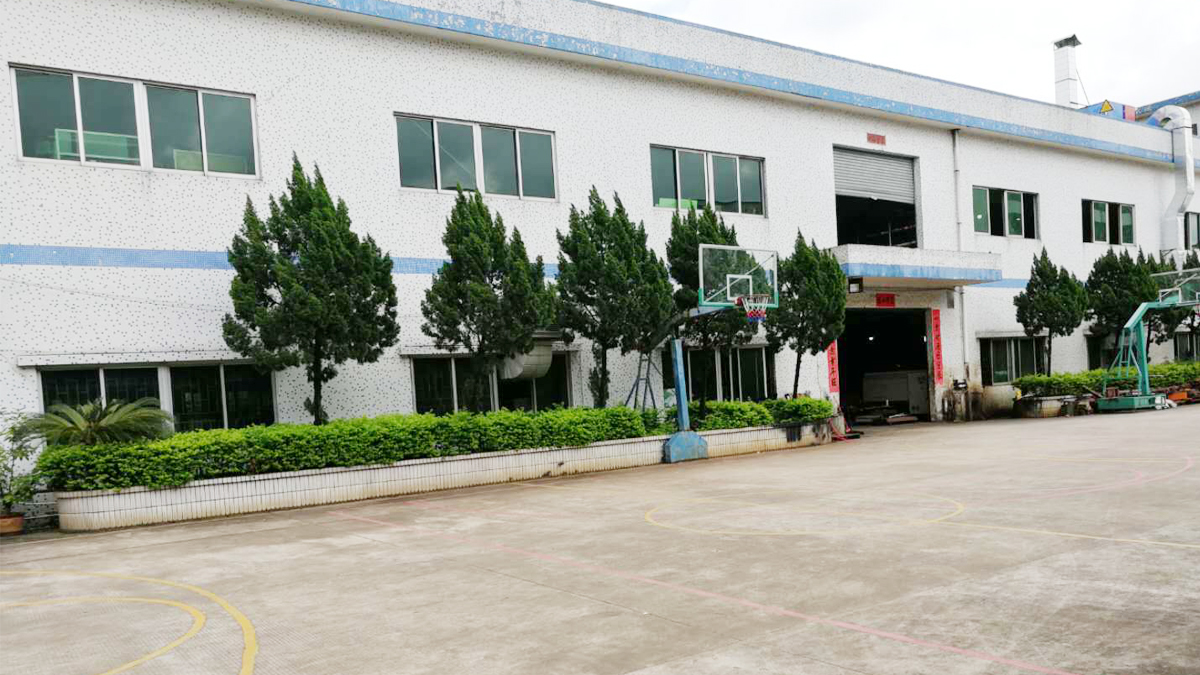
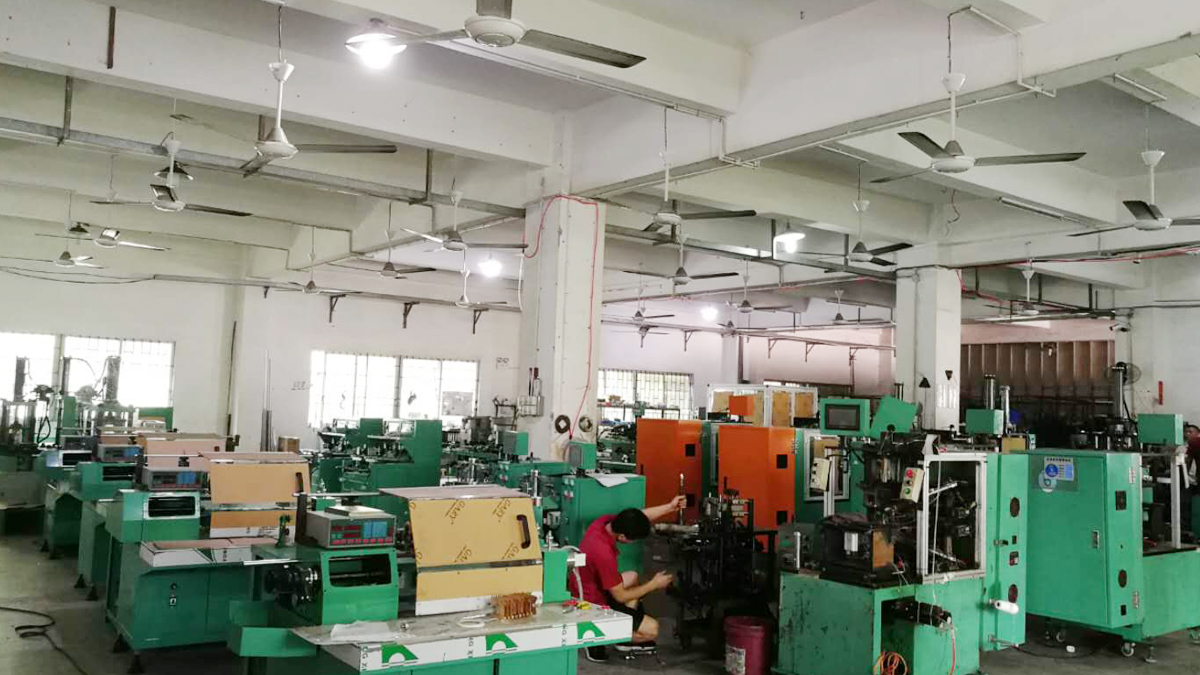
Built on Precision Engineering & Export Reliability
Our 51–100 person technical team comprises senior mechanical design engineers, electrical programming specialists, and tooling artisans. By maintaining full in-house control over CNC milling, electrical discharge machining (EDM), and surface grinding, we guarantee that every set of insertion blades, forming dies, and rotor chucks aligns perfectly with customer blueprints.
- 17+ Years Export Track Record: Verified onsite supplier credentials on Alibaba.com with thousands of operating installations in India, Brazil, Turkey, Egypt, Vietnam, Italy, and Mexico.
- Full Stator Line Synergy: We supply matched systems across the entire motor manufacturing sequence: insulation paper insertion → coil winding → coil/wedge insertion → intermediate forming → lacing → final shaping → rotor turning → shaft press-fitting.
- Prompt Engineering Response: Dedicated technical support with average response times under 9 hours, video-guided remote commissioning, and lifetime access to tooling replacements.
Frequently Asked Questions: Technical & Commercial Due Diligence
What is the minimum order quantity (MOQ) and production lead time?
Our minimum order quantity is exactly 1 complete set for all standalone machinery (winding machines, inserting machines, forming units, lacing equipment, and rotor turning lathes). Batch orders apply solely to individual motor shafts and raw machine replacement consumables. Standard machine production lead time is 25 to 35 working days from technical stator drawing approval and initial deposit confirmation. Customized multi-machine automated turnkey lines generally require 45 to 60 working days, inclusive of physical stator sample validation trials.
Can the insertion machine handle both copper and aluminium magnet wire on the same tooling?
Yes. If your motor engineering parameters specify copper and aluminium wire for identical stator lamination geometries, our tooling can be engineered to accommodate both conductors. However, because aluminium requires greater cross-sectional area to achieve equivalent conductivity, slot fill calculations must be reviewed. Furthermore, our programmable HMI allows operators to store separate kinematic profiles—reducing insertion ram velocity and acceleration curves when processing aluminium to prevent wire necking or enamel shearing.
What technical parameters must we submit to receive a binding quotation?
To enable our engineering department to configure tooling and mechanical stroke specs, please supply: (1) Stator 2D engineering drawing showing inner diameter (ID), outer diameter (OD), slot count, and slot opening width; (2) Range of lamination stack heights; (3) Enamelled wire diameter and number of strands wound in parallel; (4) Coil pitch and turns per coil group; (5) Desired slot insulation and wedge material type and thickness; and (6) Local electrical supply voltage (e.g., 220V single-phase, 380V/415V/440V three-phase at 50Hz or 60Hz).
How do you protect high-precision guide blades and tools against shipping corrosion?
All machinery and custom tooling undergo a rigorous multi-stage export packing protocol: (1) Cleaning with industrial degreasers and thorough drying; (2) Application of heavy-duty lubricating anti-rust oil on all unpainted ground steel, guide blades, and ways; (3) Wrapping with multi-layer volatile corrosion inhibitor (VCI) waterproof film and desiccant packs; (4) Secure mechanical bolting of the machine chassis directly to a reinforced skid base; and (5) Enclosure within custom-built, fumigation-free solid plywood export cases compliant with ISPM 15 standards.
What warranty, spare parts, and on-site support do you provide post-delivery?
Every unit carries a full 1-year operational warranty covering electrical and mechanical core components (PLC, servo motors, touchscreens, cylinders, gearboxes). We supply step-by-step HD video instruction manuals for installation, parameter calibration, and routine tooling replacement. In the event of an operational anomaly, our engineering team responds via video conference within 9 hours. For turnkey production line projects, on-site commissioning and factory training by senior Chinese field technicians can be arranged upon request.
Can a single coil and wedge inserting machine accommodate different stator stack heights?
Yes. As long as the stator lamination inner diameter (ID) and slot pitch remain identical, adjusting for varying stack heights (e.g., from 20mm up to 80mm) is entirely digital. The operator inputs the new stack height on the HMI touchscreen; the servo drive automatically calculates the required ram stroke, wedge feeding length, and wire pushing depth without requiring physical guide blade replacement.
Request Custom Stator Tooling Proposals & Factory Pricing
Send your stator engineering drawings, slot specifications, and target daily output. Our senior motor automation engineers will analyze your parameters and provide a comprehensive proposal within 9 hours.
