Hydraulic Forming

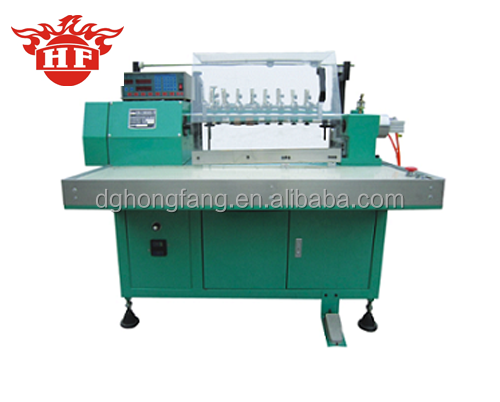
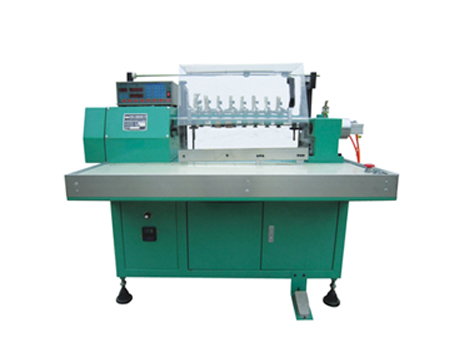
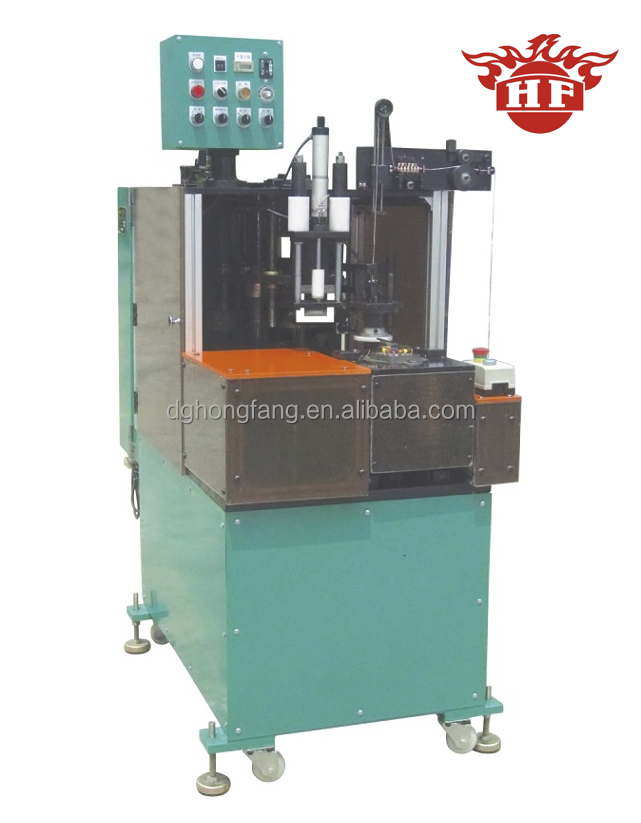
HF-W120H HONGFANG Electric Motor Stator Coil Final Forming Second Shaping Machine
- Precise secondary end-turn sizing
- Clean air-gap rotor bore clearance
- 1-Year core mechanical warranty
Precision-machined flyer winders, servo wedge inserters, double-sided coil lacers, and hydraulic shaping presses built for heavy-duty electric fan motor manufacturing plants worldwide.




In-depth analysis of slot geometry, flyer winding kinematics, magnetic tension damping, and insulation resistance factors governing commercial fan motor durability.
Household electric table fans, desk ventilators, and portable air-circulator motors operate predominantly on single-phase permanent split capacitor (PSC) or shaded-pole induction topologies, with advanced lines rapidly modernizing to Brushless DC (BLDC) inner-rotor configurations. Despite appearing mechanically straightforward, producing an electric motor stator that achieves high seasonal energy efficiency, whisper-quiet decibel emissions (<38 dB(A)), and a ten-year operational life requires micro-precision automated winding equipment. As China's premier manufacturer and exporter of winding systems based in Qishi Town, Dongguan, Zunqi Intelligent Equipment delivers machines calibrated to eliminate wire stress, maintain zero insulation micro-fissuring, and ensure absolute symmetrical magnetic balance across all stator poles.
The manufacturing architecture for traditional table fan stators centers around high-speed flyer winding machines (such as the 8-head HF-CNC Series) operating between 2,500 and 3,200 RPM. In flyer winding, the magnetic wire (enamelled copper or grade-1 polyurethane/polyesterimide aluminum wire) is guided over ceramic pulleys mounted on a balanced rotating flyer arm. The wire is laid into external winding molds or directly wound onto tooling pins before being transferred to the slot inserter.
Conversely, brushless DC (BLDC) fan stators with internal slots require needle winding kinematics, where a hardened tungsten-carbide needle traverses axially through the stator bore while coordinating radial rotary indexing. The selection between flyer and needle winding fundamentally dictates your plant's cycle time, tooling maintenance budget, and slot copper fill coefficient.
| Kinematic Parameter | Flyer Winding (PSC / Induction Fan) | Needle Winding (BLDC Table Fan) | Zunqi Engineering Advantage |
|---|---|---|---|
| Linear Wire Speed | Up to 15 m/s continuous | 2.5 to 5.5 m/s reciprocal | Dynamic servomotor speed damping |
| Slot Fill Factor | 42% – 58% after wedge insertion | 50% – 66% with segmented stators | Ultra-smooth tooling blade finishes (Ra < 0.2µm) |
| Tension Control Mode | Mechanical hysteresis / Magnetic brake | Closed-loop electronic load cell feedback | Constant tension variance < ±1.5 cN |
| Wire Gauge Handling | 0.12 mm to 0.70 mm standard | 0.10 mm to 0.45 mm fine wire | Hardened ceramic capstans prevent micro-shaving |
| Cycle Time per Pole | 1.8 – 3.2 seconds / coil bundle | 4.5 – 8.0 seconds / phase slot | Multi-spindle synchronous winding layout |
The single greatest cause of inter-turn short circuits and premature motor burnout in humid subtropical climates is insulation enamel degradation during winding. When winding fine wire at 3,000 RPM, centrifugal force and sharp direction changes can stretch copper wire past its 0.2% yield point, reducing electrical cross-section and cracking the thin dielectric polyurethane coating.
Fw ≤ 0.035 × Scu × σy, where Scu represents the nominal bare conductor area in mm² and σy is the yield strength of the annealed copper or aluminum. For a 0.20 mm diameter table fan wire, tension must never exceed 140 cN under acceleration. Zunqi winders integrate non-contact magnetic hysteresis tensioners that eliminate physical stick-slip friction, keeping dynamic tension within a tight ±3% envelope.
Following winding, coil bundles must be inserted into the stator slots together with slot liner wedges (DMD, Nomex, or polyester film). Inserting coils manually or with outdated pneumatic machines frequently results in wedge cuff shearing, wire jamming, and scratched wire enamel. Zunqi's Automatic Servo System Stator Coil & Wedge Inserting Machines employ synchronized dual servo drives: one servo actuates the push rods driving the coil bundle through guiding blades, while the second servo synchronously drives the wedge pushers. By maintaining sub-millimeter positioning between the wire and the wedge paper, our insertion technology ensures a 99.85% first-pass yield rate and guarantees dielectric isolation withstanding surge voltages exceeding 2,000V AC.
From bare silicon steel laminations to balanced, tested, and crated electric motor assemblies, Zunqi designs harmonized machines with synchronized cycle times.
DMD or PET film is automatically fed, edge-cuffed, cut, and inserted into every lamination slot in under 0.3s per slot.
Multi-spindle flyer winders spin coils onto specialized transfer tooling with precise turn counts and tension control.
Servo-guided blades transfer coils and drive insulating closure wedges into stator slots in a single uniform stroke.
Coil heads are pre-flared outward under controlled hydraulic tonnage to ensure clear rotor bore passage before lacing.
Double-head servo needle stitchers lash the end windings with synthetic cord to resist magnetic vibration and harmonics.
Precision multi-jaw dies form the final outer diameter and height profile of coil end-turns to match the fan motor housing.
Automatic diamond-tool lathe skims the cast aluminum rotor outer diameter, guaranteeing uniform air gap < 0.25mm.
Controlled load-cell hydraulic pressing forces ground SC45# steel shafts into the rotor core with micron runout accuracy.
Key shifts motor plant purchasing directors and factory automation engineers must incorporate into their 2025–2030 equipment procurement roadmaps.
Global energy mandates (such as EU ErP and India BEE 5-Star star ratings) are forcing table fan brands away from 40W shaded-pole designs toward 18W–24W Brushless DC (BLDC) motors. Procurement teams are investing heavily in flexible winders that accommodate outer rotor ceiling fan stators and inner rotor table fan cores on interchangeable tooling pallets.
With raw copper costs continuing their volatile climbs, over 65% of mass-market table fan stators now utilize copper-clad aluminum (CCA) or pure enamelled aluminum wire. Modern winders must have specialized polished wire pathways and low-inertia nozzles to prevent wire necking, accompanied by automated ultrasonic or crimp termination stations.
Tier-1 fan producers in Vietnam, India, Turkey, and Brazil demand Single-Minute Exchange of Die (SMED) capability. Tooling changeovers between 9-slot, 12-slot, and 16-slot configurations now take under 15 minutes. Embedded IoT PLC units broadcast turn counts, coil resistance drift, and cycle anomalies directly to centralized MES software.
Direct manufacturer based in Dongguan's precision machinery cluster, combining 17 years of trade experience with full vertical integration.
Our facility at No.2 Dongshan Yongchang Road, Qishi Town, Dongguan has undergone verified onsite audits. We manufacture frames, precision forming dies, and inserting tooling in-house, cutting intermediary markups and ensuring strict metallurgy control.
We do not cut corners on machine reliability. Zunqi electrical cabinets standardly utilize industrial PLCs, human-machine interfaces, and motion components from Mitsubishi, Delta, Siemens, Schneider, SMC, and Airtac, ensuring easily accessible spare parts in your domestic market.
Before any machine receives dispatch clearance, our engineers demand customer stator samples. We run continuous trial runs, measure air gap tolerances with coordinate measuring machines (CMM), and provide multi-angle high-definition testing videos for final approval.
Authoritative technical and logistical answers addressing the real questions plant managers and procurement officers ask prior to ordering.
