
17+
Years Export Track Record
100%
CE Standard Certified
≤9h
Technical Support Response
1 Set
MOQ with Custom Tooling
Featured Stator & Rotor Production Machines
Direct-line automation equipment engineered for industrial fan, deep-well pump, appliance, and servo motor production.

New Fully Automatic Motor Coil Winding Machine High Quality Coil Maker for Manufacturing Plant Use 220V
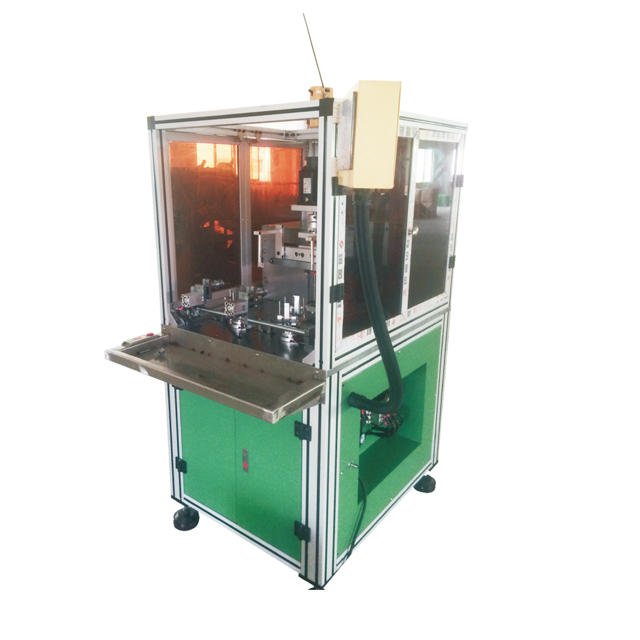
4 Stations Internal Stator Winding Machine

HF-W120H HONGFANG Electric Motor Stator Coil Final Forming Second Shaping Machine for Manufacturing Plant New 1 Year Gear

HF-LO2-6G Six Stations Internal Winding Machine with PLC and Engine 1 Year Warranty for Motor Coil Inner Stator

Good Quality Electric Iron Motor Shaft for Household Table Fan Cooler Pump Motors

Coil & Wedge Paper Inserting Machine

Automatic Semi Automatic Coil Winding Machine for Fan Motor Stator Copper/Aluminum Wire Single Phase 220V 0.1-1.2mm Wire
Comprehensive Guide: High-Performance Stator Slot Cell Insulation Engineering
In modern electric motor manufacturing, electrical insulation reliability represents the foundational baseline for quality, service life, and operational safety. Slot cell insulation—often referred to as slot lining, cuffing, or stator slot paper insertion—forms the primary dielectric barrier between the raw electrical steel laminations of the stator core and the magnet wire bundles. As an authoritative CE Certified Slot Cell Inserting Machine Factory & Exporter, Zunqi Intelligent Equipment delivers precision automated machinery designed to eliminate microscopic paper tears, ensure complete dielectric coverage, and uphold strict international manufacturing standards across induction, BLDC, pump, and automotive auxiliary electric motors.
1. Kinematic Precision and Tooling Mechanics
Industrial slot cell inserting demands microscopic repeat precision. Operating at cycle times often surpassing two slots per second, our equipment performs a continuous sequence: indexing reel insulation paper (such as DMD, NMN, Nomex®, or polyester film), pre-creasing edge cuffs, precise guillotine shearing, forming the cell cross-section to the exact slot profile, and pushing the cuff into the stator slot stack without bucking or edge-fraying. Any physical breach or improper cuff fold directly induces dielectric breakdown during intermediate phase testing or field operation. Our CE-compliant system integrates hardened, precision-ground carbide and high-speed steel (SKD11/D2) forming dies that provide a mechanical repeatability within ±0.05 mm across millions of cycles.
Servo Edge-Cuffing Control
Equipped with dual programmable micro-stepper or servo feeding drives ensuring uniform edge-cuff length from 2.5 mm to 5.0 mm without mechanical slippage.
CE Safety & Electrical Compliance
Adheres strictly to European Machinery Directive 2006/42/EC and Low Voltage Directive 2014/35/EU, including dual-channel safety relays and interlocked enclosures.
Multi-Tier Modularity
Quick-release stator mandrels and modular pushing blades allow rapid batch changeovers between 8-slot to 72-slot stator stacks within 15 minutes.
2. Future Procurement & Sourcing Trends in Motor Automation
Industrial procurement teams are increasingly abandoning standalone, single-operation machinery in favor of synchronized, intelligent work-cells. As labor rates rise globally and quality control parameters tighten under Tier-1 automotive and premium HVAC standards, purchasing directors prioritize three fundamental factors:
A. Total Integration with Downstream Winding & Inserting: Standalone slot cell insertion is evolving into unified cell-and-coil transfer blocks. Modern procurement requires that the slot cell inserter seamlessly hand off insulated stator cores to multi-station coil winders and wedging stations via standardized servo rotary dial indexing tables.
B. Traceability and Sensorized Closed-Loop Quality Checks: Future tenders consistently demand optical or laser-triangulation verification stations immediately downstream of the insertion stroke. These optical inspection arrays detect incomplete insertions, skewed cuffs, or missing liners in real time, halting the line before defective stators reach costly copper-winding stages.
C. Open PLC Architecture and Component Standardisation: International buyers now reject proprietary black-box controllers. Procurement specifications stipulate globally accessible PLC brands—such as Siemens, Omron, Delta, or Mitsubishi—with standard Ethernet/IP or Profinet connectivity for straightforward enterprise SCADA system integration.
3. Technological Evolution of Slot Cell Inserting Machinery
The historical transition from purely mechanical eccentric-cam driven insertion machinery to fully servo-electric, multi-axis interpolated equipment has fundamentally reshaped manufacturing yield rates. Early cam machines suffered from rapid tooling wear, rigid fixed stroke profiles, and lengthy re-tooling intervals when shifting between stator laminations of differing stack heights.
Today, modern slot cell inserters utilize direct-drive servo ball screws and high-torque direct indexers. This kinematic decoupling allows the machine operator to adjust paper feeding length, cuff fold widths, and insertion stroke depth directly from an intuitive multi-language touchscreen HMI. Furthermore, the advent of high-temperature Class H and Class C composite insulation materials has driven the adoption of temperature-regulated edge-creasing heaters that prevent crystalline fracturing in Nomex® and polyimide laminates during rapid folding.
Factory Direct Engineering Strengths
Based in Qishi Town, Dongguan, Zunqi Intelligent Equipment bridges industrial mechanical reliability with global export support.
17 Years Proven
Direct Manufacturer Status
Operating a full-scale workshop in Dongguan's manufacturing hub, fully verified on-site by international certification authorities, ensuring true factory pricing with zero middleman overhead.
Precision Tailored
Bespoke Stator Tooling
Tooling packages, former cups, and pushing blades are custom-engineered to your exact stator lamination drawings and physically validated with sample runs before dispatch.
Turnkey Lines
Complete Production Matching
From slot insulation to coil winding, coil & wedge inserting, end-turn shaping, lacing, and rotor shaft pressing—all machine stations are cycle-time matched.
Global Reliability
Open-Architecture Electronics
Standardized on industrial components from Siemens, Mitsubishi, Schneider, Delta, and Airtac, ensuring your local maintenance personnel can easily source spares.
Warranty & Service
Factory Support Guarantee
Comprehensive 1-year warranty coverage, remote video commissioning guidance, rapid dispatch of wearable spares, and prompt engineering response under 9 hours.
Frequently Asked Questions Regarding Equipment Procurement
Clear, direct technical answers to assist your engineering and procurement evaluation.
What is the minimum order quantity (MOQ) and production lead time?
Our automated machines, including slot cell inserters, coil winders, and lacing equipment, carry a minimum order quantity of just 1 set. Standard customized machinery typically carries a manufacturing lead time of 25 to 35 working days, which includes custom tooling fabrication, assembly, electrical wiring, and physical validation on customer-supplied stator samples.
What specific stator parameters are required to generate an engineering proposal?
To provide an accurate technical configuration, our engineering team requires: (1) Stator core outer diameter (OD) and inner diameter (ID), (2) Lamination stack height range, (3) Number and cross-sectional geometry of the stator slots, (4) Insulation paper material specifications and thickness, and (5) Local factory voltage/frequency (e.g., 220V Single-Phase or 380V Three-Phase, 50/60Hz).
Can a single slot inserting machine accommodate multiple stator models?
Yes. Our machines are built with modular tooling architectures. Stators sharing the same internal bore diameter but varying in stack height can typically be adjusted directly via the touch-screen servo parameters without changing tooling. When switching between differing stator slot geometries or bore sizes, a dedicated tooling swap (stator mandrel and pushing block) can be accomplished within 15 to 20 minutes.
How is CE compliance validated for European factory delivery?
All exported machinery fulfills mandatory European directives, notably the Machinery Directive 2006/42/EC and Low Voltage Directive 2014/35/EU. Machines feature dual emergency stops, physical safety barriers with interlock safety switches, CE-marked switchgear, certified pneumatic components, and full English technical dossiers and Declarations of Conformity.
What is the pre-shipment factory acceptance testing (FAT) protocol?
We operate a strict validation protocol. Customers ship physical lamination stacks and insulation paper rolls to our Dongguan facility. We perform continuous automated test runs on your parts, recording comprehensive HD running videos, measuring dielectric consistency, checking cuff uniformity, and documenting cycle times. Shipping occurs only after formal customer video approval.
Consult with Our Motor Automation Engineers
Need custom tooling configurations, complete line cycle-time calculations, or official commercial quotations? Our Dongguan technical desk typically responds within 9 hours.
