0%

Choosing the best Stator Coil Winding Machine in 2026 depends on the motor, production volume, and quality targets. A machine suited to small-batch prototypes may struggle on a high-speed production line. The reverse can also be true. There is no universal winner.

A useful expert perspective comes from Dr. Thomas A. Lipo, a recognized researcher in electrical machines. No verified quotation from him on winding-machine selection was provided, so the following line is an editorial summary, not his exact words: “Repeatable winding quality matters more than impressive specifications.” That distinction matters when comparing equipment.

Look beyond maximum speed. Check whether the machine holds wire tension across a full shift, places turns consistently in narrow slots, and supports the wire gauges your designs require. Ask for sample coils, production data, and a live demonstration using your actual stator geometry. Inspect the finished winding closely. Uneven layers are easy to miss in a brochure.

Changeover time matters, too. So do operator training, maintenance access, and local technical support. A sophisticated control system may reduce manual work, but it cannot compensate for poor setup or unclear process limits. Small details matter.

This guide compares winding methods, automation levels, and practical buying criteria for 2026. It also considers where specifications can mislead. Some recommendations will depend on your factory conditions, and that is worth acknowledging. A careful choice starts with measurable requirements, not a model’s headline speed.
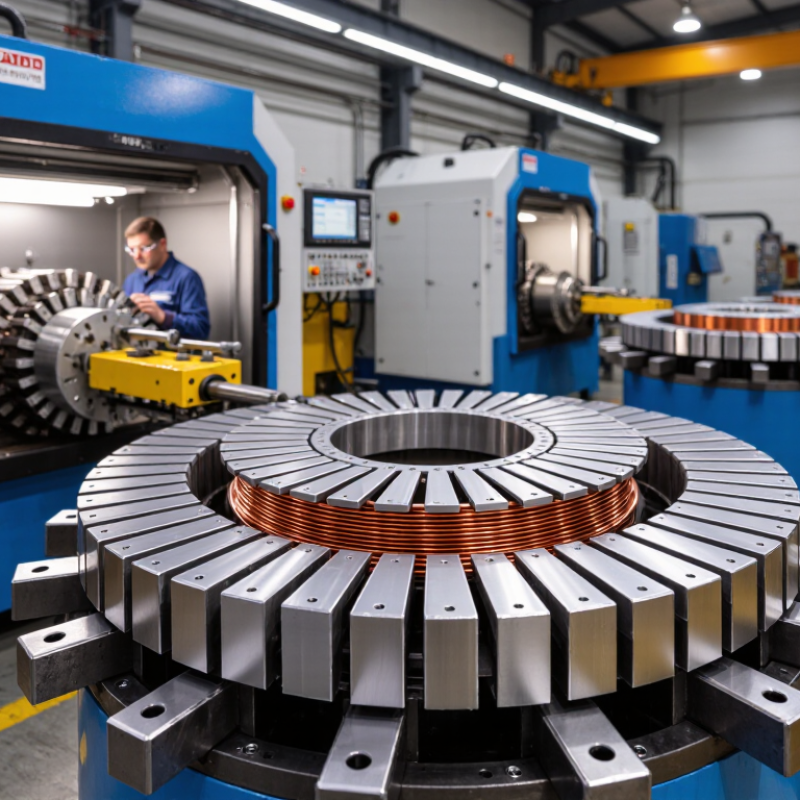
What Is the Best Stator Coil Winding Machine in 2026?

What Is a Stator Coil Winding Machine and How Does It Work?

A stator coil winding machine places insulated copper wire into slots in a motor’s stationary core. The stator is a laminated steel ring with narrow slots and thin insulation liners. During winding, a guide or needle feeds wire through each slot in a programmed pattern. The machine controls tension, turn count, and movement between slots. Some machines wind coils separately for later insertion; others wind directly onto the stator. The chosen method depends on core geometry, wire size, and production volume.

This process matters as electric-motor demand grows. The IEA’s Global EV Outlook 2024 reports nearly 14 million electric cars sold in 2023, around 18% of global car sales. That figure does not measure winding-machine demand, but it shows the expanding context for motor manufacturing. In practice, small setup errors can scrape enamel or create uneven turns. Operators check winding tension, coil placement, insulation condition, and electrical test results. One overlooked detail: a fast cycle is not useful if the finished winding fails inspection.

Tips: Match the machine’s tooling to slot shape and wire diameter. Confirm turn-count accuracy and tension stability on sample parts before full production. Keep a record of test results; it helps reveal drift, though it cannot replace hands-on inspection.

Which Types of Stator Winding Machines Are Available in 2026?

Which Types of Stator Winding Machines Are Available in 2026?

Stator winding machines are usually grouped by how they place copper wire. Needle winding machines guide wire through narrow slots, making them useful for compact stators and tight tooth spacing. Flyer winding machines use a rotating guide to lay wire around exposed teeth. They can suit higher-volume production, though complex geometries may slow setup. Insertion machines place preformed coils into slots, a common approach for distributed windings. The fit matters: tight slots can scrape insulation, so operators need to check tooling and coil dimensions carefully.

Direct tooth-winding systems place coils onto individual stator teeth, while hairpin lines form and insert rectangular conductors before joining their ends. Each handles different wire shapes and stator designs; none is best for every factory.

The International Energy Agency’s Global EV Outlook 2024 reports nearly 14 million electric car sales in 2023, about 18% of global car sales. That figure signals growing demand for electric-drive components, but it does not dictate one winding process. Actual choice still depends on slot fill, wire type, changeover frequency, and inspection needs.

A quick line-speed comparison can mislead. Measure scrap and insulation damage, too.

What Factors Determine the Best Machine for a Production Line?

The best stator coil winding machine depends on the work it must repeat, not its headline speed. Match the machine to the stator’s slot count, stack height, winding pattern, and wire range. Then check changeover time, tension control, and how easily operators can load parts. Speed alone misleads. A fast cycle means little if wire breaks, coil placement varies, or the next model requires lengthy setup.

Track cycle time alongside first-pass yield, unplanned downtime, and scrap. Deloitte’s 2024 Smart Manufacturing Survey found that 86% of surveyed manufacturing executives expected smart manufacturing solutions to drive competitiveness over the next five years. IFR’s World Robotics 2024 report counted 4,281,585 industrial robots operating worldwide in 2023. These figures support considering data capture and automation integration, but they do not prove every line needs a fully automated winder.

Run acceptance trials using your actual stators and wire, including the awkward product variant that usually slows production. Measure winding consistency and changeover duration across repeated runs. Check whether alarms identify faults clearly and whether maintenance staff can reach tensioners, guides, and tooling without dismantling half the station. I would still question one assumption: a higher quoted output may not survive real shifts, mixed models, or routine operator breaks. Ask suppliers for comparable test conditions, and verify the results on your floor.

What Is the Best Stator Coil Winding Machine in 2026?

Production-line factors that can determine the best machine

This illustrative planning model allocates 100% of the evaluation weight across five common selection factors. Adjust the weights to match your product mix, target output, quality requirements, and operating conditions; they are not measured market data or machine specifications.

How Do Leading Stator Winding Machines Compare in 2026?

Comparing leading stator winding machines in 2026 means looking beyond advertised speed. A fully automatic machine can handle repeatable jobs with less operator input, while a semi-automatic model may suit mixed production and frequent setup changes. The better choice depends on coil design, slot geometry, wire gauge, and daily volume. Compatibility comes first.

Watch the winding process closely. Does the machine maintain even tension as the wire passes around each tooth? Are turns counted reliably, and can the operator adjust winding direction or coil shape without a lengthy reset? These details affect consistency more than a headline speed figure. Ask for a trial using your own stator and wire. A smooth demo with a different workpiece proves little.

Compare changeover time, guarding, fault alerts, and access to service documentation. Check whether settings can be saved for repeat jobs, and record scrap rates during testing. A faster cycle may still lose time through setup or rework. Not always. I would also question any comparison that relies on one short run; production conditions vary, and early impressions can be wrong. Choose the machine that meets your quality targets across representative jobs, not simply the one with the most automation.

How Can Manufacturers Choose the Right Machine for Their Needs?

The best stator coil winding machine in 2026 is the one that matches your motor designs, not the longest feature list. Define measurable needs: wire diameter, slot dimensions, coil turns, winding pattern, and daily output. Check that the machine handles your smallest and largest stators without improvised fixtures. This matters. A mismatch can cause uneven coil placement, longer setup times, or damaged wire insulation.

Ask suppliers to run a trial with your stator cores and wire. Observe tension control, turn counting, winding consistency, and how quickly operators can change tooling. Inspect sample coils for dimensions and insulation condition. Review repeatability across several cycles, not just one polished demonstration. Clear controls, saved winding settings, and useful alarms can help reduce avoidable setup errors.

Production volume also affects the choice. A high-speed system may be wasteful for short runs with frequent design changes; a simpler machine may bottleneck large, stable orders. Compare floor space, training needs, maintenance access, and service support. No option is perfect. Changeover time is easy to underestimate, so measure it with the people who will operate the machine before finalizing your requirements.

What Is the Best Stator Coil Winding Machine in 2026? - How Can Manufacturers Choose the Right Machine for Their Needs?

Machine Configuration Winding Process Best Suited For Key Capabilities to Check Main Trade-Offs Choose This Option When...
Manual winding machine An operator guides the wire and controls coil placement, often with mechanical or electronic assistance. Prototypes, repair work, small batches, and products with frequent design changes. Adjustable tension, accessible tooling, turn-count control, and compatibility with the stator and wire sizes required. Lower automation and output; results depend more heavily on operator skill and consistent work methods. Production volume is low or uncertain, or flexibility is more important than cycle time.
Semi-automatic needle winding machine A programmed needle places wire into stator slots while an operator loads, unloads, or performs setup tasks. Small-to-medium production runs and stators whose slot geometry suits needle access. Needle path and clearance, number of winding heads, tension control, recipe storage, and changeover requirements. Loading and setup may remain manual; tooling and needle access can limit the stator designs it can process. You need repeatable winding with moderate automation and still require practical product changeovers.
Automatic needle winding machine Automated wire placement forms coils directly in stator slots; loading and transfer may also be automated. Repeat production of suitable small or medium stators, including applications requiring controlled coil placement. Stator range, needle accessibility, wire-break detection, tension control, automatic loading options, and changeover time. Higher initial investment and more specialized tooling; not every slot shape or winding pattern is suitable. Demand is stable and the stator design has been confirmed compatible through a process trial.
Flyer winding machine A rotating flyer lays wire around a winding form or stator pole to build coils. Concentrated windings, poles, and other stator designs that provide suitable access for flyer motion. Flyer clearance, coil-form dimensions, wire tension, winding pattern control, and the range of compatible pole geometries. Flyer motion and tooling can restrict access on some stators; suitability depends strongly on geometry. The coil can be wound around an accessible pole or form without interference from adjacent parts.
Bobbin or coil-form winding machine Coils are wound on a bobbin or removable form and then inserted into the stator. Preformed coils, distributed windings, and production processes that use a separate coil-insertion step. Form dimensions, coil transfer method, insertion tooling, insulation handling, and compatibility with the insertion process. Requires a coordinated winding-and-insertion workflow; coil handling can add process steps. Your design is better suited to winding coils separately before inserting them into the core.
Multi-station automatic winding line Multiple stations perform winding and related handling steps in sequence, with automated transfer where configured. High-volume production of stable designs with repeatable process requirements. Line balance, station cycle times, uptime, automatic transfer, fault recovery, maintenance access, and changeover plan. Greater capital and integration commitment; a bottleneck at one station can affect the line. Forecast demand supports dedicated equipment and the product design is unlikely to change frequently.

Selection note: There is no single best machine for every stator. Confirm the winding method with production trials using the actual stator core, slot geometry, wire, insulation system, and winding pattern. Compare cycle time, changeover time, first-pass yield, maintenance needs, and total operating cost using the same production assumptions. Actual capacity depends on the machine configuration, product design, and process requirements.

FAQS

What does a stator coil winding machine do?

It feeds insulated copper wire into slots in a motor’s stationary steel core. A guide controls the wire path, tension, and turn count. Small setup errors can scrape the wire’s enamel.

How does the winding process work?

The machine guides wire through lined slots in a programmed pattern. Some models wind coils separately; others wind directly onto the stator. The suitable method depends on core shape, wire size, and production volume.

What details matter when choosing a machine?

Check slot count, stack height, winding pattern, and wire range. Also consider loading, changeover time, and tension control. Compatibility comes first.

Is a faster machine always the better choice?

No. A short cycle helps only when winding quality stays consistent. Track first-pass yield, scrap, and downtime alongside cycle time. Speed alone misleads.

How should a machine be tested before production?

Use your actual stators and wire, including the awkward model that slows changeovers. Repeat the trial and record winding consistency and setup time. One smooth demo may not reflect a full shift.

What quality checks help prevent winding problems?

Inspect coil placement, wire tension, insulation, and turn counts. Review electrical test results and keep records to spot changes over time. Records help, but they cannot replace hands-on inspection.

Does every production line need full automation?

No. Fully automatic equipment may suit repeatable work, while semi-automatic machines can suit frequent model changes. Data capture can help, but it does not prove that a line needs more automation.

What maintenance and operator features should be checked?

Look for clear fault alerts and saved settings for repeat jobs. Check whether staff can reach guides and tensioners without dismantling much of the station. I would still question impressive output claims until they hold up across real shifts.

Conclusion

A Stator Coil Winding Machine forms and places wire coils into stator slots to create the electromagnetic components used in electric motors. Depending on production needs, manufacturers can choose from manual, semi-automatic, or fully automatic systems, as well as machines designed for specific winding patterns and stator sizes. Each type offers a different balance of operator involvement, output, flexibility, and process consistency.

Choosing the best machine in 2026 means looking beyond speed alone. Important considerations include the range of stators and winding patterns the equipment can handle, required production volume, changeover time, ease of operation, reliability, maintenance needs, and available technical support. Comparing machines against these priorities helps manufacturers identify a practical fit for their production line. The right choice can improve winding consistency and workflow while supporting current requirements and future growth.

Ethan

Ethan

Ethan is a professional marketing specialist with a strong understanding of the company’s products, their practical applications, and the needs of the people who use them. He regularly contributes expert articles to the company website, where he explains product features, shares helpful guidance,......