0%

Electric motors sit behind pumps, compressors, factory lines, and many electric vehicles. The International Energy Agency’s 2011 report, Energy-Efficient End-Use Equipment: Electric Motors, estimated that motor-driven systems accounted for about 45% of global electricity use. This is a historical benchmark, not a current measurement, but it shows why motor efficiency and reliable production matter. The IEA’s Global EV Outlook 2024 reported nearly 14 million electric car sales in 2023, around 18% of global car sales. That shift adds context; it does not, by itself, prove which winding equipment a factory should buy.

A Motor Stator Winding Machine can shape output quality, changeover time, and labor needs. Yet a fast cycle alone tells little. Buyers should compare supported stator dimensions, wire sizes, winding patterns, tension control, tooling changes, and inspection options against their actual production mix. Ask for sample coils or a trial using your own stator. Watch the wire lay into each slot. Check whether the machine records faults and whether local technicians can service it. Small details matter.

And the brochure is not the factory floor. Published speeds may depend on ideal conditions, so request cycle-time data for your specific product. Consider operator training, spare-part access, and integration with existing equipment. The best choice is rarely the machine with the longest feature list. It is the one that meets your winding requirements consistently, with costs and limitations made clear. There is no perfect fit. A careful comparison of these ten options can make the trade-offs easier to see.
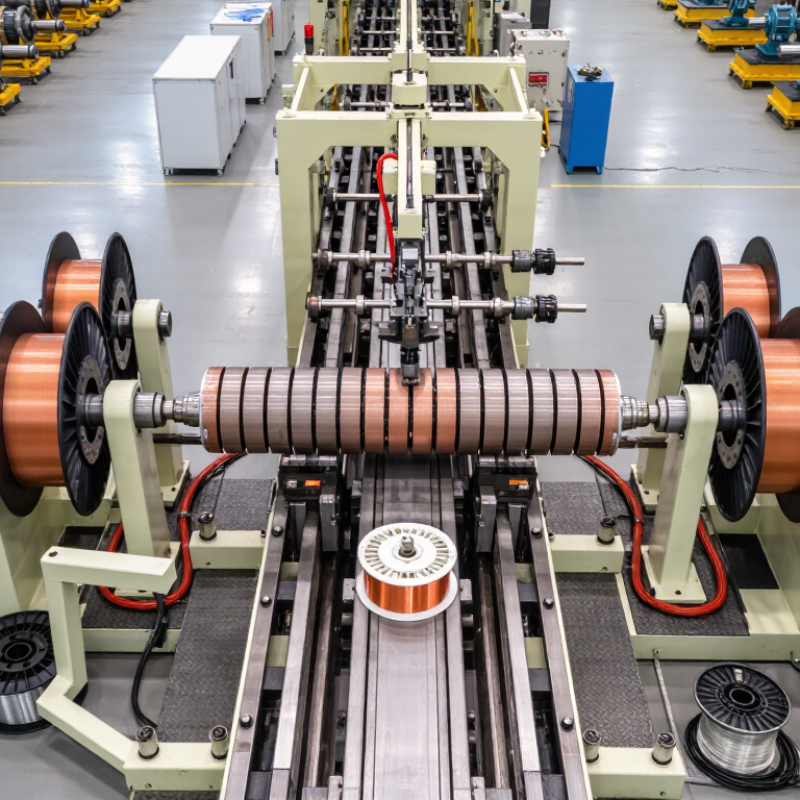
10 Best Motor Stator Winding Machines to Buy?

What a Motor Stator Winding Machine Does

A motor stator winding machine forms and places insulated copper wire inside the slots of a stator core. The stator is the stationary part of a motor, and its coils create magnetic fields when energized. The machine controls practical details: wire tension, coil shape, turn count, and placement. Small errors matter. A loose turn may rub against the core; uneven winding can complicate insulation and assembly.

Depending on the design, a machine may wind coils directly into slots or shape coils separately for later insertion. Operators set winding patterns to match the motor’s pole count and electrical design, then check samples for dimensions, damaged insulation, and consistent resistance. The U.S. Department of Energy’s 2021 Motor Systems Market Assessment reports that motor-driven systems account for about 69% of electricity use in U.S. manufacturing. That figure makes reliable motor production important, though it does not mean a winding machine alone determines efficiency.

A machine can make a bad coil neatly. That is worth remembering. Setup, wire quality, tooling condition, and inspection all affect the result. For buyers comparing equipment, useful questions include whether the machine handles the required wire sizes, supports the intended winding pattern, and records production settings. A clear setup sheet can save hours on a busy line. The operator still matters.

Main Types of Motor Stator Winding Machines

Motor stator winding machines generally fall into manual, semi-automatic, and fully automatic types. Manual machines suit repair shops, prototypes, and low-volume work. An operator guides the wire and controls tension, turn by turn. It is flexible, but consistency depends heavily on skill. Small errors can accumulate.

Semi-automatic machines handle repeatable steps, such as rotating the stator or controlling wire feed, while an operator loads parts and checks the winding. They can be a practical middle ground for changing production runs. Fully automatic machines manage more of the process, including winding sequences and, in some setups, wire cutting or connection tasks. They typically need careful setup and compatible tooling. More automation is not always better.

Machines also differ by winding method. Needle winding places wire directly into stator slots, which can help with compact internal geometries. Flyer winding guides wire around teeth or poles and may suit particular coil layouts. Preformed coils can instead be inserted into slots by dedicated insertion equipment. Each method has limits. A buyer should compare stator dimensions, slot fill, wire gauge, and expected output before choosing. On paper, a machine may seem suitable; the actual winding pattern can prove otherwise. A sample run is worth the time.

10 Best Motor Stator Winding Machines to Buy? — Main Types

Typical fit of common winding machine types for different production needs

This qualitative comparison shows typical applications, not market rankings or machine performance. A value of 1 means a common fit; 0.5 means a possible fit depending on the stator and process; 0 means it is not a typical application. Machine selection also depends on wire size, slot geometry, production volume, and motor design.

Key Features to Compare Before Buying

When comparing motor stator winding machines, start with the stator sizes and winding patterns you actually run. A machine rated for a wide range may still need extra tooling for a specific slot shape. Check supported wire diameters, coil turns, and winding modes against your production drawings. Then watch a sample run: tension should stay steady, and wire should sit cleanly in each slot. Small details matter. Ask how quickly operators can change fixtures and load a new recipe. A fast cycle is less useful if setup takes half a shift.

Compare repeatability as well as headline output. Request run data across several stators, not just one polished demonstration. Look for controls that flag broken wire, missed turns, or abnormal tension, and confirm how alarms are logged. Test actual coils. Also inspect guarding, access for cleaning, and the time needed to replace wear parts. Ask what training, spare parts, and technical support are available locally; downtime can erase a modest purchase-price saving. Noise, floor space, and power requirements deserve a place in the comparison sheet. I would not choose on automation level alone. A simpler machine can be easier to maintain, though it may require more operator attention. Balancing flexibility with stability is awkward, and your own shift conditions should guide that choice.

10 Best Motor Stator Winding Machines to Buy? - Key Features to Compare Before Buying

Machine Type Winding Method Best Suited For Key Advantages Limitations to Consider Features to Compare Before Buying
1. Manual Stator Winding Machine Operator-guided winding using a handwheel, simple drive, or basic winding fixture. Prototypes, repairs, small production runs, and simple stator designs. Low equipment complexity; flexible for frequent design changes; straightforward to maintain. Output and winding consistency depend heavily on operator skill; limited production speed. Fixture adjustability, turn-count display, tension control, safety guarding, and availability of compatible tooling.
2. Programmable Coil Winding Machine Controlled wire placement with programmed turns, traverse, and winding sequence. Repeat production of coils or stators with defined winding patterns. More repeatable winding than manual operation; recipes can simplify changeovers. Programming and setup are required; tooling may be specific to the coil or stator geometry. Recipe storage, axis control, turn-count accuracy, wire-guide adjustment, tension settings, and program backup.
3. Flyer Winding Machine A rotating flyer guides wire around a stationary or indexed coil form. Coils and stator designs where flyer access and the winding path are suitable. Can provide efficient, controlled coil winding; well suited to repeatable winding operations. Flyer clearance and wire path can restrict the shapes and dimensions it can handle. Flyer speed range, wire-guide geometry, tensioner type, coil-form compatibility, and changeover time.
4. Needle Winding Machine A moving needle feeds wire directly into stator slots. Small or medium stators, including designs requiring precise slot-by-slot wire placement. Direct wire placement supports controlled winding in accessible slot geometries. Needle access, slot opening, and winding sequence can limit compatibility; tooling setup is important. Needle travel and clearance, stator indexing, slot compatibility, wire-tension control, and support for the required winding pattern.
5. Concentrated-Winding Machine Coils are wound around individual teeth or tooth groups. Stators designed for concentrated windings, commonly with accessible individual teeth. Can simplify coil placement for compatible stator designs and support modular production setups. Only suitable for stator geometries and winding layouts designed for concentrated windings. Tooth access, coil-form tooling, indexing accuracy, number of winding stations, and coil transfer requirements.
6. Distributed-Winding Machine Coils are placed across multiple slots according to a distributed winding pattern. Stators requiring distributed coil placement and a defined slot-to-slot winding sequence. Designed to handle more complex winding layouts when matched to the stator and process. Setup and tooling can be more complex; the correct winding sequence must be programmed or mechanically configured. Slot indexing, coil handling method, winding-pattern support, tooling flexibility, and integration with insertion equipment.
7. Automatic Coil Winding and Insertion System Automated coil winding is combined with transfer and insertion into stator slots. Higher-volume production using stable, repeatable stator designs. Combines multiple process steps and can reduce manual handling between winding and insertion. Higher initial investment; changeovers and maintenance may require specialized skills and tooling. Supported stator range, insertion tooling, cycle-time definition, changeover procedure, fault recovery, and service access.
8. Stator Coil Insertion Machine Pre-wound coils are inserted into stator slots using insertion tooling. Production lines that wind coils separately and need controlled slot insertion. Separates winding from insertion; can improve process consistency for compatible stators. Requires correctly formed coils and carefully matched insertion tooling; unsuitable tooling can damage insulation. Slot and coil compatibility, insertion force control, tooling changeover, insulation protection, and operator safety features.
9. Multi-Station Stator Winding Machine Multiple winding heads or stations process stators or coils in parallel or in sequence. Medium- to high-volume production with repeatable designs and balanced process steps. Can increase production capacity and reduce idle time when stations are properly balanced. Requires more floor space and coordination; a fault at one station may affect the overall line. Number of usable stations, independent controls, station balancing, guarding, setup time, and fault-isolation capability.
10. CNC Stator Winding Machine Computer-controlled axes coordinate wire placement, indexing, and programmed winding motions. Repeat production with precise, programmable winding paths or frequent recipe changes. Supports repeatable motion control and stored production settings for compatible designs. Requires trained setup and maintenance; CNC capability does not remove the need for correct fixtures and process validation. Axis count, control interface, program storage, motion repeatability, safety interlocks, diagnostics, and local technical support.

Buying note: These are equipment categories, not rankings of specific products. Compatibility depends on stator dimensions, slot geometry, winding layout, wire type, production volume, and the required level of automation. Confirm sample-part capability, tooling costs, cycle-time assumptions, and process acceptance criteria with the supplier before purchasing.

10 Motor Stator Winding Machines to Consider

Ten Motor Stator Winding Machines to Consider

A manual flyer winding machine suits prototypes and low-volume work. It gives operators direct control, though coil consistency depends heavily on skill.

Semi-automatic flyer machines add controlled rotation and tension. For repeat production, automatic flyer winders can handle more coils with less manual adjustment.

CNC multi-spindle machines wind several coils at once, but need careful setup. Needle winding machines reach narrow slots that flyer tools may not access easily.

For concentrated windings, dedicated machines place wire around individual teeth. Distributed winding machines form coils for insertion across multiple slots.

Hairpin winding equipment bends and inserts preformed copper conductors, making it relevant to specific motor designs.

Coil insertion machines transfer wound coils into stator slots; check that tooling matches the core dimensions.

Integrated winding and lacing machines combine two operations, but a single fault can interrupt the whole process. A poor fit is costly.

Tips: Compare wire range, slot geometry, changeover time, and service access before buying. Ask for a trial using your actual stator stack and wire. Record scrap and cycle time; estimates can miss awkward setup delays.

How to Match a Machine to Your Production Needs

Choosing a stator winding machine starts with the motor design, not the advertised speed. Check whether it handles your winding method, wire range, slot geometry, and coil dimensions. A needle winder may suit compact or irregular stators; a flyer machine may fit other coil designs. Verify with your actual parts. Ask for sample windings, then inspect tension, placement, insulation damage, and repeatability.

Output matters, but only in context. The International Energy Agency’s Global EV Outlook 2024 reports nearly 14 million electric cars were sold in 2023, about 18% of global car sales. That growth may raise demand for motor production, but it does not tell you which machine fits your line.

Compare the required daily volume with changeover time, operator needs, and downstream assembly capacity. The U.S. Department of Energy’s 2014 manufacturing motor-systems assessment estimates that motor-driven systems use about 68% of U.S. manufacturing electricity. Energy use deserves a place in your operating-cost review.

One uncomfortable truth: a faster winder can merely move the bottleneck. I would also question any quotation that skips trials with your wire and stator. Real parts can be fussy.

FAQS

What does a motor stator winding machine do?

It forms insulated copper wire into coils and places them in stator slots. It controls wire tension, coil shape, turn count, and placement. Small errors matter.

Why does winding consistency matter?

Loose wire may rub against the stator core. Uneven coils can complicate insulation and assembly. A neat coil can still be wrong.

Do all machines wind coils directly into stator slots?

No. Some wind directly into the slots. Others shape coils separately for later insertion. The suitable method depends on the motor design.

What should buyers check before choosing a machine?

Compare supported stator sizes, wire diameters, turn counts, and winding patterns with production drawings. A wide range may still require special tooling.

How can buyers check winding repeatability?

Request run data from several stators, not one polished sample. Inspect coil dimensions, insulation, resistance, and wire tension. Test actual coils.

Which machine controls and alarms are useful?

Useful controls can flag broken wire, missed turns, or abnormal tension. Ask how alarms and production settings are recorded. Records help.

What practical operating details should buyers compare?

Check fixture-change time, loading steps, cleaning access, wear-part replacement, guarding, noise, floor space, and power needs. Cycle speed is not everything.

Is a more automated machine always better?

Not necessarily. A simpler machine may be easier to maintain but need more operator attention. Shift conditions matter. I might underestimate setup time; measure it on your line.

Conclusion

A Motor Stator Winding Machine forms and places wire coils into a motor stator, helping manufacturers produce consistent windings with greater speed and repeatability. Different machine types serve different tasks, from winding coils separately for later insertion to winding directly into stator slots. Understanding these approaches makes it easier to identify equipment suited to a particular motor design and production process.

This guide considers ten types of machines and explains what to compare before buying, including winding capacity, automation, compatibility with stator dimensions, setup requirements, ease of operation, and maintenance needs. The right choice depends on more than the machine’s features: production volume, product variety, available workspace, and operator experience also matter. By matching these requirements to the machine’s capabilities, buyers can narrow their options and select equipment that supports dependable production without paying for unnecessary capacity.

Ethan

Ethan

Ethan is a professional marketing specialist with a strong understanding of the company’s products, their practical applications, and the needs of the people who use them. He regularly contributes expert articles to the company website, where he explains product features, shares helpful guidance,......