0%

Choosing an Automatic Stator Winding Machine is a production decision, not just a search for the fastest model. The right equipment must match the motor design, wire range, winding pattern, and expected output. A machine built for high-volume, repeatable coils may not suit a workshop handling frequent custom jobs.

Real operating details matter. Consider changeover time, tension control, coil consistency, operator access, and the availability of training and spare parts. Ask how the machine handles your actual stator dimensions, not only the sample shown in a product brochure. A small mismatch in tooling can mean extra setup, uneven winding, or avoidable downtime.

This guide compares ten machines using practical buying criteria, including automation level, application fit, usability, and service support. It also highlights questions worth asking suppliers before requesting a quote. Specifications can look convincing on paper. Production trials tell a fuller story. Still, no shortlist is perfect. A model that suits one factory may be the wrong choice for another, even when their output targets seem similar.

Before deciding, prepare sample parts and share your winding requirements with the manufacturer. Request clear details about included tooling, installation, warranty coverage, and operator training. If possible, inspect a demonstration using a comparable stator. The goal is not to buy the machine with the most features. It is to find reliable equipment that fits your process, budget, and plans for future production.
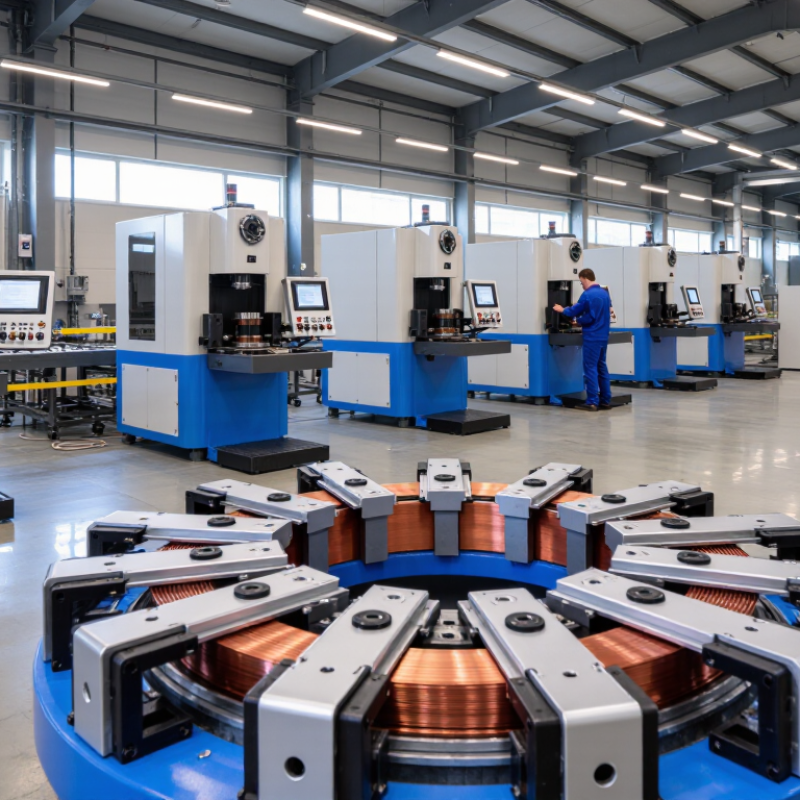
10 Best Automatic Stator Winding Machines to Buy?

How Automatic Stator Winding Machines Work

An automatic stator winding machine places insulated copper wire into the slots of a motor’s stator. The core is secured in a fixture, and a programmed guide carries wire through a set path. Depending on the stator design, the machine may rotate the core or move the winding head. This motion forms coils with specified turns and spacing. A controller coordinates speed, direction, and wire placement.

A tensioning unit keeps the wire from becoming slack or stretching too tightly. Sensors may monitor wire breaks, position, or cycle completion, while an operator checks insulation and loading before production.

Small details matter. A misplaced turn can rub against a slot edge or leave uneven space for the next coil. After winding, some systems cut the wire and guide its ends to a termination point; other setups require separate steps.

Automation improves repeatability, but it does not remove the need for setup checks. A recipe that works for one stator may not suit another, so trial runs and careful inspection remain important.

Key Types and Features of Stator Winding Machines

Automatic stator winding machines differ in how they guide wire, position coils, and handle production changes. Needle winders place wire through narrow slots and suit many distributed-winding designs. Flyer winders rotate a guide around the stator, often supporting faster coil placement. Insertion machines push preformed coils into slots. That is a separate operation, not just another winding style.

Machine choice depends on stator geometry, wire diameter, slot fill, and required output. Look for programmable winding patterns, tension control, wire-break detection, and repeatable indexing. For example, a small tension variation can loosen turns or scrape insulation at a slot edge. Useful safeguards. But added automation cannot correct poor tooling or an unsuitable coil design.

The International Energy Agency’s 2011 report, Energy-Efficiency Policy Opportunities for Electric Motor-Driven Systems, estimates that motor-driven systems use about 45% of global electricity. This figure describes motor systems broadly; it does not measure winding-machine savings. It does show why consistent manufacturing matters.

Compare changeover time, scrap tracking, maintenance access, and operator training alongside cycle speed. A polished specification sheet can still hide difficult setup work. Buyers should test representative stators and inspect finished coils before committing. That practical check is easy to overlook.

10 Automatic Stator Winding Machines to Consider

Ten automatic stator winding machines to consider include single-station flyer winders, multi-station flyer winders, and needle-winding systems. A single station suits modest output; multiple stations can improve throughput when operators can keep them supplied. Needle winding helps with compact slots and restricted access. Small details matter.

Other options include machines for concentrated windings, distributed windings, automatic coil insertion, and combined winding-and-insertion operations. A dedicated insertion unit can reduce manual handling, but it may need carefully matched tooling. Programmable CNC winders offer adjustable turns, speed, and wire tension. Flexible quick-change machines can handle several stator sizes, though changeovers still take time. High-speed automatic winders round out the list, provided the wire and core can tolerate the operating rate.

Compare machines using actual production samples, not brochure figures alone. Check slot dimensions, wire range, winding pattern, changeover time, and how faults are detected. Ask to see a finished stator and inspect its coil placement and insulation. I would not assume the fastest machine is the best fit. Setup quality matters, and even a capable system can produce inconsistent coils when tension settings drift. A trial run may reveal issues that a specification sheet misses.

Comparing Machine Capacity, Precision, and Automation

When comparing ten automatic stator winding machines, start with the stator, not the advertised speed. Check supported wire diameters, slot counts, stack lengths, and tooling changeover time. A machine that handles thin wire neatly may struggle with thicker wire or a different coil layout. Capacity should match your actual product mix, including the awkward jobs.

Precision shows up in repeatable turns, controlled wire tension, and consistent placement inside each slot. The International Energy Agency’s 2011 report, Energy-Efficiency Policy Opportunities for Electric Motor-Driven Systems, estimates that motor-driven systems use 43–46% of global electricity. That figure is not a winding-machine benchmark, but it explains why dependable motor production matters. Ask suppliers for measured winding tolerances and sample-coil results, not just a maximum-speed figure. Small deviations count.

Automation can reduce manual handling and help standardize recipes, alarms, and quality checks. The U.S. Department of Energy’s 2014 sourcebook reports that motor systems account for about 70% of electricity use in U.S. manufacturing. For buyers, that makes production reliability worth examining alongside output. Request a live demonstration using your stator and wire. Watch setup, tension changes, and recovery after a fault. Fast cycle times look good. Yet changeovers can eat into them, and I would not assume every automated feature pays back equally.

How to Choose a Machine for Your Production Needs

Choosing an automatic stator winding machine starts with the motor, not the machine catalogue. Record the stator’s inner and outer diameters, slot count, stack length, wire range, and winding pattern. Then check whether the equipment can handle your actual product mix, including the smallest and largest models. A machine that runs one sample well may struggle with frequent changeovers. Fit matters.

Estimate daily output from your real shift conditions, not the advertised cycle time alone. Include loading, wire changes, setup, inspection, and routine stops. Ask for a trial using your own stator cores and wire, and inspect tension consistency, coil placement, and finished winding quality. Test it. Also confirm what operators must adjust manually, how recipes are stored, and whether alarms are clear enough for a new team member to respond safely.

Consider the space around the machine, too. Measure access for loading, maintenance, and moving finished parts; a compact footprint can still leave awkward service access. Check training, spare-part availability, maintenance intervals, and support response times in writing. Compare energy use and tooling costs alongside purchase price. One detail is easy to overlook: a highly automated line may reduce labor but make small production changes slower. That trade-off depends on your schedule, and it deserves a realistic trial before you commit.

10 Best Automatic Stator Winding Machines to Buy? — How to Choose a Machine for Your Production Needs

This comparison covers common machine configurations rather than branded models. Capability and output depend on stator geometry, winding pattern, wire, tooling, and automation level; confirm specifications using production samples and a process trial.

Machine configuration Winding or process method Typical stator and winding fit Production fit Key advantages Check before buying
1. Automatic needle winder A moving needle lays wire directly into stator slots, usually slot by slot. Commonly used for concentrated windings, including many small and medium BLDC and permanent-magnet motor stators. Best for repeat production of a defined stator family; automation can include wire cutting, clamping, and termination. Direct winding can reduce the need to wind and insert separate coils. Programmable motion supports different winding patterns. Confirm slot access, tooth geometry, nozzle clearance, wire tension control, and compatibility with the required turns and wire size.
2. Multi-station needle winding machine Several winding heads or stations wind stators in parallel or in sequence. Concentrated-winding stators with repeatable geometry and compatible tooling across stations. Suitable for higher-volume production where reducing handling and cycle time is important. Can increase throughput and keep loading, winding, and unloading steps organized in a repeatable cycle. Compare the actual cycle time per finished stator, changeover time, operator requirements, and whether every station supports the same recipe.
3. Automatic flyer coil winder A rotating flyer lays magnet wire onto a coil form or winding fixture. Useful for preformed coils used in distributed-winding stators and other motor coil applications. Good for repeated coil production before a separate coil insertion or assembly operation. Supports controlled coil shape and turn placement; may be configured for automatic wire start, finish, and cutting. Check coil-form design, winding speed at the required wire tension, turn-count accuracy, and compatibility with downstream insertion tooling.
4. Automatic stator coil winding and insertion line Forms coils and inserts them into stator slots, often with automated transfer between process steps. Commonly used for distributed-winding stators with preformed coils and a repeatable slot layout. Best for medium- to high-volume production with stable product specifications. Combines operations that would otherwise require separate handling; can improve process consistency and reduce manual insertion work. Validate slot fill, coil pitch, insulation-liner handling, insertion-force limits, and the required wedge or slot-closure process.
5. Automatic coil insertion machine Pushes or transfers prewound coils into stator slots using dedicated tooling. Best suited to stators whose coil groups are wound separately and designed for insertion. Useful when coil winding and insertion are separate production stages or when upgrading an existing line. Automates a labor-intensive operation and can provide controlled insertion motion and force. Check coil geometry, slot opening, insulation protection, tooling changeover, and whether the machine handles the required number of phases and coil groups.
6. Automatic stator winding and lacing machine Winds or handles coils and automatically ties end turns with lacing cord or an equivalent binding process. Applicable where end-turn support and secure coil retention are required by the motor design. Useful for repeat production when winding and end-turn securing need to be coordinated. Can reduce manual lacing and improve repeatability of the end-turn support process. Confirm lacing pattern, cord material, access around the end turns, insulation clearances, and compatibility with the stator’s winding layout.
7. Automatic stator winding and termination machine Winds the stator and performs defined wire start, finish, cut, or connection-preparation operations. Suitable for stators where lead routing and repeatable wire termination are important parts of the process. Good for production lines seeking to reduce manual wire handling between winding and connection steps. Can improve consistency of lead placement and reduce handling-related variation. Specify lead length, terminal type, connection method, insulation requirements, and the inspection method for each termination.
8. Automatic winding cell with robotic loading A winding machine is integrated with a robot or automated transfer system for loading and unloading. Works with compatible stators that can be presented in a consistent orientation and securely fixtured. Appropriate for sustained production where labor reduction and machine utilization justify cell integration. Can link winding with inspection, marking, or other operations while reducing manual part transfers. Assess guarding, safety systems, part presentation, recovery from stoppages, robot reach, and total line cycle time—not just winding time.
9. Automatic winding machine with recipe-based servo control Servo-driven axes execute stored motion and winding programs for repeatable turns and wire placement. Useful for products with multiple winding recipes or controlled changes in winding pattern. Suitable for mixed production when frequent, validated recipe changes are required. Recipe storage and controlled motion can support repeatable setup and product changeover. Check recipe security, program limits, data backup, setup verification, and whether the controller records production and fault information.
10. Flexible automatic winding system with quick-change tooling A programmable winder uses exchangeable fixtures or tooling to handle multiple related stator designs. Best for a product family with manageable differences in core size, slot layout, or winding pattern. Useful for lower-volume or mixed-model manufacturing where a dedicated line for every design is impractical. May reduce changeover effort and broaden the range of products handled by one machine. Verify the approved design range, tooling cost, changeover procedure, setup validation, and achievable quality on the most demanding stator in the family.

Selection note: Before purchase, provide suppliers with stator drawings, slot and pole details, winding diagrams, wire specifications, insulation requirements, target output, and quality criteria. Request a sample run using your actual materials and compare finished-part quality, cycle time, changeover time, and service requirements.

FAQS

How does an automatic stator winding machine work?

It secures the stator core in a fixture and guides insulated copper wire through programmed paths. The machine controls movement, speed, and wire placement to form coils with specified turns.

What does the wire tensioning unit do?

It keeps the wire from becoming slack or stretching too tightly. Sensors may detect breaks or position changes. Small details matter.

Which winding machine type suits compact stator slots?

Needle-winding systems can reach compact slots and restricted areas. Suitability still depends on the stator design and available tooling.

Are multi-station machines always more productive?

They can increase throughput when operators keep each station supplied. If loading falls behind, extra stations may not help much.

What should buyers check before choosing a machine?

Compare supported wire diameters, slot counts, stack lengths, winding patterns, and changeover times. Ask to inspect a finished stator, not just a specification sheet.

Does the fastest machine provide the best results?

Not necessarily. High speed may affect wire or core performance, and changeovers can reduce real output. Speed is not everything.

How can winding precision be assessed?

Check repeatable turn counts, wire tension, and coil placement inside the slots. Request measured tolerances and sample coils made with your stator and wire.

Does automation remove the need for inspection?

No. Operators still need to check setup, insulation, and loading. A recipe that works for one stator may not suit another.

What should a live machine demonstration include?

Watch a real setup, tension adjustment, and recovery after a fault. A trial run may reveal issues that a brochure misses. I might still overlook something.

Conclusion

This guide explains how an Automatic Stator Winding Machine forms and places coils in a motor stator, from wire feeding and tension control to winding, indexing, and process monitoring. It introduces common machine types and features, including different winding methods, station configurations, programmable settings, and levels of operator involvement. The overview also considers ten machine options as examples of the capabilities buyers may encounter, without focusing on specific manufacturers.

To compare equipment, look beyond headline speed and assess winding capacity, placement precision, repeatability, and automation features together. The right choice depends on the stator dimensions and designs you produce, required output, available floor space, operator skills, and budget. Consider changeover time, ease of setup, maintenance needs, and compatibility with existing production processes as well. Matching these factors to your actual workload can help you select a machine that supports consistent quality and efficient production without paying for capacity or features you do not need.

Ethan

Ethan

Ethan is a professional marketing specialist with a strong understanding of the company’s products, their practical applications, and the needs of the people who use them. He regularly contributes expert articles to the company website, where he explains product features, shares helpful guidance,......